Custom Robot PCB Manufacturing: Cost, Lead Time and Solutions
Why Robot PCB Quality Decides Product Success
Robotics is one of the fastest growing electronics markets in 2026. From industrial arms and collaborative cobots to AMR logistics robots, medical robots and humanoid platforms, every machine depends on a set of high performance printed circuit boards. A robot PCB handles control, power delivery, signal transmission, communication and data processing, so its design and manufacturing quality directly affect the stability, reliability and service life of the whole robot.
This guide explains what a custom robot PCB is, where robot boards are used, how they are designed and manufactured, what they cost, how long production takes and how to choose a robot PCB supplier. It is written for robotics startups, automation equipment makers, motion control engineers and OEM buyers who need a manufacturing partner rather than just a bare board quotation.
Contact gopcb with your Gerber files and BOM for a free DFM review and a custom robot PCB quotation at PCB manufacturing.
What Is a Custom Robot PCB?
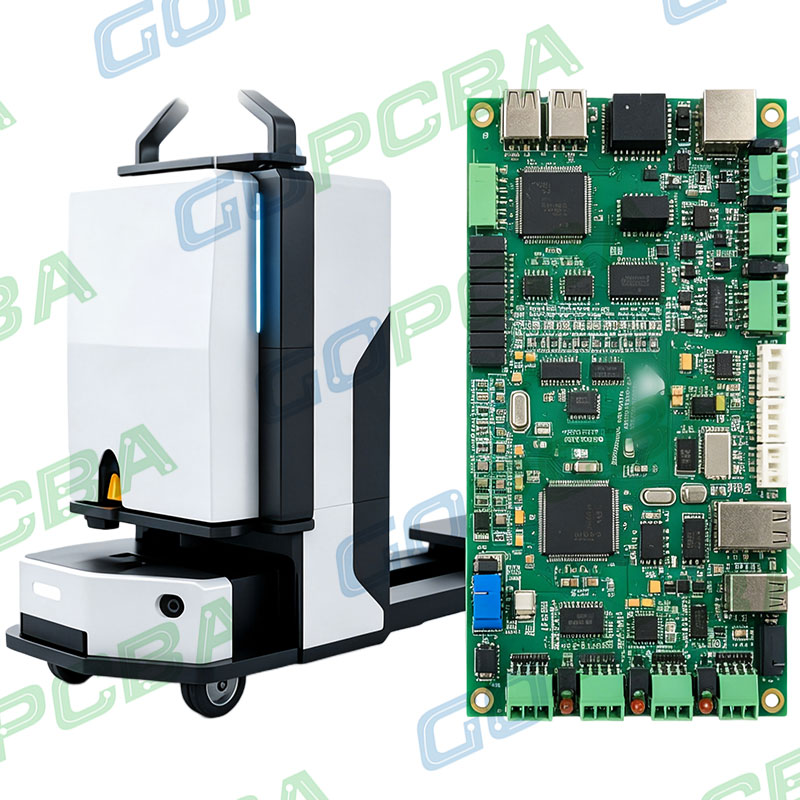
A custom robot PCB is a printed circuit board designed specifically for a robot control system. It connects microcontrollers, motor drivers, sensors, power stages, communication modules and AI processors so that the robot can sense its environment, plan motion and drive its actuators in real time.
Modern robots rarely use a single board. A typical system combines several purpose built PCBs such as:
- Main controller PCB
- Motor driver PCB
- Motion control PCB
- Power management PCB
- Sensor interface board
- AI computing board
- Vision processing board
- Communication module PCB
- Battery management system (BMS) PCB
As robots become more intelligent, the multi board architecture with high speed interconnects is now the industry standard design approach.
Main Application Fields for Robot PCBs
Industrial robots run in hot, high vibration, high load factories. Welding, handling, assembly, painting and CNC automation lines need PCBs with excellent thermal and mechanical stability.
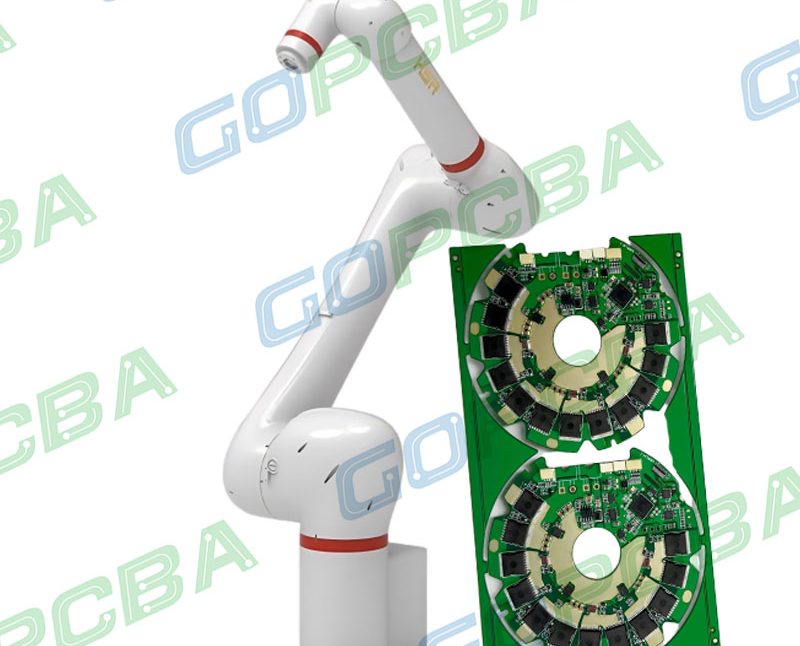
Collaborative robots (cobots) work beside people, so their boards must combine high reliability, functional safety, high speed communication, precise servo control and multi sensor fusion.
Medical robots, including surgical and rehabilitation systems, require near medical grade quality control, long life components and traceable manufacturing.
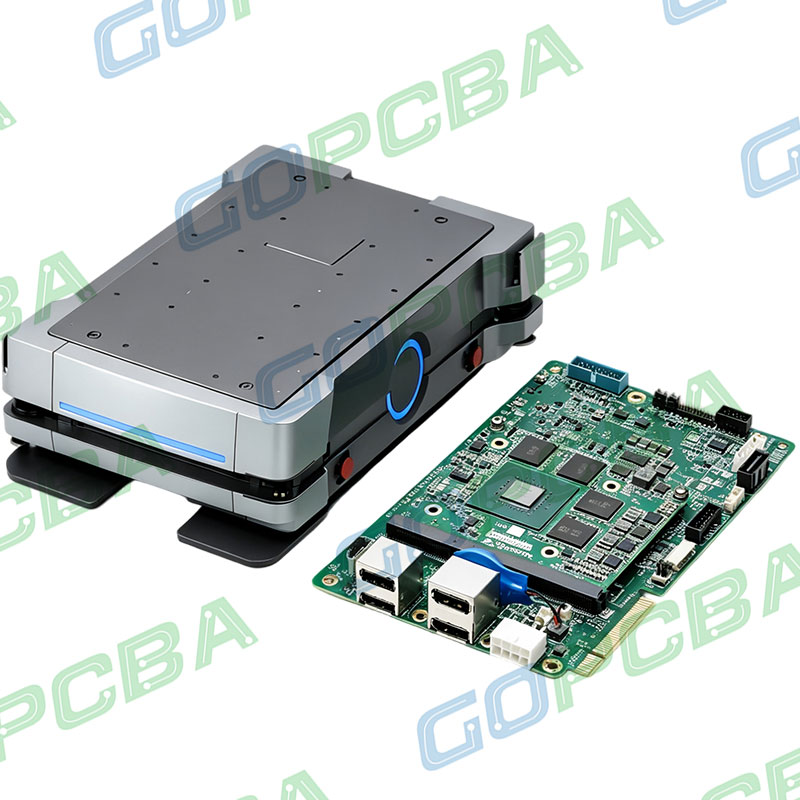
AMR autonomous mobile robots integrate LiDAR, AI vision, SLAM navigation, battery management and motor control, which means many high speed, high density boards inside one vehicle.
Humanoid robots are the fastest growing segment. A single humanoid can contain dozens of PCBs for AI computing, motion control, vision, voice, torque sensing and wireless communication, pushing robot PCB fabrication toward thin, high layer count and HDI processes.
Robot PCB Design Requirements
Custom robot PCB design must balance electrical performance with mechanical reliability and long term operation in the field.
High speed signal integrity: AI chips, FPGAs, DDR memory and high speed camera interfaces need controlled impedance, differential routing, multilayer stack-ups and careful layer planning. Even a small impedance mismatch on a vision data bus can cause intermittent failures that are almost impossible to find in the field.
Power integrity: robot motors draw large transient currents when they start and change direction. The board therefore needs large power planes, adequate copper weight, optimized decoupling and a low impedance power delivery network so that the logic supply never dips below the operating window.
Thermal design: robots run continuously for long shifts. Common solutions are thick copper PCBs, embedded copper coin blocks, metal core boards, thermal via arrays and large copper pours under power components.
Vibration resistance: motion produces sustained vibration. Reliable pad design, component locking, stiffeners and rigid flex construction keep solder joints alive over millions of cycles.
EMC and EMI control: clean layout with solid ground planes, optimized return paths, filtering, power isolation and shielding keeps electromagnetic noise from disturbing sensors and wireless links.
Materials Used for Robot Boards
Material choice depends on the function of each board. Standard FR-4 covers most control and power boards. High Tg FR-4 is preferred where boards sit close to motors and hot actuators. High frequency boards for radar and wireless links use Rogers or hybrid stacks, while flexible and rigid flex polyimide boards connect moving joints and rotating axes. Thick copper and metal base boards handle the high current motor driver stage.
For AI and vision boards with fast processors, low loss materials and tight dielectric control matter as much as the layer count. A good manufacturer will recommend the stack-up together with the designer instead of simply quoting the cheapest FR-4, because the material decision is locked in long before assembly begins.
Manufacturing Process and PCBA Assembly
Custom robot PCB production follows the same disciplined flow as other high reliability electronics: front end engineering and DFM, material preparation, inner layer imaging, lamination, drilling, plating, outer layer imaging, solder mask, surface finish, electrical test and final inspection.
Robot boards then move to PCBA, where SMT placement, through hole insertion, BGA assembly, AOI, X-ray inspection, ICT and functional testing are performed. Many robot projects also need firmware programming, conformal coating and box build, so a turnkey partner reduces logistics and quality interfaces. gopcb supports this complete flow through its turnkey PCB assembly service, from component sourcing to final functional test.
Custom Robot PCB Cost Reference
Pricing depends on layer count, material, size, copper weight, surface finish, impedance control, testing and quantity. Typical prototype ranges for robot boards are 30 to 80 USD for a two layer board, 80 to 180 USD for four layers, 180 to 400 USD for six layers and 300 to 900 USD for HDI robot PCBs. PCBA prototypes normally run from 200 to 1500 USD depending on component density.
In small batch production of 50 to 500 boards, unit prices drop to roughly 5 to 20 USD for two layers, 10 to 40 USD for four layers, 20 to 80 USD for six layers and 40 to 150 USD for eight layers. Assembly cost then depends on component count, BGA packages, programming, functional testing and coating. Above one thousand boards, unit cost is typically 30 to 60 percent lower than prototype pricing, which is why volume planning with one supplier pays for itself.
Robot PCB Lead Times
Lead time is set by layer count, material availability, process complexity and PCBA scope. Bare board samples for two layers can ship in 24 to 48 hours, four layers take three to five working days, six to eight layers five to eight working days, HDI seven to twelve working days and complex high layer count boards ten to fifteen working days.
PCBA samples normally take three to seven working days, small batches seven to twelve working days and volume production two to four weeks. For robot development programs, expedited service can be arranged when components are ready, so teams can validate designs and hit product launch schedules.
How to Choose a Robot PCB Supplier
The right partner offers one stop PCB fabrication, component sourcing, SMT assembly, programming, functional test, conformal coating and box build under one quality system. Look for experience with HDI, rigid flex, thick copper and high frequency boards, strict IPC quality management, DFM feedback before production, fast prototyping, volume capability and clear communication.
gopcb combines all of these in its PCBA testing and industrial PCBA services, with dedicated support for controller boards, motor driver boards, AI vision boards and autonomous navigation systems from prototype to mass production.
FAQ
What material is best for a robot PCB? FR-4 or high Tg FR-4 covers most industrial robots. Rogers laminates suit high frequency modules, polyimide flex boards suit joints and moving links, and thick copper or metal core boards suit high power drivers.
How much does a custom robot PCB cost? Bare board prototypes typically range from 30 to 900 USD and PCBA samples from 200 to 1500 USD, depending on layers, materials, components, testing and volume.
How long does robot PCB production take? Simple samples can ship in 24 to 48 hours, while HDI or high layer count boards usually need seven to fifteen working days. PCBA lead time depends on component availability.
Which surface finish do robot PCBs use? ENIG is the most common finish because of its flat pads, good solderability and long term reliability. Hard gold can be added on connector areas that see frequent mating cycles.
Do you support one stop robot PCB manufacturing? Yes. gopcb covers design review, fabrication, component sourcing, SMT, programming, functional testing, conformal coating and box build to shorten development and speed up production.
Get a Custom Robot PCB Quote
Robotics is moving toward smarter, higher precision and more reliable machines, and the robot PCB is the backbone of every electronic system inside them. The fastest way to get accurate pricing is to submit your Gerber files, BOM and design notes for a DFM review. gopcb manufactures multilayer, HDI, rigid flex, high frequency and thick copper robot boards with IPC grade quality control. Send your files today for a custom robot PCB cost estimate and production lead time.