



Custom Remote Control PCB Manufacturing: The Complete 2026 Guide
Why Custom Remote Control PCB Manufacturing Matters
Wireless control is everywhere. Smart home systems, industrial automation, automotive electronics and the Internet of Things all depend on a reliable circuit board that sends and receives commands. A custom remote control PCB lets you match the communication method, range, power budget and physical size of your product. This guide walks through the types, design flow, materials, manufacturing steps and 2026 pricing so you can build a remote that works exactly as intended.
What Is a Remote Control PCB?
A remote control PCB is the circuit board that handles wireless communication and control. It brings together the control logic, signal transmitter and power management on one board. In use, it converts a user action into an electrical signal, encodes that signal and sends it over the air, after which the receiver decodes it and carries out the command.
The board uses one of several communication methods. Infrared remote control PCBs are cheap and simple but need the handset to be pointed at the receiver. Radio frequency remote PCBs cover a longer distance and resist interference better. Bluetooth and Wi-Fi remote PCBs connect to smartphones and IoT platforms and are ideal for app controlled devices.
Main Types of Remote Control PCB
Infrared remote control boards. Common in TVs and air conditioners, they are low cost and easy to design but require a clear line of sight. Radio frequency remote control boards. Used in garage doors, drones and industrial controls, they support long distance transmission. Bluetooth remote PCBs. Built for smart homes and mobile devices, they support app control. Wi-Fi remote control boards. They support cloud control and remote management, which makes them a natural fit for IoT systems.
Key Components on a Custom Remote PCB
A high performance design usually combines a microcontroller as the core control unit, an RF or infrared transmitter module for the signal path, a crystal oscillator for a stable clock, a power management section for good battery efficiency, an antenna design that controls range and stability, and human interface parts such as buttons, LEDs and touch modules. Getting these parts to work together cleanly is the heart of a reliable remote.
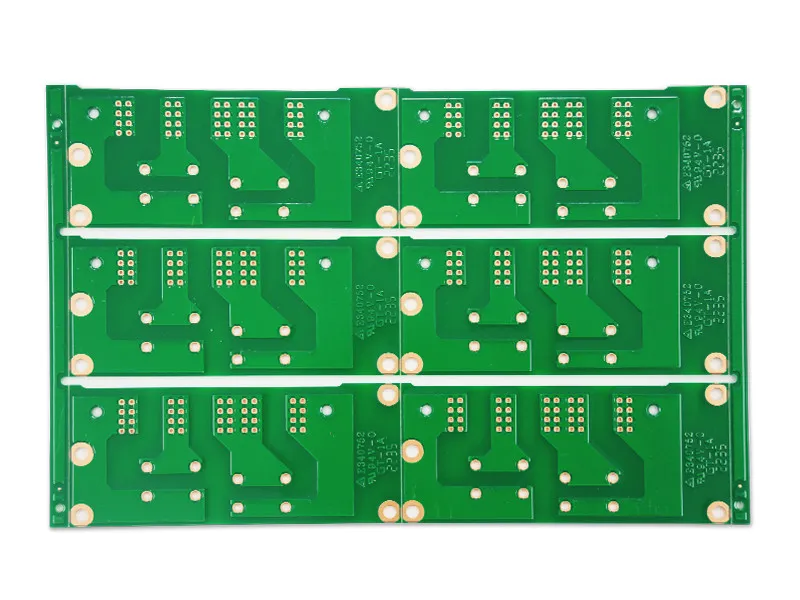
Custom Remote Control PCB Design Process
Requirements analysis. Define the communication method, the transmission distance and the power budget. Schematic design. Complete the circuit design and component selection. Layout and signal optimization. Route the traces to reduce interference, improve RF performance and match impedance. Prototyping. Build a quick sample to validate the design. Testing and verification. Run functional, signal and environmental tests before production.
A professional design for manufacturing review at this stage catches issues early. It keeps the layout within the fabricator capability and helps the board pass first time, which cuts the cost of failed prototypes.
Design Notes for a Reliable Remote
Pay close attention to transmission distance and stability, electromagnetic compatibility design, low power operation so the battery lasts, compact layout and structural size, and environmental resistance such as heat and moisture. RF circuits are especially sensitive to trace length, ground planes and antenna clearance, so the layout matters more than on a digital only board.
Materials for Remote Control PCBs
FR4 laminate is the cost effective choice for most applications. High frequency materials such as Rogers are used when the RF signal needs lower loss and more predictable performance. Flexible and rigid flex boards fit wearable or folded designs. The surface finish matters too. HASL is economical, ENIG is reliable for fine pitch and RF, and OSP is a clean finish for solderability. Choose the finish based on the component type and the environment the product will see.
Custom Remote Control PCB Manufacturing Process
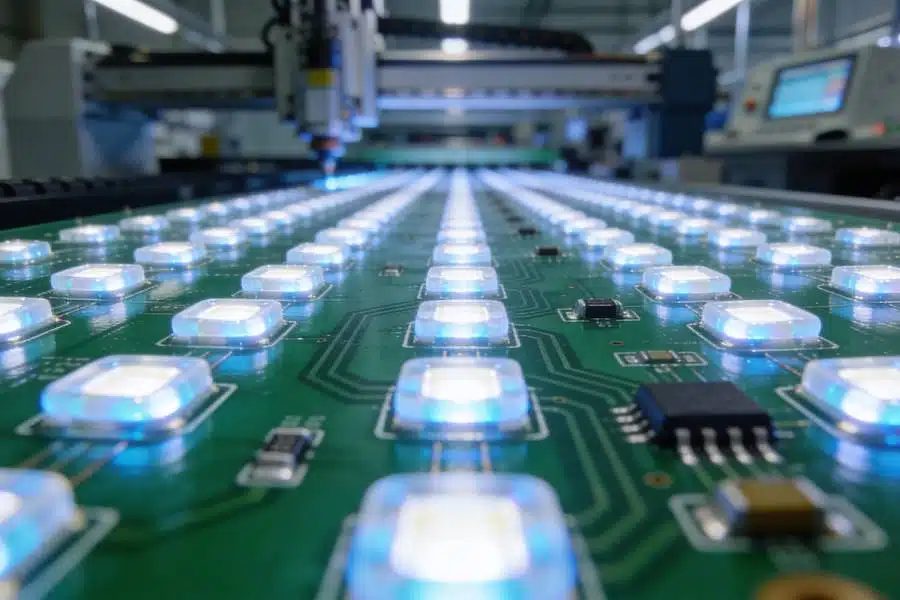
The board is first fabricated with etching, drilling and plating. Components are then sourced from a stable supply chain. The next stage is surface mount and through hole assembly on an automated line to keep placement precise. After assembly, the firmware is burned in to write the control logic and communication protocol. Finally the board goes through automated optical inspection, functional testing and RF performance testing so every unit works before it ships. A one stop supplier that combines prototyping, volume production and assembly shortens the total lead time.
A custom board also removes the extra cost of a generic feature set. A stock remote may carry buttons, protocols and RF bands that your product does not use, which adds cost and clutter. A custom design keeps exactly the functions you need, optimizes the antenna for the band you operate on, and lets you place the board in the exact housing you already designed. That fit improves appearance, battery life and manufacturability at the same time.
Applications
Custom remote control PCBs are used in smart home control systems, consumer electronics such as TVs and speakers, automotive systems like keyless entry, industrial wireless controls, and drone and robot control systems. Each application has different priorities, but all rely on stable wireless communication and dependable power management.
2026 Pricing for Custom Remote Control PCB
Price depends on layer count, board type and size, component cost, process complexity and quantity. As a reference, a prototype run of 1 to 10 boards typically costs about 50 to 300 US dollars. A small production batch of 50 to 500 boards runs about 2 to 10 US dollars per board, and a large run of 1000 or more can drop to 0.5 to 5 US dollars per board. To reduce cost, optimize the design, use standard materials and raise the order quantity so the setup cost is spread out.
How to Choose a Remote Control PCB Manufacturer
Look for proven RF and IR design experience, ISO and RoHS certifications, complete production and test capability, a reliable delivery cycle and responsive engineering support. A manufacturer with over ten years of PCB experience, global delivery and a competitive, fast response service keeps your project moving. Compare the supplier’s antenna and impedance capabilities when the product has an RF path.
For RF routing and layout guidance, review high frequency PCB design best practices, then hand the design to PCB manufacturing and apply PCB design and manufacturing principles to keep the board production ready.
Verify the antenna and impedance with the supplier before you freeze the layout. Signal range and reliability are set in the copper, not after assembly. Ask for a measured range and a baseline RF test from the prototype samples so you know the production design stays within the target. Good communication up front avoids a board that meets the schematic but fails in the field.
Future Trends
Remote control boards are moving deeper into the IoT, getting smaller and lighter, and shifting toward low power as the norm. Newer wireless standards such as BLE 5.0 and Wi-Fi 6 are becoming standard, and environmentally friendly PCB materials are more common. These trends mean the next generation custom remote will need tighter design controls and a partner who understands both RF and modern assembly.
FAQ
What is the difference between an RF remote PCB and an IR remote PCB? RF does not need to be aimed and reaches farther, while IR is cheaper but needs a clear line of sight.
How long does a custom remote control PCB take? Prototypes usually take 3 to 7 days, while volume production takes about 2 to 4 weeks.
Do you support small batch production? Yes, a good supplier offers flexible minimum order quantities.
What files do you need? Gerber files, the BOM list and coordinate files are the main requirements.
How can I lower the cost? Optimize the design, use standard materials and increase the order quantity.
