HDI PCBA Cost: What Makes High-Density Assembly Expensive
An HDI assembly carries a price premium over an ordinary surface mount build, and almost none of that premium comes from the components. It comes from the board itself, from the precision the assembly process needs to reach the parts on it, and from the inspection that verifies joints nobody can see. Understanding where the money goes is what makes the premium negotiable.
What Makes a Board HDI
High density interconnect describes a construction rather than a single feature. The defining elements are microvias formed by laser drilling, a higher layer count in a thinner stack, and finer conductor geometry than a conventional board allows.
The reason for building that way is component pitch. Area-array packages with hundreds of balls on a pitch well under a millimetre cannot be routed on a conventional board, so the connections are brought out through microvias that occupy a fraction of the area a through-hole would consume. Everything else about the construction follows from that constraint.
Why the Board Costs More
Laser drilling is the first cost. Each hole is formed individually by an ultraviolet laser rather than by a drill program that strikes many holes at once, and the equipment and the registration control it needs are both expensive. Blind and buried vias add drilling and lamination cycles on top of that.
Stacking microvias pushes the cost further, because each stacked column has to be drilled, plated, filled and planarised before the next layer can be laminated over it. Finer lines and tighter tolerances add imaging and inspection cost, and the yield at every one of those steps is lower than on a conventional board. Those effects together typically add tens of dollars per board before a single component has been placed.
Component Cost and Sourcing
HDI designs usually use denser and more expensive parts. Fine-pitch processors, radio-frequency modules and high pin count devices cost more than their coarse-pitch equivalents, and they often have longer lead times and narrower availability.
Sourcing multiplies the effect. A board with a hundred unique part numbers carries a hundred opportunities for a shortage, a minimum order quantity or a substitution question, and each of those costs engineering time. Consolidating part numbers and standardising on packages that are stocked by more than one distributor reduces both the component spend and the hidden procurement cost.
Assembly Cost
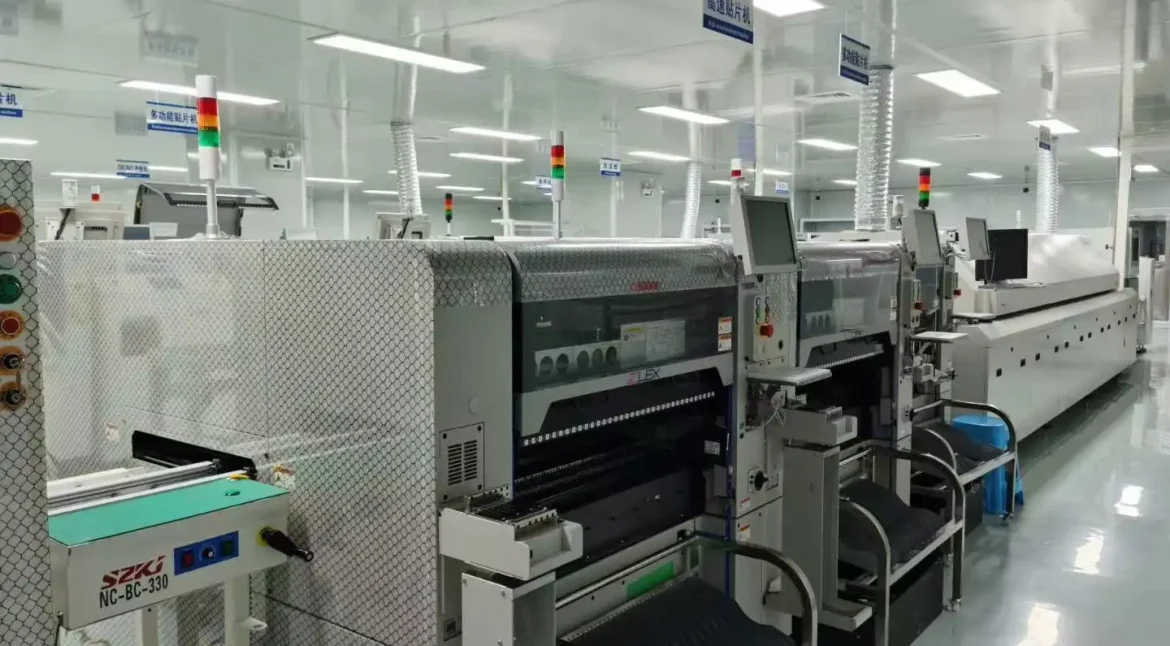
The stencil matters more on an HDI board. Apertures for fine-pitch parts have a small area-to-depth ratio, and paste release becomes the limiting factor on print quality. That drives thinner stencils, better surface finishes and often a nano-coating, plus more frequent stencil cleaning during the run.
Placement accuracy follows the same trend. Fine-pitch parts demand a machine capable of high placement force control and vision alignment, and component count per board is typically high because the density is the whole point of the design. Reflow is a single pass if all surface mount parts are on one side, and two passes if the design needs both, which raises cost disproportionately because the second pass also stresses the joints formed in the first.
Test and Inspection
Hidden joints are the defining inspection problem. Optical inspection verifies what it can see, but the joints under an area-array package are invisible to it, so X-ray becomes necessary rather than optional. Interpretation of X-ray images requires skilled operators, which adds labour cost rather than only equipment cost.
Electrical test is complicated by access. A dense board with fine geometry offers fewer probe points, so a fixture may not be feasible and flying probe test becomes the practical option, at the cost of much longer cycle time per board. The right balance between fixture cost and cycle time depends on volume, and it is worth recalculating whenever the order quantity changes.
NRE Cost
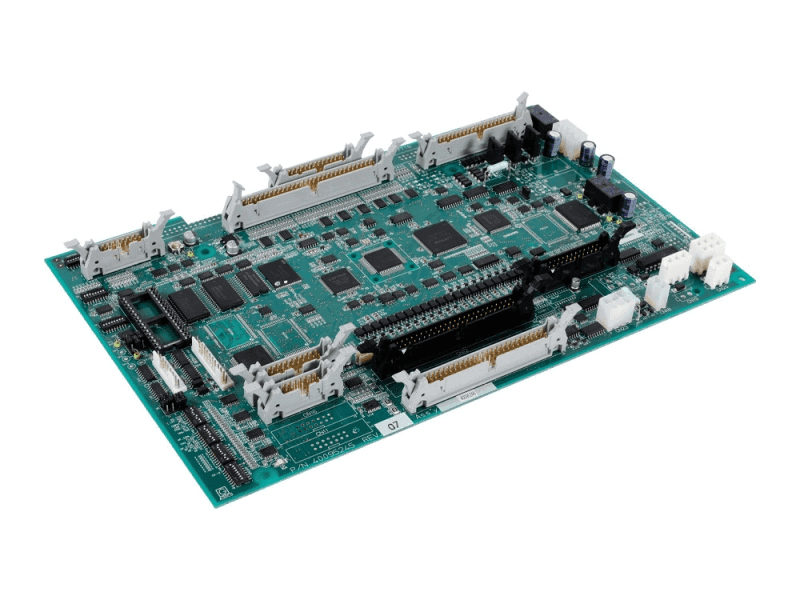
Non-recurring engineering charges cover the work done once per design: stencil fabrication, programming the placement machine, preparing the inspection programs, creating the test fixture or the flying probe program, and the first-article approval process. On an HDI board each of those items is more expensive than on a conventional one, because the tolerances are tighter and the programs take longer to develop.
NRE cost is fixed, so it dominates small orders and becomes almost invisible at volume. That is why the first ten boards of an HDI design look disproportionately expensive, and why adding a few boards to the first order is nearly always cheaper than placing a second order later.
How Volume Changes the Picture
The board cost falls with quantity but never to a conventional level, because the process steps themselves are expensive. What changes dramatically is the share of the fixed charges: engineering, stencils and programming are spread across more units, so the NRE cost per board collapses.
Assembly yield also improves with volume, for an unglamorous reason. A process that is dialled in over a few hundred boards produces fewer defects than one that is set up fresh for a small run, and each avoided rework operation is both a labour saving and a reduction in the risk of damage to a board that has already absorbed significant cost.
Reducing Cost Without Losing Performance
The largest lever is the stackup. Replacing stacked microvias with staggered ones often removes process steps without changing the electrical result, and reducing the layer count by improving the routing is worth more than any purchasing negotiation. Standard panel sizes avoid special tooling and improve material utilisation at the same time.
Part number consolidation is the second lever, because it reduces procurement risk, feeder changes and inspection program complexity in one move. The third is to keep the whole build with one supplier. Every subcontract between fabrication, component sourcing and assembly adds a handling step, an inspection point and a place for responsibility to become unclear, and the transaction cost of that fragmentation is real even when the unit prices look lower.
Where the Design Decision Is Made
Most of the difference between a reasonable HDI PCBA quotation and an expensive one is decided during layout, not during procurement. The stackup, the via structure, the panel format and the part list are all fixed before a quotation is requested, and after that only the volume can change the arithmetic.
That is why design reviews on HDI projects pay more than reviews on conventional ones. A single decision to use stacked microvias only where they are genuinely required, and staggered ones elsewhere, can remove several process steps from every board in the build. Repeating that saving across a production run outweighs any unit price negotiation.
It is also worth confirming the panel format early. Placing the board on a standard panel with rails and fiducials improves placement efficiency and material utilisation at the same time, and the constraints involved are the same ones described in board outline and mounting design.
FAQ
Why is HDI assembly so much more expensive than conventional assembly? The board fabrication is the main reason, followed by the precision the placement process requires and the X-ray inspection needed for hidden joints. Component cost is usually the smallest part of the difference.
At what quantity does the unit price become reasonable? The fixed charges stop dominating somewhere in the low hundreds of boards. Below that, expect the NRE cost to be visible in every unit price quoted.
Can a design be made cheaper without losing density? Sometimes. Staggered instead of stacked microvias, a consolidated part list and a stackup review often remove cost while keeping the routing density the design needs.