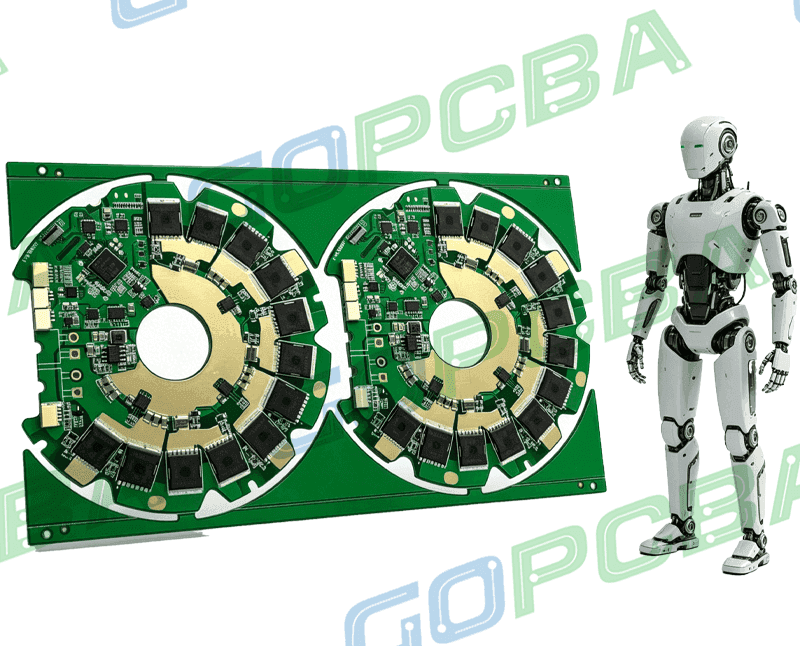
Military PCB versus Commercial PCB: Design and Reliability
Ask whether a board is military or commercial and the answer rarely changes what the board does. It changes what the board is expected to survive. The same microcontroller, the same regulator and often the same laminate appear in both products, but the margins around them, the evidence that the margins exist, and the price paid to document that evidence are different in kind. Knowing where the two paths diverge helps a team decide how much of the military discipline a product actually needs.
Two Sets of Priorities
A commercial PCB is optimised for a market window. Cost, size, assembly yield and time to volume dominate, and the environmental envelope is usually taken from a generic standard such as the operating range of the enclosure. A military PCB is optimised for a mission profile: a specified temperature range that may begin below minus fifty degrees Celsius, vibration and shock spectra taken from a platform, humidity and salt fog exposure, and a service life measured in decades rather than years.
The difference appears first in the assumptions. A commercial design may treat an out of specification condition as an acceptable field return rate. A military design has to treat it as a system failure, because the equipment may be the only channel available. That single change in assumption propagates into material selection, derating, qualification testing and documentation, and it is why two boards can look identical on the schematic and be entirely different to build.
<img src="https://www.gopcba.com/wp-content/uploads/2026/08/Three-Main-Circuit-Board-Components.jpg" alt="Rugged high reliability board compared with a commercial board” />
Materials and Material Selection
Standard FR4 with a glass transition temperature around one hundred and thirty to one hundred and forty degrees Celsius is adequate for most consumer electronics. High reliability work moves to higher transition temperatures and to laminates with lower dielectric loss, better dimensional stability and a tighter specification on resin content and glass weave. Polyimide enters when the board must survive repeated thermal cycling or must flex, and ceramic or metal backed substrates appear where the thermal path is the limiting factor.
Material selection is not only about performance. Military programmes usually require that the laminate be qualified to a recognised specification, that the supplier appear on an approved list, and that the material be traceable to a lot. The same FR4 grade bought on price from a distributor cannot satisfy that requirement even when its datasheet looks equivalent, which is why the material decision is partly a procurement decision.
Design Margins and Derating
Derating is where the discipline is most visible. Commercial designs often run a component close to its rated voltage, current or junction temperature, because the margin is available in the reference design and the cost of more headroom is real. Military designs apply published derating factors that hold the stress well below the rating, and they apply those factors across the full specified temperature range rather than at room temperature.
Layout follows the same logic. Clearances between traces are widened where the voltage and the environment warrant it, thermal vias are added for conduction rather than only for soldering, and features that are vulnerable to vibration such as tall components and unsupported connectors are constrained. The general rules that make a board buildable still apply and are set out in PCB design guidelines for manufacturability; the high reliability version of the same board applies them with less tolerance for the exceptional case.
Qualification Testing and Traceability
A commercial product is usually verified by functional test, a sample of environmental testing and the compliance evidence the market demands. A military product is qualified by a defined sequence of tests that may include thermal shock, vibration, mechanical shock, humidity, salt fog, altitude and electromagnetic compatibility, applied to the design as a whole and often repeated on production lots. The qualification testing programme is agreed before the design is frozen, because a design that cannot pass the sequence is a redesign.
Traceability is the second half of the same requirement. Material lots, process parameters, inspection results and test data are retained so that a board can be traced from the finished assembly back to the panel and the laminate batch. That record is what allows a failure in service to be investigated, and it is a substantial part of the cost of a military build.
Manufacturing and Process Control
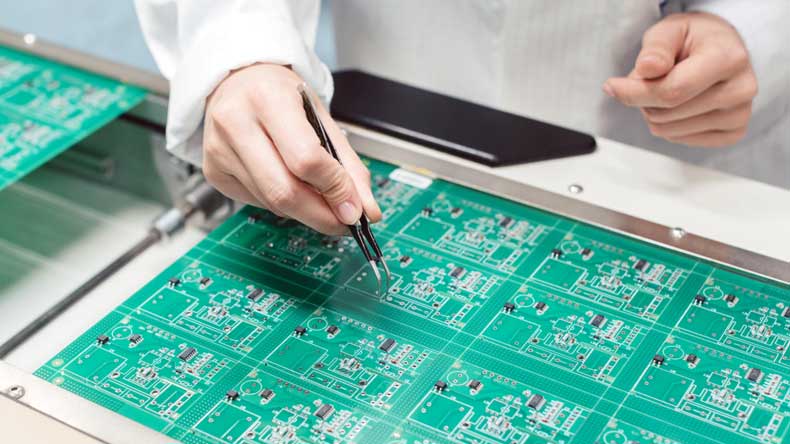
The processes themselves are similar. Both products are drilled, plated, imaged, etched, laminated and finished on the same class of equipment. The difference lies in process control and inspection. A high reliability build tightens the acceptance criteria for hole wall quality, copper thickness, registration and surface finish, and it adds steps such as microsectioning and X-ray of plated barrels rather than replacing them with sampling. Those checks are agreed at the prototype stage, as described in multilayer PCB prototype requirements.
Protection after assembly diverges as well. Conformal coating is common in both worlds, but the military version specifies the coating type, the coverage including the board edges, and the verification method, and it treats a void in the coating as a defect. The available choices and their trade offs are described in conformal coating for board protection.
Cost and Life Cycle
A commercial board is priced per unit and the design is optimised for annual volume. A military PCB is priced partly per unit and partly for the engineering and qualification effort, and the volume is often in the hundreds or low thousands. Non recurring cost therefore dominates the programme, which changes the economics of every decision: a redesign that saves a dollar per board is worth little, while a redesign that avoids a repeated qualification campaign is worth a great deal.
Life cycle follows the same pattern. Commercial products are frequently redesigned or discontinued within a few years, so component obsolescence is managed by redesign. Military programmes often require the same design to be producible for ten or twenty years, which forces the use of parts with long term availability, of alternate sources, and of provisions such as a last time buy.
Choosing the Right Route
Most products sit between the two extremes and should be designed accordingly. A medical monitor, an industrial controller or an automotive module may need part of the military discipline without the full documentation burden. The practical approach is to define the environment and the consequences of failure first, then select the material grade, the derating policy and the test programme that the environment justifies rather than adopting a standard wholesale.
For a team that needs a high reliability build outside a defence programme, the useful conversation with the fabricator covers the laminate specification, the inspection level, the acceptance standard to be applied and the test evidence that will be supplied. Those four items define most of the difference in cost and most of the difference in confidence, and they can be specified independently of any particular market.
FAQ
What is the main difference between a military PCB and a commercial PCB? The reliability requirement. A military board must survive a specified environmental profile and documented qualification, while a commercial board is optimised for cost, volume and time to market.
Why does a military PCB cost more? Because of qualified materials, tighter process control, additional inspection, qualification testing and the traceability records that a defence programme requires.
Can a commercial fabricator build a military PCB? Only if it holds the required approvals, works to the applicable specification and can supply the test evidence. Capability alone is not enough without the documentation.