PCB Sample Order Pricing: What a Small Order Really Costs
A sample order is the smallest useful unit of a board programme. It proves the fabrication process, the fit and often the function, and its price is dominated by fixed charges rather than by the boards themselves. Understanding that structure is what allows a buyer to get the most evidence for the smallest spend. This guide explains how a pcb sample order is priced and how to use one well.
What a Sample Order Is For
The sample is also the first time the fabricator sees the design, so it is where a manufacturability question becomes visible. A feature that sits at the process limit may pass a rule check and still need a conversation at this stage, and having that conversation on five boards is far cheaper than having it on five thousand.
A sample order exists to answer questions. Does the footprint fit the real component, does the stackup produce the intended impedance, does the assembly process work with this panel, and does the product behave as the simulation suggested. Each of those is a question that becomes more expensive to answer later in the programme.
That framing changes what the sample should contain. A sample built on a simplified stackup answers fewer questions than one built on the production stackup, and the money saved on the first is often spent on a second build that should not have been necessary.
The Tooling and Setup Charge
The tooling charge covers CAM engineering, a drill programme, a test programme and often a stencil. Each item is work performed once for the design, and each is required regardless of the number of boards ordered, which is why a five-piece order can cost nearly as much as a fifty-piece order.
Not every item is always needed. A sample that will be hand assembled may not require a stencil, and a low-net-count board may be tested by flying probe rather than by a fixture. Asking which items apply is the fastest way to reduce a sample quotation without reducing what the sample proves.
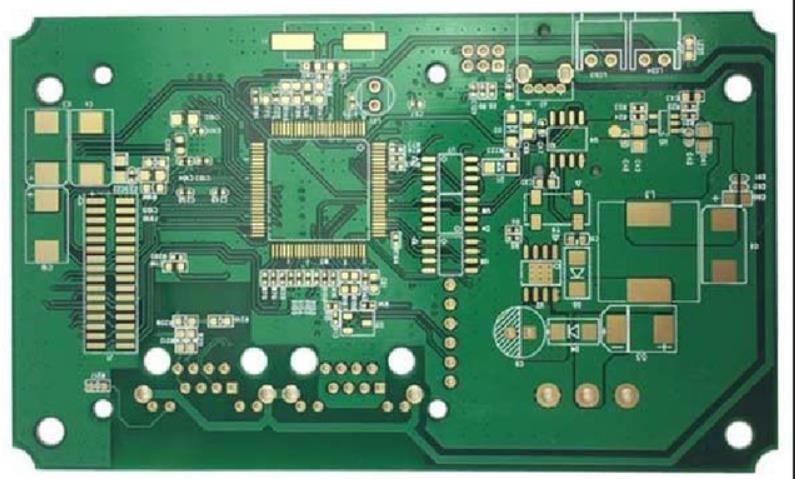
<img src="https://www.gopcba.com/wp-content/uploads/2026/09/167-1.jpg" alt="PCB sample order pricing breakdown showing tooling and panel sharing” />
Panel Sharing and Why It Helps
It also affects the schedule in a way that is easy to miss. A grouped order is held until a suitable companion job appears, so the lead time is partly determined by what else is in the queue. Ordering a standard board increases the chance of a quick match.
Small orders are normally grouped with other work on a shared panel. The grouping reduces material waste and shares the process load, and it is the reason a small order is economical at all. The trade is schedule flexibility, because the board waits for a suitable companion job.
Choosing a standard panel footprint, a routine finish and a common laminate increases the chance of being grouped. A board that requires a special material or a sequential lamination cannot be grouped, and both its price and its lead time reflect that isolation.
Choosing the Sample Quantity
Quantity also interacts with the assembly plan. If the sample will be used to develop the stencil aperture and the reflow profile, several boards are needed before any functional board is available, and those process boards have to be counted in the order.
The quantity should cover the evidence required plus a margin. Boards are consumed by destructive checks, by handling damage and by assembly development, so ordering exactly the number needed for functional testing usually leaves nothing for the checks that explain a failure.
A practical approach is to count the tests first. If a microsection, a thermal cycle and three assemblies are planned, the quantity follows from that list plus a small margin. Ordering on the basis of the tests rather than on a round number removes both waste and shortage.
Acceptance Criteria for a Sample
It is worth stating the inspection method as well as the limit. Plating thickness can be verified by X-ray fluorescence or by a microsection, and the two produce different evidence at different costs. Agreeing the method before the build prevents a dispute about what was measured.
A sample needs written acceptance criteria as much as a production order does. Plating thickness, hole tolerance, impedance tolerance and appearance all have to be defined before the build, or the review becomes a matter of opinion and the sample proves nothing.
The criteria also determine the cost. A tighter tolerance narrows the process window and raises the price on every board, so a criterion should be derived from the product requirement rather than inherited from the previous project.
Sample, Prototype and Pilot
The three terms describe different quantities and different purposes. A sample is the smallest run that proves the process, a prototype is a build large enough for functional development, and a pilot run validates the assembly line at a representative volume. Each has a different cost structure.
Moving directly from sample to pilot without a prototype stage is possible on a simple product, while a complex assembly usually needs the intermediate step. Applying prototype requirements as a checklist helps decide which stages the programme actually needs.
Cost Shape and Where It Falls
Delivery terms belong in the comparison. A sample shipped by courier is fast and expensive per unit, while a consolidated shipment is slower and cheaper. For a sample the schedule usually matters more than the freight, but the figure should still be recorded in the landed cost.
The price curve between one board and a hundred is steep, because the fixed charges are divided by a growing quantity. Between a hundred and a thousand it flattens as material and process time take over. That shape is predictable and it can be used to plan the build sequence.
Ordering a slightly larger sample than the immediate need is often rational. The incremental boards cost very little once the tooling is paid for, and having spares avoids a repeated tooling cycle if one is damaged or consumed by a test.
Getting the Most From a Sample Order
Finally, record what the sample proved. A short report listing the measurements, the questions answered and the questions still open turns the sample into a project document, and it prevents the same questions being asked again at the next stage of the programme.
Provide a complete package. The fabrication data, the drill file, the stackup drawing, the finish specification and the acceptance criteria together remove the clarification cycles that otherwise occupy the early part of a small order.
Then use the sample as a reference rather than as a one-off. A first article measurement recorded against the design becomes the baseline for every subsequent order, and choosing a layer stackup and finish that can be repeated keeps that baseline meaningful. Applying manufacturable design guidelines before the order is what makes the reference reproducible.
FAQ
Why does a sample cost so much per board? Because setup is charged once and divided by a small quantity. The boards themselves are inexpensive; the engineering, programming and tooling dominate the price at this volume.
Can I reuse tooling for a second sample order? Yes, provided the design has not changed. A revision that alters the panel, the drill programme or the test access invalidates part of the tooling, which is why batching changes matters.
Should the sample use the production finish? Yes, wherever the finish affects assembly. A finish that tolerates fewer reflow passes than the production sequence requires will fail at an assembly stage that the sample was meant to prove.