
High Frequency Board Fabrication: Working With PTFE
A high frequency laminate behaves differently on the production line from the epoxy material the shop runs every day. It is softer, it expands more with temperature, and it does not accept the same drilling, plating and mask processes without changes to the parameters.
What the Material Does Differently
A polytetrafluoroethylene based laminate is soft compared with a glass reinforced epoxy. It scratches easily, it deforms under pressure, and it absorbs the energy of a drill rather than cutting cleanly unless the parameters are changed.
Its coefficient of expansion is also higher in the direction through the board, which affects the plating in a hole and the registration between layers. Both effects are manageable, but only if the process is set up for the material rather than for the default.
Handling and Cutting
The protective film stays on the laminate until the last moment before processing, because a scratch in the surface is a permanent change to the dielectric. Cutting is done with the film in place, and the sheets are stored flat.
Panels are handled with gloves and separated with paper, and the stack is kept clean. Contamination on the surface of a soft material is harder to remove than on a hard one, because cleaning that is aggressive enough to remove it also damages the surface.

Drilling Parameters
A new drill is used for the material, because a worn edge generates heat and smears the resin rather than cutting it. A smear on the wall of the hole is the defect that ruins the plating adhesion later.
The feed rate and the spindle speed are set so that the chip load stays small and the heat stays low, and the entry and exit materials are chosen to support the soft surface. An aluminium entry sheet and a rigid backing board keep the hole clean at both ends.
Cleaning the Hole
After drilling, the debris inside the barrel is removed with a jet of air. On a soft laminate the debris tends to cling to the wall, so a simple blow is not always enough and the panel is inspected before it moves on.
Where the material is difficult to wet, the hole surface is activated before plating. A plasma treatment or a chemical activation prepares the wall so that the deposited copper adheres, which is the step that decides whether the hole survives a thermal cycle.
Plating and Metallisation
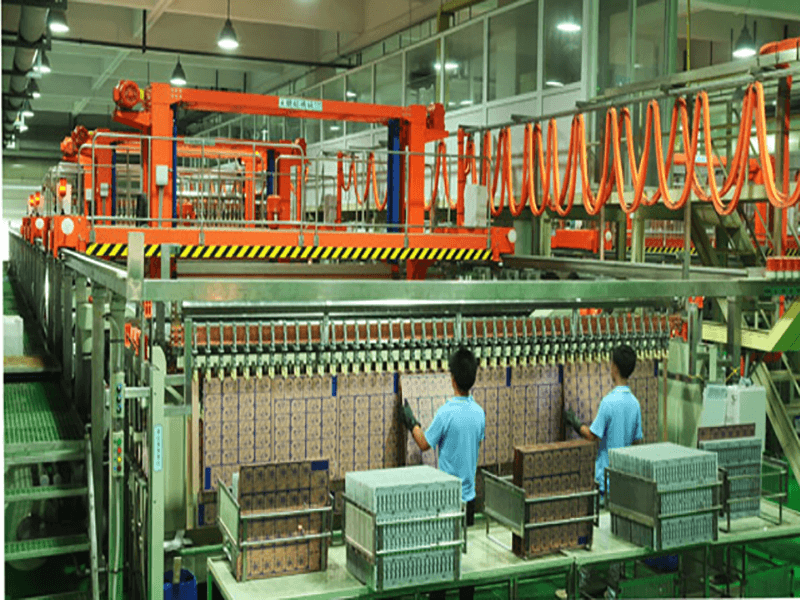
The plating process itself is similar to that used for any other board, but the preparation is not. The activation has to reach the whole barrel, including the middle of a thick panel, or the copper will deposit on part of the wall and leave a gap.
Plating adhesion is checked on a coupon by thermal stress and cross section. A hole that looks sound optically can fail the stress test, and that failure is the reason the coupon exists rather than a sample of the production panel.
Solder Mask on a Low Energy Surface
A low surface energy material resists the adhesion of the mask. The surface is prepared with an acidic process rather than a mechanical scrub, because abrasion damages the laminate, and the panel is dried before the mask is printed.
Curing is staged rather than performed in one step. A gradual rise through several temperatures lets the solvent leave the film and the resin cross link without trapping either, and the stages are recorded as part of the process control.
Routing and Profiling
The material is more brittle than epoxy and produces burrs at the cut edge. The panel is supported between sacrificial sheets during routing, and the edge is finished by hand where the outline is visible in the product.
The tool life is shorter than for a standard laminate, so the router bits are changed more often. Running a tool past its life produces a rough edge, and a rough edge on a high frequency board can change the electrical length of a conductor that runs close to it.
Registration and Layer Alignment
Registration is harder because the material moves more during the press cycle. The design should allow a generous annular ring and avoid placing a via close to the edge of a pad or a plane.
Where several high frequency layers are laminated together, the tooling system has to hold the layers in position through the temperature cycle. A layer that shifts by a fraction of a millimetre changes the impedance of a coupled pair and the performance of a filter.
Design Rules That Suit the Process
Keep the annular ring generous, avoid small vias where a larger one will do, keep copper features away from the routed edge, and do not place a critical coupled structure on the outermost layer where the surface finish varies most.
Where the design uses a mix of materials, describe the construction in the drawing so the fabricator can plan the press cycle. The material selection and the layer arrangement are the two decisions that make the rest of the process predictable.
Inspection and Acceptance
Acceptance is based on coupons cut from the same panel, cross sectioned to show the dielectric thickness and the plating, and measured for the impedance of a representative line.
The surface is inspected for scratches and for contamination before shipment, because a defect in the surface of a soft laminate cannot be repaired. The parts are packed with interleaving paper and kept flat, since the material takes a set if it is stored under load.
Cost and Where It Pays
A high frequency board costs more at every step: the material, the tool life, the process time and the yield. The increase is justified when the design cannot meet its specification on a standard laminate.
The comparison should be made on the electrical result rather than on the material price. Where the loss budget closes with a standard laminate, spending on a specialty material buys margin that the product may not need. The alternative is described under laminate selection, and the plating issues under plating defects.
Process Control and Verification
On a design of this kind, drilling is the item that decides how the rest of the board is arranged. The process window is set by the narrowest step in the flow, so an improvement anywhere else shows up as margin rather than as yield until that step is addressed. A short note on the drawing about handling, storage or packaging is often worth more than an extra decimal place on a tolerance.
Process Control and Verification
On a design of this kind, drilling is the item that decides how the rest of the board is arranged. The process window is set by the narrowest step in the flow, so an improvement anywhere else shows up as margin rather than as yield until that step is addressed. A short note on the drawing about handling, storage or packaging is often worth more than an extra decimal place on a tolerance.
FAQ
Why is a new drill used for a high frequency laminate? A worn edge generates heat and smears the resin, which weakens the adhesion of the plating in the hole.
Why is the hole activated before plating? Because a low surface energy material does not wet readily. Plasma or chemical activation prepares the wall so the copper adheres.
Can solder mask be printed normally? The mask is the same, but the surface preparation and the cure are not. Abrasive preparation damages the laminate and a single stage cure can trap solvent.