Pcb Panelization: Design Rules and Process Limits
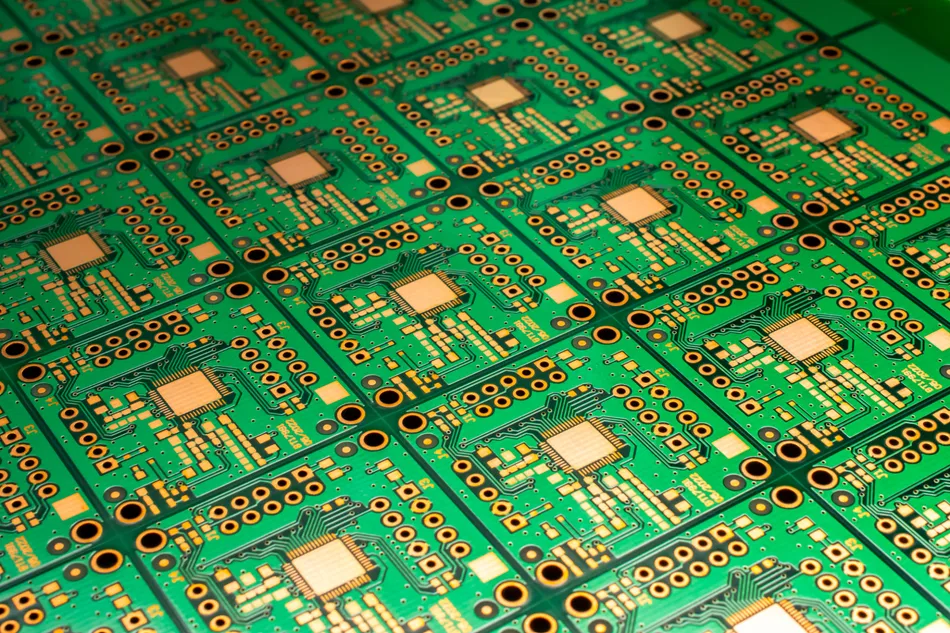
PCB panelization is the step where a single board becomes a production panel. The panel is what the pick and place machine handles, what the printer clamps and what the assembly line moves from station to station. A panel that is designed only around the board outline will waste material, stress the assembly equipment and leave burrs on the finished product.
Why Panelise a Board
A small board cannot be handled on its own. The conveyor, the printer and the placement machine all need a minimum size, and a panel brings the board up to that size while allowing many parts to be processed at once.
The panel also fixes the position of the board for every operation. A board that is processed alone has to be located anew at each station, while a panel is located once by its tooling holes and then held for the whole line.
The third reason is throughput. A panel of ten boards uses one setup for ten products, and the setup time per board falls accordingly. That is why panelisation is a cost decision as much as a technical one.
The trade is material: the rails, the tabs and the spacing are thrown away, so a poorly designed panel can waste a quarter of the laminate. The cost reduction work should always include the panel.
Panel Size and Utilisation
The panel has to fit the machines that will process it, and the smallest machine in the chain sets the limit. A common target is a panel around 250 by 350 mm, with a rail on two opposite edges.
Panel utilisation is the fraction of the panel that becomes product. It is improved by rotating the board, by nesting two different boards in one panel, and by reducing the rail width and the spacing to the minimum the process allows.
The improvement has to be measured against the risk. A panel that is packed too tightly has no room for the router bit or for the v-score blade, and the shop will either decline the job or produce a panel with damaged edges.
The layout of the panel should be drawn by the designer and checked with the assembly house, because the best arrangement depends on the machine set rather than on a general rule.
Board spacing is part of the same calculation. A gap that is too small leaves no room for the router and forces the shop to use a narrower bit, which wears faster and cuts more slowly, so a panel that looks efficient on paper can cost more to produce.
A useful exercise is to lay the panel out twice, once with the boards in a portrait orientation and once in landscape, and to compare the number of boards per panel. The difference is often a whole extra board, which is a direct saving on every panel of the order.

Breakaway Tabs
A breakaway tab is a small bridge of laminate that holds the board in the panel until final separation. The tab has to be strong enough to survive the assembly line and weak enough to be broken without damage.
The tab width and the number of tabs are set by the board size and by the weight that the tab has to carry. A large, heavy board needs more tabs or a stiffer arrangement, while a small board needs only two or three.
The tab is a mechanical feature and it leaves a witness mark on the finished edge. Where the edge is visible in the product, the tab should be placed on a side that is hidden, or the edge should be milled rather than broken.
Tab design is covered in more detail in the tab design guide, and the placement decision belongs in the panel drawing rather than in a note.
V-Score and Routing
A v-score is a shallow cut on both sides of the panel along the separation line. The board is held by the remaining material and snapped apart after assembly, which leaves a clean straight edge with a small chamfer.
The v-score has to run in a straight line all the way across the panel, so it suits rectangular boards with straight sides. A board with a curved edge or with a cutout has to be routed instead, which costs more and leaves a rougher edge.
The depth of the score is set by the blade, and it has to leave enough material to hold the board. Too deep and the board separates in the machine; too shallow and the edge tears when it is snapped.
Every board on a v-scored panel must share the same score line, so the panel layout has to align the boards in a grid. That constraint often decides whether a v-score or a route is used.
Spacing, Fiducials and Tooling
Board spacing is the gap between adjacent boards and between a board and the rail. It has to accommodate the router bit, the placement nozzle and the depanelisation tool, and it is usually between two and five millimetres.
Fiducials are the optical marks that the placement machine uses to align the panel. They are placed on the rails and on each board where the accuracy demands it, and they must be surrounded by a clear area so that the camera can find them.
Tooling holes locate the panel on the printer and on the conveyor. They are drilled to the machine specification, and they have to be placed so that the panel cannot be loaded the wrong way round.
All three features belong on the panel drawing and in the fabrication data. The tooling hole guide and the outline tolerance rules cover the dimensions that the shop needs.
Design Review
The review starts with the panel drawing and the machine list. Every station that will touch the panel should be named, and the panel should be checked against the minimum and maximum size for each one.
The second item is the separation method and the edge quality that the product can accept. A visible tab mark on a cosmetic surface is a defect, while the same mark on a hidden edge is not.
The third item is the data package: the board artwork, the panel drawing, the tooling hole positions and the fiducial positions. A shop that has to guess the panel layout will produce a panel that fits its own machines rather than the assembly line.
The final check is the first article, where the panel is run through the real line and the separation is inspected. The result should be recorded, because the panel design is repeated on every order for that product.
FAQ
Who should design the panel? The designer, with the assembly house. The designer knows the board and the assembly house knows the machines, and the panel has to satisfy both.
Is a v-score always cheaper than routing? It is cheaper for a rectangular board in a regular grid, because the separation step is a snap rather than a cut. For any other shape the router is the only option.
How much material does a panel waste? It depends on the utilisation, which is often between seventy and ninety per cent. Raising it is a cost saving, but only while the process limits are respected.