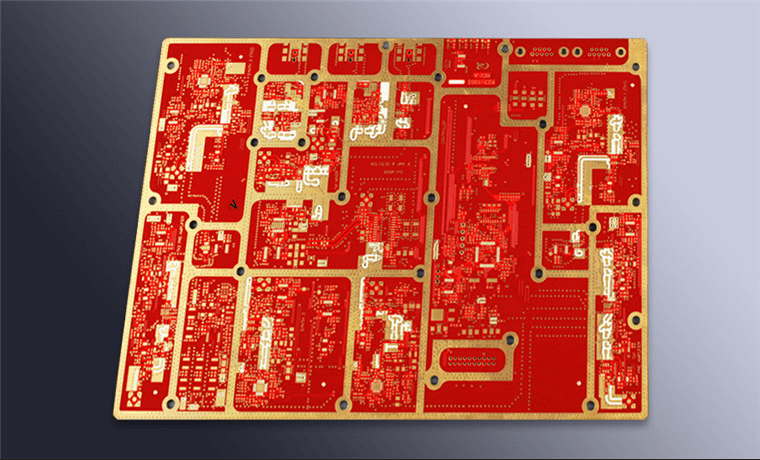
Via Tenting: Design Rules and Process Limits
Solder mask over a via can be applied in two quite different ways. Tenting covers the via completely, with the mask bridging across the drilled hole and sealing it. Plugging fills the hole with mask ink or with a dedicated plugging material, leaving a flat surface. The choice changes what happens during reflow, whether the via can be probed, and how the assembly behaves in a humid environment.
This article covers both, how they are specified, and how they interact with reflow and with test.
What Tenting Does
Via tenting is the standard treatment for an ordinary signal via. The mask covers the pad and the hole, so no copper is exposed and no solder can enter the barrel. The hole is sealed against the flux and the cleaning chemistry of the assembly process, and the surface is flat enough not to interfere with the stencil in most cases.
The quality of a tent depends on the mask ink, the hole diameter and the process. A large hole is difficult to bridge, and the ink tends to sag into it or to tear at the edge. The ink has to have enough thixotropy to hold the bridge, which is the property described under solder mask ink thixotropy, and the cure has to be complete or the tent will crack. Where a via is large or is close to a pad, tenting is often unsuccessful and plugging is used instead.
Tenting Versus Plugging
Via plugging fills the barrel with material and then cures it, either with a mask ink or with a purpose made plugging compound applied by screen printing or by a vacuum assist. The result is a filled hole with a surface that can be plated over or coated, which allows a via to be placed inside a component pad without leaving a cavity under the solder joint.
The two treatments differ in what they can support. A tent is a thin film over a hollow barrel, so it can be damaged by a probe or by a vacuum nozzle, and it does not provide a surface that can be soldered. A plug is solid, so it can be plated over and soldered, and it withstands handling. The cost is higher, because the plugging is a separate operation with its own material and cure, and the process has to be controlled to prevent ink from contaminating the barrel or the surface around it. The general treatment of vias and their connection options is covered under via in pad or plated through.

Outgassing And Solder Wicking
A via that is not sealed is a path for gas and for liquid. At reflow temperature, moisture absorbed in the laminate escapes through the open barrel, and if the via is under a component or inside a pad the escaping gas can blow a hole in the molten solder. The same path lets flux and cleaning chemistry travel into the barrel, where it is difficult to remove and where it can leave a residue that is trapped for the life of the product.
A tent does not always prevent this. If the tent is incomplete, cracked or peeled at its edge, the via is open in practice while appearing sealed. The way to be sure is to plug the barrel rather than bridge it, and to verify by section that the plug is continuous and that the mask has not drawn away from the barrel wall. Where the design relies on tenting to protect a via under a component, that assumption should be checked rather than presumed. Ensuring the coating around the via is continuous is a related question, described under design guidelines for manufacturability.
Vias In Pads
A via inside a component pad must be filled and planarised. The solder ball or the paste deposit sits directly over it, and any cavity or dimple below the surface becomes a void or a blowhole in the joint. The filling must be flat enough that the solder volume over the pad is the same as on a pad without a via, and the fill must not pull away from the barrel wall during reflow.
Two materials are used: plated copper, which fills the barrel and is then planarised by plating and etching, and a conductive or non conductive plugging compound. Plated copper gives the best mechanical result and the best thermal path when the via is also a thermal via, and it is the more expensive option. Plugging compound is adequate for a via that only carries a signal, provided the compound is compatible with the assembly temperatures and the surface is flat after cure. The surface finish applied over the fill must also be able to take the solder, which rules out some combinations of plugging material and finish.
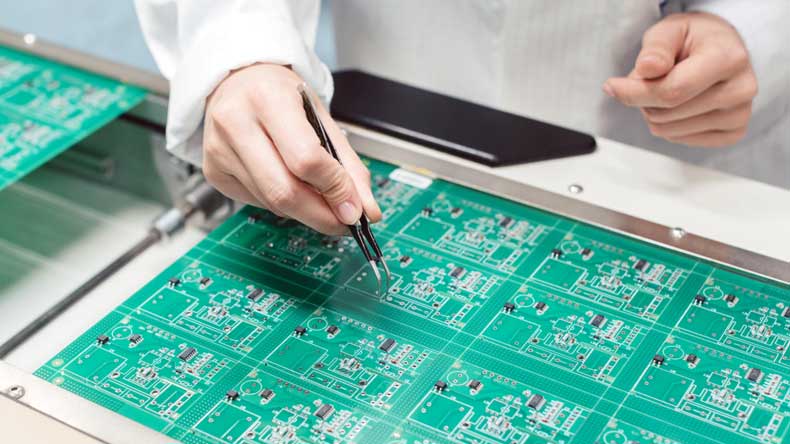
Probe Access And Test
A tented via cannot be probed, because the probe would puncture the mask and expose the copper. Where a via serves as a test point, a mask opening must be provided over it, which means the via is neither tented nor plugged, and the barrel is then open to the assembly process. That is acceptable for many products, and the via is treated as a normal test pad with the same size and clearance requirements.
A plugged via cannot be probed either, unless the plug is conductive and the surface finish over it is solderable. A design that expects to probe a filled via should state it, because a non conductive plug with a thin finish over it gives an unreliable contact and can be damaged by the probe. Where the via is both a test point and a place where a component will be soldered, the requirements conflict and the design usually separates them into two features.
Specifying The Requirement
The fabrication drawing should state, for each via or via class, whether it is tented, open, plugged with ink, plugged with conductive material and plated over, or filled. These are different processes with different costs, and leaving the choice to the shop means the choice will be made for cost rather than for function. A note that says only that vias are tented leaves the shop unable to distinguish a via that must be sealed from one that must be probed.
The drawings should also state the requirement for vias inside pads explicitly, since these are the ones where a failure is expensive. A via in pad that is merely tented will produce voids in the joint, and the defect appears only after the assembly is complete. Stating the fill requirement, the planarity tolerance and the finish allows the supplier to quote and to build the correct process the first time.
FAQ
Can a tented via be soldered over? No. The mask film over the barrel is not a solderable surface and it will be destroyed by the solder, leaving an open barrel under the joint.
Does plugging affect the electrical properties of a via? A non conductive plug does not change the electrical behaviour of the barrel, since the plating carries the current. It does change the thermal behaviour of a thermal via, because the cavity is filled with a material of lower conductivity than copper.
Why does a tented via sometimes fail after reflow? Usually because the tent was incomplete or the ink was under-cured, so the film cracked or peeled at the edge during the thermal excursion. Repeated thermal cycling in service makes the same failure worse.