Nitrogen: Design Rules and Process Limits
Air contains oxygen, and at reflow temperature oxygen oxidises the surfaces that the alloy has to wet. Nitrogen displaces the air, reduces the oxide that forms and widens the process window. The question is whether the improvement is worth the gas, and the answer depends on the joint rather than on the oven.
What the Oxygen Level Actually Controls
The oxygen concentration in the zone decides how much oxide forms on the pad, on the component termination and on the paste during the time the alloy is molten. Lower oxygen means less oxide and better wetting, and the relationship is continuous rather than a switch.
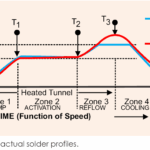
The practical levels are a few hundred parts per million for a general assembly and below a hundred for a fine pitch or a lead free process with marginal wetting. The figure is measured in the zone rather than at the inlet. Our profile notes describe how the measurement is arranged.
Where Nitrogen Helps Most
It helps where the surfaces are hard to wet: a lead free alloy with a weak flux, a component with an oxidised termination, a fine pitch pad where the flux has largely evaporated before the alloy melts, and a joint with a large thermal mass and a long time above liquidus.
It helps least where the process already has margin. A tin lead process with an active flux and a comfortable profile produces good joints in air, and adding nitrogen changes the result by less than the measurement noise. Our reflow defects notes describe the cases where the margin is genuinely thin.

Effect on Solder Balls and Residue
Less oxide means fewer solder balls, because the small sputtered particles coalesce rather than being held apart by their own oxide. That is often the visible improvement that justifies the gas on an assembly where the joints were already acceptable.
Residue behaviour also changes. A flux that leaves a pale residue in air can leave a darker one at low oxygen, because the chemistry that would have oxidised has instead been consumed differently. The residue has to be requalified rather than assumed to be the same.
Measuring Oxygen in the Zone
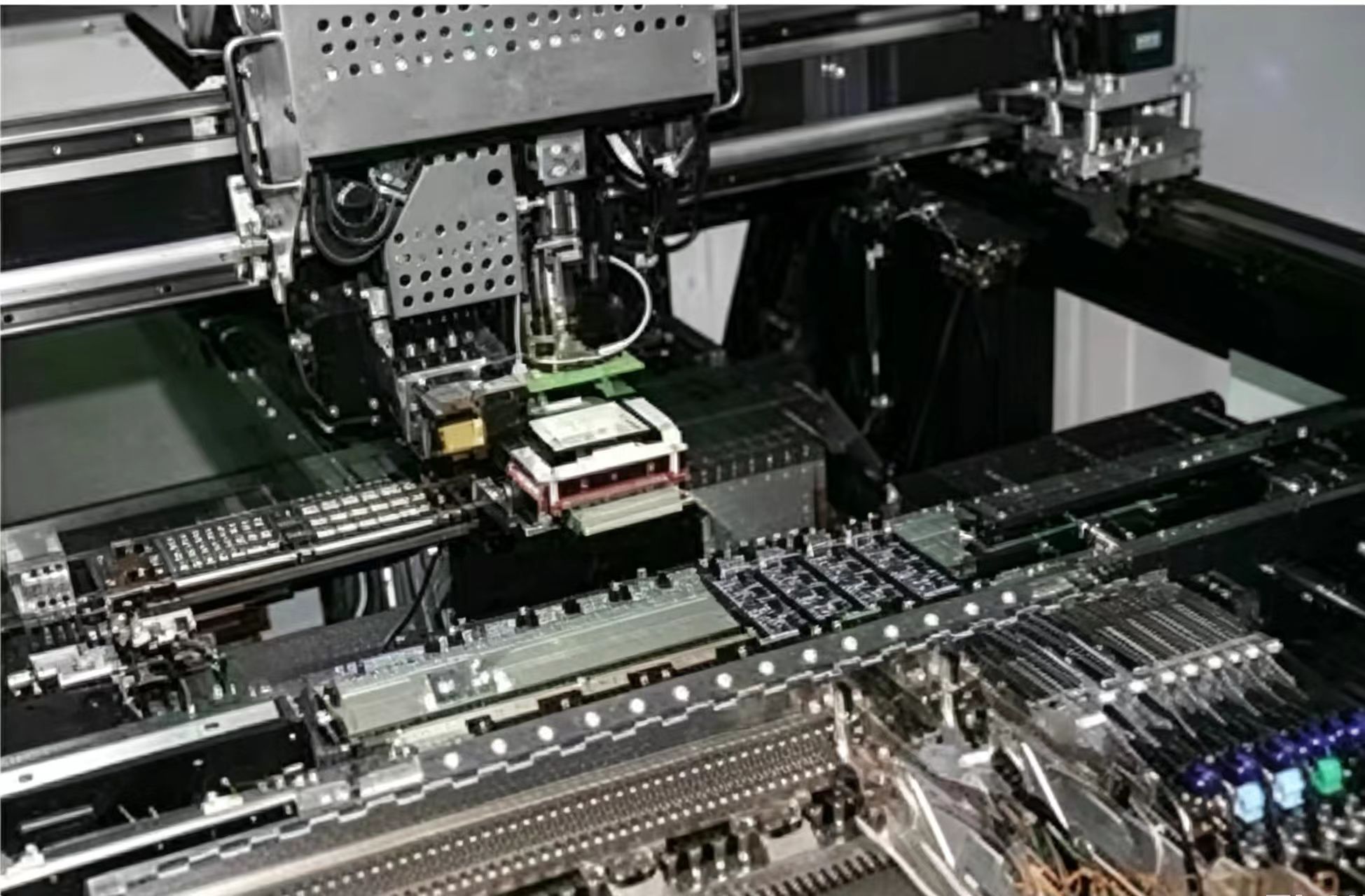
The measurement has to be taken at the board level in the zone of interest, because nitrogen is introduced at the ends and consumed by the product. A measurement at the inlet reports the supply, not the process.
The measurement is also sensitive to door openings and to the load. A reading taken with no boards in the oven describes an empty oven, and the figure under load is what the joints see. Our joint criteria notes define the acceptance that the measurement is supporting.
Cost and Consumption
Nitrogen is consumed by the zone volume, by the openings and by leaks. A tunnel with wide openings and no curtains consumes far more than one with a restricted entry, and the difference is larger than the difference produced by the oxygen setpoint.
The consumption is therefore a mechanical question before it is a chemical one. Curtains, baffles and a tunnel that is closed around the conveyor entry do more for the gas bill than a change to the setpoint.
Interaction With the Flux
A flux designed for air has to be able to work in the presence of oxygen, and a flux designed for nitrogen can be less active. Substituting nitrogen without changing the flux gives part of the benefit, and substituting a low activity flux without nitrogen can give a worse result than either.
The pair is therefore chosen together. Where the assembly has a cleaning restriction, the flux choice is already narrow and the atmosphere becomes the remaining lever.
When Not to Use It
Nitrogen adds cost, complexity and a gas supply that has to be maintained. Where the joints meet the criteria in air with margin, the gas buys nothing that the customer can measure.
The decision is made from data rather than from preference, which means a trial that measures wetting, balling and residue on the actual assembly. Our board quality notes describe how the trial result is recorded.
Process Control and Verification
A stack-up that is drawn rather than described removes most of the ambiguity from a quotation, and it lets the fabricator price the board against the dielectric and copper weights that will actually be used. Where the requirement is not written down, the shop supplies its own default, and the default is chosen for the process rather than for the design.
The measurements that matter are the repeatable ones: conductor width and spacing, annular ring, finished hole size, plating thickness and surface finish are all verifiable on a coupon that travels with the panel. Running a first article through the same checks as the production panel confirms that the two agree, and that comparison is the cheapest form of process control available at prototype stage.
Checks Before Release
The checks that matter are the ones performed on the product rather than on a sample kept for the purpose, because a coupon that travels with the panel is the only evidence about that panel. Where a requirement can be measured, it should be measured at the point of manufacture and recorded against the board or the lot it applies to.
A parameter that is set once and never re verified drifts, and the drift is usually discovered by a defect rather than by the record. The tooling, the material and the profile form one system, and a change to any of them should be assessed against the other two before it is released.
FAQ
Does nitrogen remove the need for flux? No. It reduces the oxide load and it does not replace the chemistry that removes the oxide already present.
Is a lower oxygen level always better? Up to the point where the remaining benefit is smaller than the measurement uncertainty. Below that the cost rises without a measurable gain.
What does gopcb provide for reflow atmosphere? We provide oxygen measurement at the board level under load, flux and atmosphere selected as a pair, trials that measure wetting and balling on the actual assembly, residue requalification after a change, and records that tie the settings to the result.