Assembly Line Start-Up and Shutdown Routines
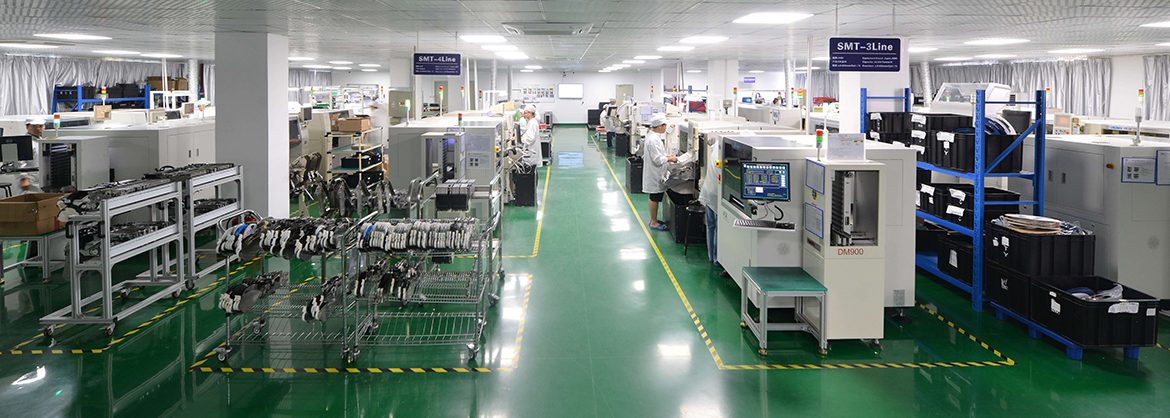
The first boards of a shift are built on a machine that has been idle, and an idle machine is not the same as a running one. The start-up routine exists to close the difference before product is made.
What Changes Overnight
The oven cools and the thermal profile is different until the zones stabilise. Paste on the stencil has changed. The printer head has drifted with temperature. None of these are visible on a screen.
The stabilisation time should be part of the routine. Our <a href="https://www.gopcba.com/reflow-oven-profile-verification/” title=”profile”>profile notes describe the measurement.
Warm-Up and Stabilisation
The oven is brought to temperature and held there until the zones stop moving, which is a measurement rather than a timer in some cases. Printing before that produces a profile that is out of window.
The stabilisation should be recorded. Our thermal measurement notes describe the recording.
<img src="https://www.gopcba.com/wp-content/uploads/2026/08/Thermal-management-in-the-HDI-PCB-design.jpg" alt="Operator running a start-up checklist at a printer” />
Verification Before the First Board
The checklist covers the oven, the printer, the paste, the stencil, the feeder setup and the program. Each item is a check rather than a glance.
A first article confirms the combination. Our changeover notes describe the same sequence after a product change.
Purge and Clean
Paste left on the stencil overnight is removed before printing resumes, and the squeegee is cleaned with it. The first few prints are usually discarded until the volume stabilises.
The discard count should be defined rather than judged. Our paste conditioning notes describe the reasoning.
Shutdown
The shutdown routine removes the paste, cleans the stencil, records the state of the line and leaves the oven in a defined condition. A line left with paste on the stencil costs the next shift more than the shutdown would have.
Our floor control notes describe the arrangement.
Unplanned Stops
A stop in the middle of a run is a short version of the same problem. The idle limits for the paste and the stencil apply, and the restart should follow the same verification.
The limits should be written where the operator can see them. Our stencil cleaning notes describe the schedule.
Verification
The verification is a recorded oven stabilisation, a checklist signed before the first board, a defined number of discarded prints, and a shutdown that removes the paste and records the line state.
Our quality notes describe how the records are kept.
Process Control and Verification
Running a first article through the same checks as the production panel confirms that the two agree, and that comparison is the cheapest form of process control available at prototype stage. Keeping a sample from the panel turns a dispute into a measurement, because the same coupon can be re-examined by both parties without rebuilding the batch.
Reviewing the design before the data is released is cheaper than correcting it after the panel is in the tank, because every step downstream inherits the decision made at the front end. Documenting the assumption is part of the design work, and a short note on the drawing prevents a question that would otherwise arrive a day later and cost a day of schedule.
The process window is set by the narrowest step in the flow, so an improvement anywhere else shows up as margin rather than as yield until that step is addressed. A short note on the drawing about handling, storage or packaging is often worth more than an extra decimal place on a tolerance.
Where a value sits close to a process limit, the drawing should say so, since the shop can then open the process window rather than working to a nominal figure that carries no tolerance. A stack-up that is drawn rather than described removes most of the ambiguity from a quotation, and it lets the fabricator price the board against the dielectric and copper weights that will actually be used.
Checks Before Release
The checks that matter are the ones performed on the product rather than on a sample kept for the purpose, because a coupon that travels with the panel is the only evidence about that panel. Where a requirement can be measured, it should be measured at the point of manufacture and recorded against the board or the lot it applies to.
A parameter that is set once and never re verified drifts, and the drift is usually discovered by a defect rather than by the record. The tooling, the material and the profile form one system, and a change to any of them should be assessed against the other two before it is released.
Where the process window is narrow, the measurement resolution has to be better than the window, or the data cannot distinguish a good part from a marginal one. A record that identifies the operator, the date and the settings is worth more than a record that identifies only the result.
The acceptance criteria should be written before the work starts, so that the decision is made by the specification rather than by the person inspecting.
FAQ
Is a first article needed at every start-up? It is needed after any period in which the machine state changed, which includes overnight and any stop longer than the idle limit.
Can the oven be left hot overnight? It can, and idling an oven consumes energy and ages the zones. The stabilisation still has to be verified at the start.
What does gopcb provide for start-up control? We provide a recorded oven stabilisation before printing, a checklist signed before the first board, a defined discard count until the print volume stabilises, and a shutdown routine that removes the paste and records the line state.