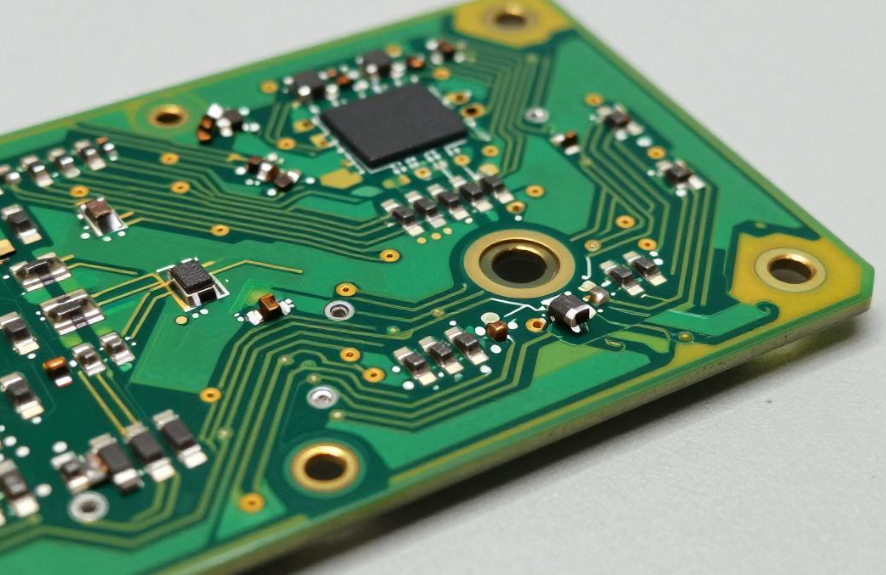
During hardware product development and iteration, industrial, medical, RF, power, and other specialized applications may require special-process PCB technologies such as thick copper, embedded resistors, resin-filled vias, metal-core structures, or high-frequency materials.
When estimating project costs, engineers often focus on the price of the laminate or copper material while overlooking the additional expenses created by specialized manufacturing processes. As a result, the final quotation can differ significantly from the initial budget, potentially affecting procurement schedules and product development plans.
For accurate PCB cost analysis, engineers need to evaluate the entire manufacturing chain, including materials, process setup, engineering, inspection, yield, logistics, and production volume. Understanding how these costs are generated makes it easier to identify optimization opportunities before the design enters production.
1. Material Costs: Understanding the Premium of Specialized Materials
Material cost is the most visible component of PCB manufacturing cost, but it is not necessarily the largest contributor to the final price of a special-process board.
A standard FR-4 PCB generally benefits from mature supply chains and high-volume purchasing. In contrast, specialized materials may have fewer qualified suppliers, longer procurement cycles, or higher minimum order quantities.
Metal-Core and Thermally Enhanced PCBs
For aluminum-core or copper-core PCBs, the metal substrate itself can cost more than conventional FR-4. The dielectric layer must also provide the required electrical insulation and thermal performance.
The final material cost may therefore depend on:
- Metal-core type and thickness
- Dielectric thermal conductivity
- Dielectric thickness
- Insulation requirements
- Copper foil thickness
- Surface finish
- Required thermal-performance specifications
When only the metal substrate price is considered, the actual material budget can be underestimated.
Embedded Resistors and Capacitors
Embedded-passive PCBs may require specialized resistive or capacitive materials. These materials can have different procurement conditions from conventional PCB laminates.
Material availability, supplier qualification, minimum order quantities, shelf life, and customization requirements can all affect the effective material cost.
Prepreg, Dry Film, and Process Chemicals
Specialized PCB materials may also require compatible prepregs, dry films, bonding materials, plating chemistry, or other consumables.
A material should therefore be evaluated as part of a complete process system rather than as an isolated laminate price.
For example, a high-Tg or low-loss material may require a specific prepreg system and lamination profile. Similarly, thick-copper manufacturing may require process conditions that differ from standard copper processing.
2. Process Costs: Setup, Changeover, and Equipment Utilization
For many special-process PCB projects, manufacturing complexity is a major source of incremental cost.
Standard PCB production lines are often optimized for stable, repetitive production. A specialized order may require additional setup, process qualification, or equipment adjustment.
Production Changeover
When a manufacturing line switches between substantially different process requirements, the factory may need to:
- Clean process equipment
- Adjust chemical conditions
- Change production recipes
- Reconfigure tooling
- Verify process parameters
- Run qualification panels
- Perform first-article checks
The actual time depends on the manufacturing line and process. However, when the order quantity is small, setup and changeover costs are distributed across fewer boards, increasing the effective cost per unit.
This explains why a small prototype run can have a significantly higher unit price than a larger production order using the same technical specification.
Equipment Wear and Maintenance
Special processes can also increase equipment consumption and maintenance requirements.
For example, deep drilling, high-aspect-ratio structures, laser drilling, via filling, and thick-copper processing may require more specialized tooling or tighter equipment control.
Potential cost factors include:
- Drill and routing tool consumption
- Laser equipment utilization
- Plating equipment maintenance
- Etching-system maintenance
- Additional cleaning
- Tool replacement
- Equipment qualification
These costs are often not visible when engineers compare only material prices.
Skilled Labor and Process Engineering
Specialized boards may require additional process-engineering involvement.
Engineers may need to monitor process windows, review cross-sections, adjust parameters, analyze defects, and coordinate multiple manufacturing steps.
Therefore, PCB process optimization is not simply about reducing labor. It is about simplifying unnecessary process complexity while maintaining the required electrical, thermal, mechanical, and reliability performance.
3. Inspection and Quality Costs: Specialized Verification Requirements
Inspection requirements can add significant cost to technically complex PCB projects.
A standard PCB may rely primarily on AOI, electrical testing, dimensional inspection, and routine visual inspection. Special-process boards may require additional verification methods.
Depending on the design, these can include:
- Metallographic cross-section analysis
- Controlled-impedance testing
- Thermal conductivity testing
- Embedded-resistor measurement
- Dielectric-property verification
- Solderability testing
- Thermal shock testing
- Thermal cycling
- Humidity testing
- Insulation testing
The required inspection scope should be defined according to the actual product risks rather than automatically adding every available test.
Cross-Section Analysis
Cross-section analysis can be particularly important for multilayer and special-process PCBs.
It can be used to verify:
- Copper thickness
- Plating quality
- Via structure
- Resin-filled vias
- Dielectric thickness
- Layer registration
- Internal defects
For a prototype or NPI build, additional cross-sections may be justified to validate the manufacturing process. During stable mass production, the sampling frequency can be adjusted according to the quality-control plan.
Reliability Testing
High-reliability applications may require thermal cycling, thermal shock, humidity exposure, or other reliability tests.
However, test conditions should be based on the product application, applicable standards, customer requirements, and qualification objectives rather than assuming that one universal test condition applies to every PCB.
A clear test plan helps engineers distinguish between essential qualification testing and optional verification, which can improve PCB cost control without compromising product reliability.
4. Yield and Scrap Costs: The Hidden Part of PCB Manufacturing Cost
Yield is an important component of PCB manufacturing cost, especially for complex designs.
A special-process PCB may involve multiple manufacturing stages. Every additional process creates another opportunity for defects, rework, or scrap.
Potential causes include:
- Material defects
- Registration errors
- Drilling defects
- Plating variation
- Via-filling problems
- Lamination defects
- Surface-finish issues
- Dimensional problems
- Electrical failures
The actual yield depends heavily on the design, process maturity, manufacturer capability, production volume, and quality requirements. Therefore, fixed yield percentages should not be treated as universal industry values.
Why Low-Volume Production Can Be Expensive
Consider a production process with several fixed engineering and setup costs.
If those costs are spread across 50 boards, the cost contribution per board is much higher than when the same costs are spread across 5,000 boards.
This is why PCB production volume has a direct effect on effective unit cost.
A simplified model is:
Effective Unit Cost = Total Production Cost ÷ Accepted Quantity
Total production cost may include material, processing, engineering, testing, setup, logistics, and applicable scrap or replacement costs.
5. Engineering Costs: The Additional Work Behind Special Processes
Engineering effort is another important component of PCB cost analysis.
A standard PCB may require relatively straightforward CAM preparation. A special-process board can require significantly more engineering analysis before manufacturing.
Examples include:
- Stackup development
- DFM analysis
- Impedance calculation
- Blind and buried via planning
- Laser-drilling strategy
- Resin-plugging process review
- Embedded-resistor analysis
- Thermal design review
- Copper distribution analysis
- Manufacturing capability verification
Engineering teams may also need to create specialized process documentation, manufacturing drawings, inspection plans, and process-control instructions.
Why DFM Matters to Cost
A design that is technically functional but difficult to manufacture can increase production cost.
For example, unnecessarily small features, excessive process combinations, extremely tight tolerances, or difficult-to-control copper distributions may require additional processing and inspection.
Early PCB DFM review can identify these risks before production and provide opportunities to simplify the design.
6. Supply Chain and Delivery Costs
Specialized materials and processes can also increase procurement and logistics complexity.
Some high-performance laminates, metal-core materials, specialty prepregs, or functional films may have longer procurement cycles than standard FR-4.
Potential supply-chain costs include:
- Special material procurement
- Minimum-order requirements
- Supplier qualification
- Inventory management
- Customs and import handling where applicable
- Expedited transportation
- Special packaging
- Storage requirements
If a material is not available locally and must be sourced specifically for a project, the material lead time can become a significant factor in the overall project schedule.
For urgent projects, expedited logistics may reduce the procurement lead time but increase transportation cost.
Engineers should therefore consider both price and lead time when evaluating PCB procurement options.
7. How Multiple Special Processes Increase Total Cost
One of the most important cost principles is that individual process premiums can interact with one another.
For example, a board combining:
thick copper + embedded resistor + resin-filled vias + HDI + high-reliability testing
may not simply cost the sum of five independent process charges.
Each additional process can affect:
- Material compatibility
- Lamination
- Registration
- Drilling
- Plating
- Inspection
- Yield
- Engineering workload
The interaction between processes can therefore create additional engineering and manufacturing complexity.
This is why engineers should evaluate the complete process flow instead of calculating each special feature independently.
8. Practical Strategies for Reducing Special-Process PCB Costs
Cost reduction should begin during the design stage rather than after receiving the final quotation.
Simplify Special Processes Where Possible
If a special process is not essential to product performance, consider whether a conventional manufacturing method can achieve the same technical objective.
For example, avoid combining multiple specialized processes unless each one provides a clear functional benefit.
This does not mean removing advanced technology simply to reduce cost. The objective is to eliminate unnecessary process complexity while preserving required performance.
Optimize PCB Production Volume
For PCB production volume, engineers should consider the relationship between setup costs and unit cost.
Instead of repeatedly ordering very small batches, a larger planned production run may distribute fixed engineering and setup costs across more boards.
However, inventory cost, product lifecycle, demand uncertainty, and engineering-change risk should also be considered.
Complete DFM Before Quotation
Early DFM review can identify:
- Manufacturing-limit violations
- Unnecessary special processes
- Excessively tight tolerances
- Difficult stackup structures
- Complex via requirements
- Poor copper distribution
- Testing requirements that may be unnecessary
Resolving these issues before quotation can reduce both manufacturing cost and schedule risk.
Select a Supplier With Relevant Process Experience
Supplier capability is an important part of PCB cost control.
A supplier with established experience in a particular special process may have better-developed process recipes, equipment capability, engineering knowledge, inspection procedures, and quality records.
The objective is not simply to choose the lowest initial quotation. Engineers should evaluate the relationship between quoted price, process capability, yield, lead time, quality requirements, and potential rework.
9. A Complete Special-Process PCB Cost Structure
A practical cost model can be divided into several categories:
| Cost Category | Typical Cost Drivers |
|---|---|
| Materials | Laminate, copper, prepreg, specialty materials |
| Consumables | Dry film, plating chemicals, resin, protective materials |
| Process | Drilling, plating, etching, lamination, via filling |
| Setup | Changeover, tooling, equipment preparation |
| Engineering | CAM, DFM, stackup, process engineering |
| Inspection | AOI, electrical testing, cross-section, impedance |
| Reliability | Thermal, humidity, mechanical, or application-specific testing |
| Yield | Scrap, rework, replacement, process loss |
| Logistics | Packaging, transportation, expedited delivery |
| Procurement | Special sourcing, minimum quantities, inventory management |
This framework allows engineers to move from a simple material-price estimate to a more realistic PCB cost analysis.
Conclusion
The cost of a special-process PCB is determined by much more than the price of the base material. Specialized materials, consumables, production setup, equipment utilization, engineering work, inspection, reliability testing, yield, procurement, and logistics can all contribute to the final manufacturing cost.
For engineers, the most effective approach is to evaluate the complete manufacturing process before the project enters production. By simplifying unnecessary processes, completing PCB DFM early, optimizing PCB production volume, and selecting suppliers with relevant manufacturing experience, companies can better control total project costs without compromising required PCB performance.
Kingda can support customers with special-process PCB engineering evaluation, DFM review, material and stackup selection, prototype validation, quality inspection, and mass production, helping engineers understand the complete cost structure from design through manufacturing.