AI PCBA Manufacturing: How Artificial Intelligence Is Transforming Assembly
The Shift Toward AI PCBA Manufacturing
The printed circuit board assembly industry has supported electronics production for decades, but the way factories operate is changing. Driven by stronger domestic support for the integrated circuit industry and by growing demand for complex electronic products, PCBA factories are under pressure to raise quality, shorten lead times, and use resources more efficiently. The answer that many manufacturers are turning to is AI PCBA manufacturing, in which artificial intelligence participates in process control, inspection, planning, and equipment maintenance instead of leaving every decision to human operators. Buyers who understand this shift can select partners whose quality systems improve with every batch.
The transformation is not about replacing people with robots in a single step. It is about connecting machines, sensors, and software so that the factory can see what is happening in real time and respond immediately. A well-run assembly plant already collects data from solder paste printers, placement machines, reflow ovens, and inspection systems; artificial intelligence turns that data into decisions that improve the next board, the next batch, and the next shift.
This article explains how artificial intelligence is entering PCBA factories, where it creates the largest measurable benefits, and what buyers should expect when their assembly partner adopts intelligent manufacturing methods.
Why Traditional Process Control Reaches Its Limits
Conventional quality control depends on the attention and experience of operators. People inspect boards, monitor machines, and react to alarms, but human performance is limited: attention fades during long shifts, judgment varies between individuals, and some problems cannot be detected by eye at all. Vibration from nearby equipment, a gradual change in solder paste viscosity, or a nozzle beginning to clog can degrade quality long before a human notices anything wrong.
These hidden conditions matter because modern boards leave little room for error. Fine-pitch components, small BGAs, and dense layouts fail in ways that are invisible until testing or field use. Artificial intelligence addresses the gap by watching the process continuously: sensors record temperature, pressure, position, and image data at every station, and algorithms compare each new measurement against the patterns that predict good and bad results. When a deviation appears, the system flags it in seconds instead of at the end of the shift.
The evolution of machine roles is also changing. In the past, equipment acted as a labor tool that repeated programmed motions. In an intelligent factory, machines behave more like partners: they report their own condition, warn about developing faults, and adjust parameters within defined limits, while engineers supervise the system and handle exceptions that require judgment.
Where AI Adds Value in the PCBA Factory
Quality inspection is the most visible application. Automated optical inspection and X-ray machines generate thousands of images per hour, and AI-based image analysis can be trained to recognize soldering defects, component placement errors, and subtle anomalies that rule-based programs miss. The system learns from real production examples, so its accuracy improves as more boards pass through the line, and it reduces both escapes and false calls that waste the time of repair technicians.
Process control is the second major area. Solder paste printing, component placement, and reflow soldering all have parameters that interact with materials, board design, and environmental conditions. Machine learning models relate the measured results to the process settings and warn when a combination drifts toward an out-of-control condition. The factory can then correct the stencil cleaning frequency, the placement pressure, or the reflow profile before defects are created, which is far cheaper than repairing boards after soldering.
Equipment maintenance also becomes predictive. Vibration sensors and current monitors on placement machines and ovens feed models that recognize the early symptoms of wear. Maintenance is scheduled when the data says it is needed rather than on a fixed calendar, which raises equipment utilization and reduces sudden stoppages. For a factory running multiple lines, the difference in output between reactive and predictive maintenance can be substantial over a year.
AI Across the Whole Production Chain
AI PCBA manufacturing extends beyond the assembly line into planning and supply. On the planning side, production schedules are built from real capacity data, machine availability, and component delivery dates, so the factory can promise realistic lead times and detect conflicts early. During production, the system tracks work in progress and rebalances the line when a machine slows down, which keeps the whole batch moving instead of stopping at the slowest station.
Component quality and inventory benefit as well. Incoming inspection data, batch numbers, and supplier performance can be analyzed to identify unreliable parts before they reach the line. Inventory models suggest the right stock levels for long-lead components and flag parts that are at risk of obsolescence. In an industry where a single missing component can delay an entire order, this visibility protects delivery performance.
Testing data closes the loop. When functional test results are linked back to the process data of each individual board, engineers can trace a failure to the exact machine, material batch, or process window that caused it. This traceability is exactly what high-reliability customers in automotive, medical, and industrial markets require, and it is far easier to provide when the factory collects data automatically rather than on paper forms.
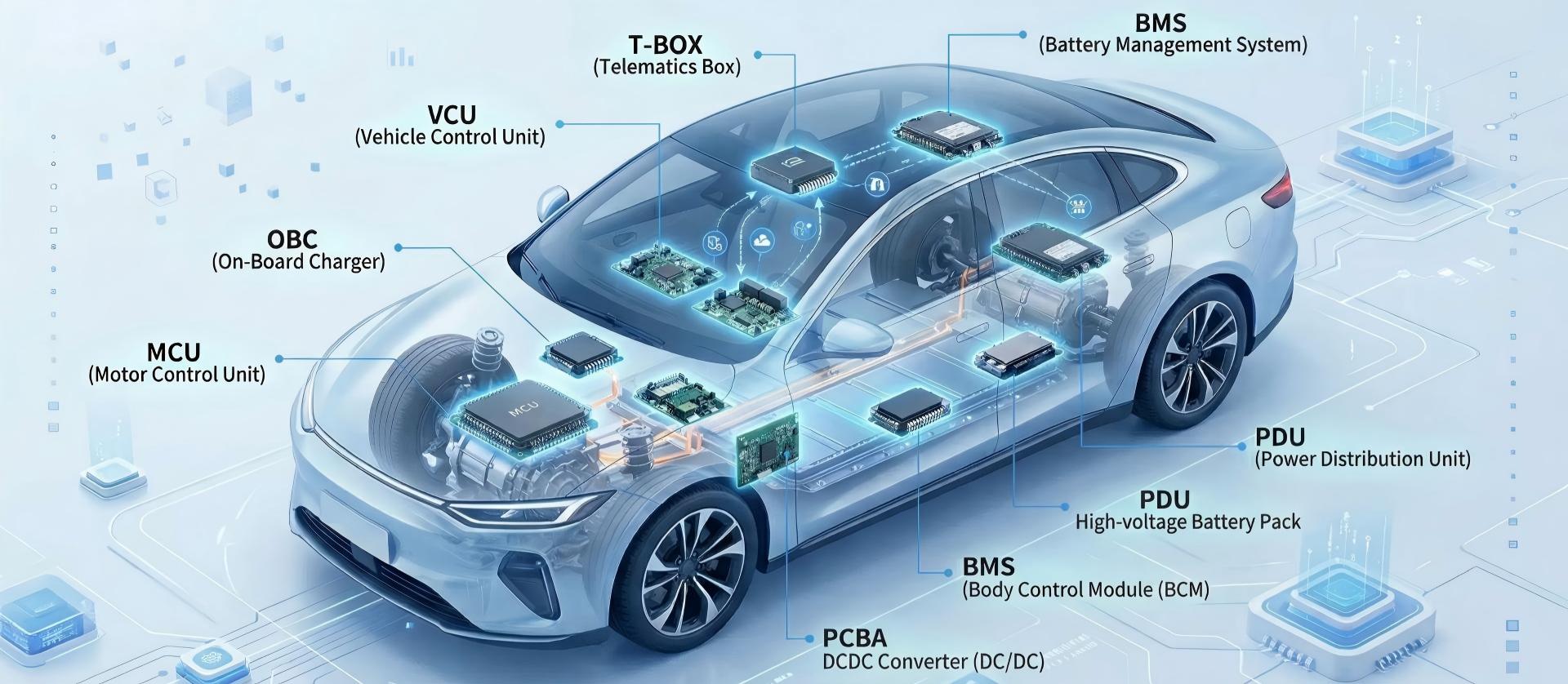
Challenges on the Road to the Smart PCBA Factory
The move to AI PCBA manufacturing is not instant or free. The first challenge is data: algorithms are only as good as the records they learn from, so factories must standardize how measurements and defects are captured before intelligent systems can be deployed. The second challenge is integration, because printers, mounters, ovens, and testers from different vendors use different interfaces, and connecting them into one data stream requires engineering effort.
People remain the third challenge. AI systems change the role of technicians from manual inspectors to data analysts, which requires training and a cultural shift. Factories that succeed treat the transformation as a long-term program: they start with one line, prove the benefit, and then expand. Factories that buy software without fixing their data discipline usually see little improvement, which is why buyers should evaluate the maturity of the whole process rather than the presence of a few smart machines.
Investment cost also matters. Sensors, computing, and software licenses add to the capital base of a factory, and the return appears gradually through higher yield and utilization. In practice, well-implemented AI pays for itself through fewer defective boards, less rework, and better on-time delivery, but the economics depend on volume and product mix. For prototype and low-volume work the benefit is smaller, while high-volume assembly shows the strongest gains.
Inspection intelligence illustrates the practical gain. Modern solder paste inspection and AOI systems classify defects such as insufficient solder, bridges, tombstoning, and component shift, and AI-assisted review groups the images by root cause so that process engineers see patterns instead of isolated failures. When the same defect appears on several boards, the system correlates it with the machine, the nozzle, or the material batch that produced it, turning quality data into a direct instruction for corrective action.
What Buyers Gain From an Intelligent Assembly Partner
For electronics buyers, the benefits of AI PCBA manufacturing appear in the metrics that matter most. Higher first-pass yield means fewer boards are rejected and delivery dates are more predictable. Better process control means that a batch of ten thousand boards behaves like the approved first article instead of drifting over time. And automatic data collection means the customer receives honest, complete records of inspection and test results without extra cost.
Intelligent factories also handle engineering changes faster. When a component is substituted or a design revision arrives, the system helps the process engineers adjust the affected steps quickly and checks that the new configuration produces boards within specification. This responsiveness shortens the development cycle for new products and reduces the risk of launching with an unproven process.
Selecting a partner for artificial intelligence PCBA work should therefore include a look at the factory’s data systems, not only its machine list. Ask how defects are recorded, how test data is linked to production, and what reports the customer receives. The depth of these answers reveals whether the supplier has truly adopted intelligent manufacturing or simply purchased new equipment without changing its methods.
How gopcb Applies Intelligent Manufacturing
gopcb combines modern SMT lines, automated inspection, and structured data collection in an integrated production system that serves customers across automotive, industrial, energy, medical, and communications products. The company connects its SMT PCB assembly lines with AOI, X-ray, and electrical test stations so that quality data follows every board, and engineering teams use that data to keep processes stable from prototype to volume production.
Because fabrication, assembly, and testing are managed under one roof, gopcb can combine the strengths of intelligent manufacturing with the simplicity of a single point of contact, including PCBA testing matched to each product’s reliability class and industrial PCBA experience for demanding applications. Send gopcb your Gerber files and bill of materials to receive a free DFM review and a turnkey PCB assembly quotation for your next production run.