PCBA Quotation Process: A Complete Guide for Electronics Buyers
Why the PCBA Quotation Process Deserves Careful Attention
More electronics companies are moving from buying bare boards and components separately to ordering complete PCBA services, because a single assembly partner saves time, reduces interfaces, and simplifies quality control. But before a project begins, the buyer and the factory must agree on price, scope, and expectations, and that agreement is reached through the PCBA quotation process. A quotation is not just a number; it is a technical document that shows how the supplier understands the design, the materials, and the process.
A good quotation process follows clear standards even though every project is different. Not every manufacturer is qualified for every product, so the buyer should evaluate each candidate against the actual requirements of the board: layer count, technology, volumes, quality class, and delivery target. When the quotation stage is handled professionally, later surprises on price and schedule become rare. When it is rushed, hidden costs appear after production starts and disputes are difficult to resolve.
This guide explains what happens during a typical PCBA quotation process, what information the factory needs, how the price is built, and how buyers can compare quotations fairly. The same steps apply to prototype runs, low-volume batches, and high-volume production, with the emphasis shifting as quantities grow.
Information the Supplier Needs Before Quoting
The quality of a PCBA quotation depends directly on the quality of the input files. A complete package normally includes the Gerber or ODB++ files for the board, the bill of materials with manufacturer part numbers, assembly drawings and component placement files, and any special requirements such as impedance control, conformal coating, or X-ray inspection. The buyer should also state the expected quantity, the target lead time, and the quality standard, because a prototype quote for fifty boards is completely different from a production quote for fifty thousand.
Missing information is the most common reason for quotation delays and inaccurate pricing. If the supplier must guess the component package type, the copper weight, or the surface finish, the quote will carry extra contingency. Professional buyers prepare the files before contacting factories, and they confirm that the BOM shows the correct quantities, reference designators, and preferred manufacturers. Clear files allow the engineer to review the design once and produce an accurate price the first time.
Communication is part of the quotation itself. The best results come from direct dialogue about the product, the application, and the risks, because frequent communication reduces the chance of misunderstanding. During the PCBA quotation process, buyers should ask how the factory handles difficult parts, what documentation will be provided with the shipment, and how engineering changes are managed after the order starts.
How the PCBA Quote Is Built
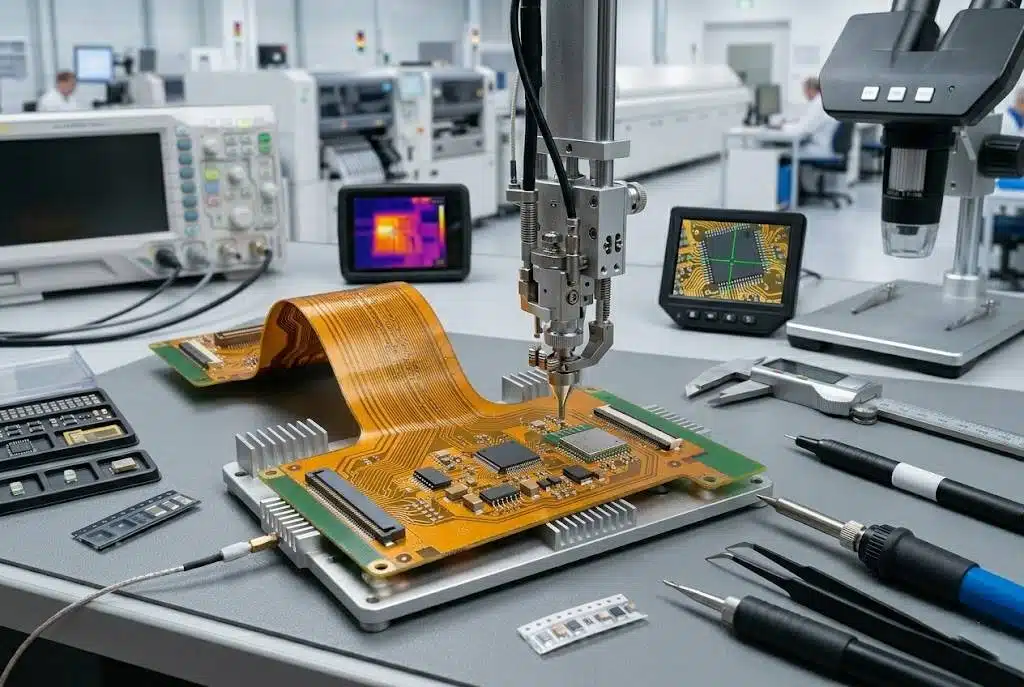
A professional quotation separates the cost into clear parts so that the buyer can see where the money goes. The first part is the bare board: panel size, layer count, material, copper weight, surface finish, and special processes determine the fabrication cost. The second part is the assembly: stencil, solder paste, placement time, reflow or wave soldering, and inspection labor all depend on the number and type of components. The third part covers components themselves when the factory offers turnkey service, and the fourth part includes testing, packaging, and logistics.
Before the price is set, a capable supplier performs a design for manufacturability review. The engineer checks pad sizes against component footprints, verifies that the stencil apertures suit the parts, confirms that test points exist for the specified test method, and flags anything that will cause yield problems. This review is usually free, and it protects both sides: the factory avoids building a design that cannot be assembled reliably, and the buyer avoids paying for boards that fail in production. DFM findings should be listed in the quotation notes so that the buyer understands every assumption.
An accurate quote also depends on process capability. A factory that only runs SMT lines may not be suitable for a design with large through-hole connectors, while a factory without X-ray or AOI experience may struggle with fine-pitch BGA packages. During quotation, the supplier should honestly state which processes are standard and which require special setup, because capability gaps discovered after the order starts are expensive for everyone.
BOM Quality and Component Sourcing
Components usually represent the largest share of a turnkey PCBA quotation, so BOM quality decides cost and schedule more than any other factor. The factory needs manufacturer part numbers, not only generic descriptions, because distributors price parts by exact reference. Parts with long lead times, such as certain connectors, power ICs, and automotive-grade components, should be identified during quotation so that procurement can start early. Obsolete parts found at this stage can be replaced through a formal change request before the design is committed.
Component pricing changes with market conditions, and honest suppliers keep their component quote valid for a defined period. The buyer should ask whether the price includes tariffs, what happens when a part goes end of life, and how substitution is handled. A factory with an established purchasing channel can often secure better pricing and genuine parts through authorized distributors, which matters because counterfeit components are a growing problem in the electronics supply chain.
During the PCBA quotation process, the bill of materials also affects the assembly price. Components with fine pitch, high pin counts, or special handling requirements increase placement time and inspection effort. If the design includes press-fit, hand-soldered, or conformal-coated parts, the supplier should state the additional labor in the quotation rather than absorbing it silently. A complete BOM review at the quoting stage turns the assembly components procurement into a predictable part of the project.
Cost Factors That Change the Quotation
Several variables move the final price of an assembled board. Panel utilization is one of the largest: a board size that uses the standard panel efficiently costs much less per piece than one that wastes a large border. Layer count and material grade influence fabrication cost directly, while copper weight and surface finish add smaller but real increments. On the assembly side, the number of unique components, the placement density, and the percentage of fine-pitch or BGA parts set the machine time and the inspection effort.
Testing strategy is often underestimated. Visual inspection, automated optical inspection, and X-ray each add cost, and functional testing requires fixtures and programming time. During the PCBA quotation process the buyer should specify the test method that matches the reliability requirement of the product, because a cheap quote that skips testing can become an expensive field failure. Ask the factory to show the inspection points and the expected test coverage in the quotation document.
Quantity changes the unit price more than any other single factor. Prototype runs pay for engineering setup, stencil production, and low machine utilization, so the unit price is high. As volume rises, setup cost is spread over more boards and material pricing improves, which is why multi-level quotations for prototype, pilot, and production quantities help buyers plan product costs realistically.
Evaluating and Negotiating the Quotation
Comparing quotations requires more than looking at the bottom line. The buyer should check what is included: whether components are priced at current market rates, whether testing is part of the standard flow, what documentation is delivered, and how the factory handles defective parts. Two quotes for the same design can differ by thirty percent simply because one includes AOI, functional testing, and full traceability while the other offers only visual inspection.
Negotiation during the PCBA quotation process works best when both sides understand the cost structure. Buyers can reduce price by simplifying the design, accepting standard materials, consolidating quantities, or giving the factory flexibility on delivery dates. Asking for small concessions that match real process savings, such as panel-friendly board dimensions or standard surface finish, is more productive than demanding an arbitrary discount that the factory will recover elsewhere.
Signing the order should follow a clear written agreement. The contract should include the quotation validity, the accepted files and revision, the delivery schedule, payment terms, quality criteria, and the process for engineering changes. Keeping the documentation consistent protects both parties when a project spans months, and it makes the quotation a reliable reference for the whole production run.
How gopcb Handles the PCBA Quotation Process
gopcb treats quoting as an engineering exercise rather than a sales exercise. When the Gerber files and bill of materials arrive, the engineering team reviews the design for manufacturability, checks component availability and pricing, selects the correct process for the board technology, and returns a structured quotation with every assumption stated. Buyers receive honest feedback on the design before production, so the quote reflects the real cost of building the product correctly.
As an integrated PCB manufacturing and PCB assembly partner, gopcb can quote board fabrication, component sourcing, SMT placement, testing, and box build in one document, which removes the gaps that appear when several suppliers are involved. Every batch is inspected and reported under a documented quality system, and PCBA testing is matched to the reliability needs of the product. Send gopcb your files and volumes through the turnkey PCB assembly service page to receive a detailed quotation with DFM feedback and a realistic schedule.