
Solder Paste Aperture Area Ratio and Release
The area ratio is the aperture area divided by the aperture wall area. It is the single number that predicts whether a stencil will release paste well, and it is easier to calculate than to measure.
Why the Ratio Matters
When the stencil separates from the board, the paste must transfer from the aperture wall to the pad. The adhesion to the pad competes with the adhesion to the wall.
As the aperture gets smaller, the wall area rises relative to the volume and the paste prefers to stay on the wall. Below a certain ratio the release becomes unreliable, and the deposit is short. Our paste volume notes describe how the resulting deposit is measured.
Calculating It
For a rectangular aperture the ratio is the area of the opening divided by the total wall area, which is the perimeter multiplied by the stencil thickness.
The ratio improves as the aperture gets wider and as the stencil gets thinner. That is why fine pitch work uses thinner stencils, and why a step stencil is used when part of the board needs more volume. Our land pattern notes describe the pad that goes with it.
The Practical Limit
The commonly quoted limit is a ratio that the process can hold in routine production, and the figure depends on the stencil technology, the paste and the printer settings rather than being a physical constant.
The limit should therefore be established for the specific combination and confirmed by measuring the deposit on the product, not taken from a general table. Our paste inspection notes describe the measurement.

Improving the Release
The measures are a thinner stencil, a trapezoidal or laser cut wall finish, a paste with a lower tack, and a printer separation profile that pulls rather than peels.
The aperture corners also matter: a rounded aperture releases better than one with sharp corners because the paste does not key into the corner. The aperture size should be chosen with the shape rather than independently of it.
Compensating for a Poor Ratio
Where the ratio cannot be improved, the aperture can be enlarged beyond the pad and the resulting bridging risk managed, or the paste volume can be made up elsewhere.
Enlarging the aperture beyond the pad is a compromise that trades a short deposit for a bridging risk, and the decision should be made with the joint requirement in mind. Our joint criteria notes describe how the requirement is stated.
Step Stencils and Mixed Boards
A step stencil has different thicknesses in different areas, so that a fine pitch part gets a thin section and a heavy connector gets a thick one.
The steps require an etching or a milling process and they create a transition region where the squeegee behaves differently. The transition should be placed where there are no fine features. Our fabrication notes notes list the attributes that should be stated.
Verification
The verification is the deposit volume measured on the product at the fine pitch apertures, at the start of the run and at intervals.
Where the deposit is short on the smallest aperture and correct elsewhere, the area ratio is the cause and the answer is a thinner stencil or a different aperture rather than more pressure. Our inspection notes describe the joint check that follows.
Process Control and Verification
On a design of this kind, deposit is the item that decides how the rest of the board is arranged. Running a first article through the same checks as the production panel confirms that the two agree, and that comparison is the cheapest form of process control available at prototype stage. Keeping a sample from the panel turns a dispute into a measurement, because the same coupon can be re-examined by both parties without rebuilding the batch.
Reviewing the design before the data is released is cheaper than correcting it after the panel is in the tank, because every step downstream inherits the decision made at the front end. Documenting the assumption is part of the design work, and a short note on the drawing prevents a question that would otherwise arrive a day later and cost a day of schedule.
The process window is set by the narrowest step in the flow, so an improvement anywhere else shows up as margin rather than as yield until that step is addressed. A short note on the drawing about handling, storage or packaging is often worth more than an extra decimal place on a tolerance.
Where a value sits close to a process limit, the drawing should say so, since the shop can then open the process window rather than working to a nominal figure that carries no tolerance. A stack-up that is drawn rather than described removes most of the ambiguity from a quotation, and it lets the fabricator price the board against the dielectric and copper weights that will actually be used.
Process Control and Verification
On a design of this kind, deposit is the item that decides how the rest of the board is arranged. Running a first article through the same checks as the production panel confirms that the two agree, and that comparison is the cheapest form of process control available at prototype stage. Keeping a sample from the panel turns a dispute into a measurement, because the same coupon can be re-examined by both parties without rebuilding the batch.
Reviewing the design before the data is released is cheaper than correcting it after the panel is in the tank, because every step downstream inherits the decision made at the front end. Documenting the assumption is part of the design work, and a short note on the drawing prevents a question that would otherwise arrive a day later and cost a day of schedule.
Process Control and Verification
On a design of this kind, deposit is the item that decides how the rest of the board is arranged. Running a first article through the same checks as the production panel confirms that the two agree, and that comparison is the cheapest form of process control available at prototype stage. Keeping a sample from the panel turns a dispute into a measurement, because the same coupon can be re-examined by both parties without rebuilding the batch.
Reviewing the design before the data is released is cheaper than correcting it after the panel is in the tank, because every step downstream inherits the decision made at the front end.
Process Control and Verification
On a design of this kind, deposit is the item that decides how the rest of the board is arranged. Running a first article through the same checks as the production panel confirms that the two agree, and that comparison is the cheapest form of process control available at prototype stage. Keeping a sample from the panel turns a dispute into a measurement, because the same coupon can be re-examined by both parties without rebuilding the batch.
A first article check confirms that the process and the drawing agree on the points listed above, and that the coupon data supports the values used in the design.
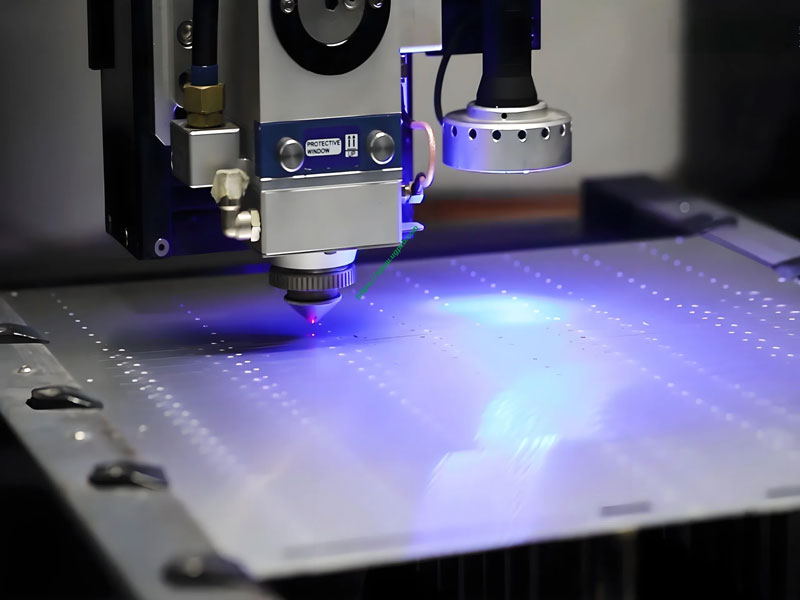
Where a measurement falls outside the expected window, the sample is retained so that the cause can be established before the balance of the batch is released.
FAQ
Is the area ratio the only criterion? It is the dominant one. The wall finish, the paste and the separation profile all shift the limit for a given ratio.
Can a thin stencil be used everywhere? It can, and the through-hole or heavy parts then receive less paste than they need. That is the case a step stencil exists for.
What does gopcb provide for aperture design? We provide area ratio calculation for every aperture, stencil thickness selection from the smallest feature, rounded aperture geometry, step stencil definition with the transition placed clear of fine features, and deposit measurement on the product rather than reliance on a general limit.