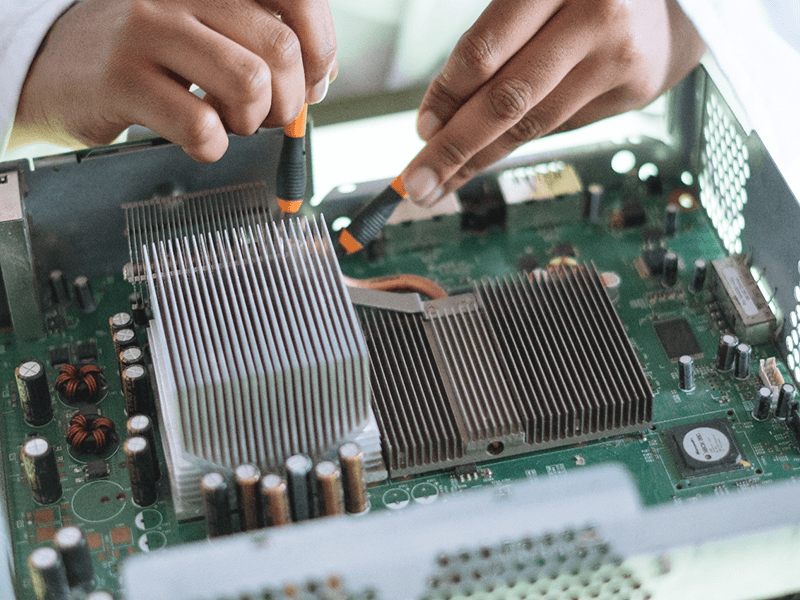
Dimensional Verification of Assembled Boards An assembled board has dimensions, and they matter as soon as it has to fit into an enclosure, sit on a mating connector, or pass a camera module through a hole. Dimensional verification on an assembly is different from dimensional inspection of a bare board,…
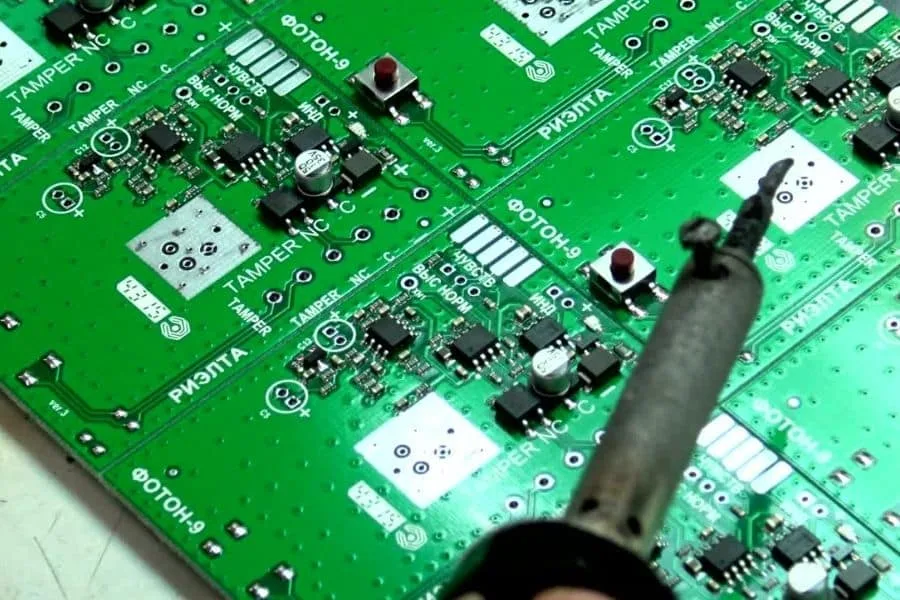
Gold Embrittlement in Solder Joints: Thickness Limits and Control Gold is a finish that protects a surface before assembly and then becomes a liability during it. Dissolved into molten alloy it forms hard intermetallic plates that sit exactly where the joint carries its highest strain, and the resulting failure appears…
High-Mix Scheduling and Changeover Discipline In a high-mix shop the machines rarely run long enough for their rated speed to matter. What matters is how often they stop and how long they take to start again. A line that changes over six times a shift spends a large part of…
Mixed-Technology Assembly: Process Sequence and Control A mixed-technology assembly carries surface mount parts and through-hole parts on the same board, and the sequence in which they are attached is a design decision rather than a matter of shop preference. The sequence determines how many thermal excursions the assembly sees, which…
Incoming Inspection: PCB Incoming Laminate Inspection Before Fabrication Laminate arrives with a certificate and a part number, and neither proves that the material in the box matches what the stack was designed around. Incoming inspection exists to close that gap, because a laminate with a lower glass transition temperature or…
Zone Temperature: Design Rules and Process Limits A reflow oven’s zone temperature is the air temperature the controller holds in that zone, measured by a thermocouple mounted somewhere inside it. It is not the board temperature, and on a cold start or a light load it is not even a…
Rework Heating Profiles for Fine Pitch Assembly Repairs Rework removes the protection that a controlled reflow profile provides and replaces it with a hand held tool, a judgement about when the joint is ready and a thermal history that nobody records. On fine pitch assemblies, that difference decides whether the…
First Pass Yield and the Metrics That Support It A yield number on its own says almost nothing. Ten percent of boards failing at final test could mean a stable process with a tight limit, or a process that has been degrading for a month, or a test fixture that…
Dye and Pry Analysis for Solder Joint Crack Detection Dye and pry is the test that answers a question X-ray cannot: where exactly did a solder joint crack, and how far has the crack travelled. It is destructive, it takes a day, and it produces a fracture surface that either…
Microsection Preparation Technique for PCB Analysis A microsection is the only way to see inside a plated hole, and the quality of the section decides whether the answer is real or an artefact of preparation. A badly ground sample can round a crack until it disappears, smear copper across an…