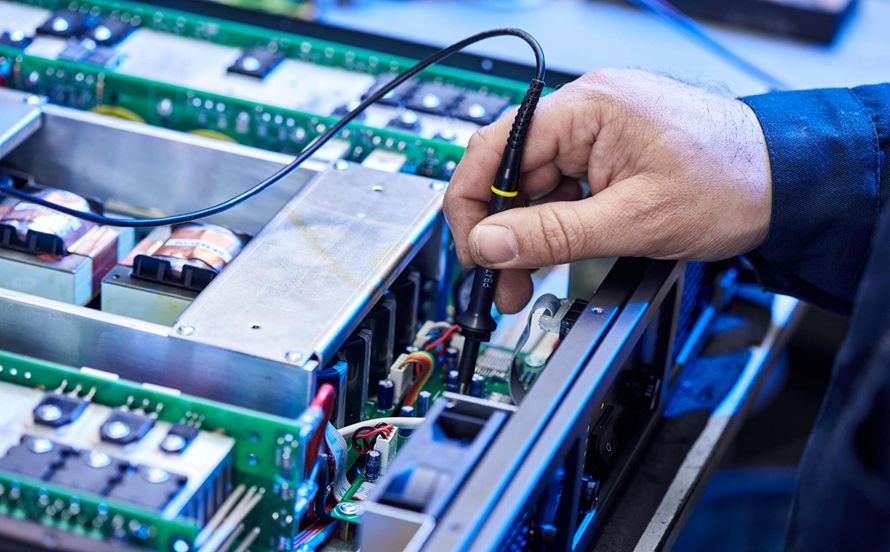
Thermal Interface Material Application A thermal interface material fills the microscopic gap between two surfaces so that heat can cross it, and its performance depends on the thickness of that layer as much as on its conductivity. A material with a high conductivity applied too thickly performs worse than a…
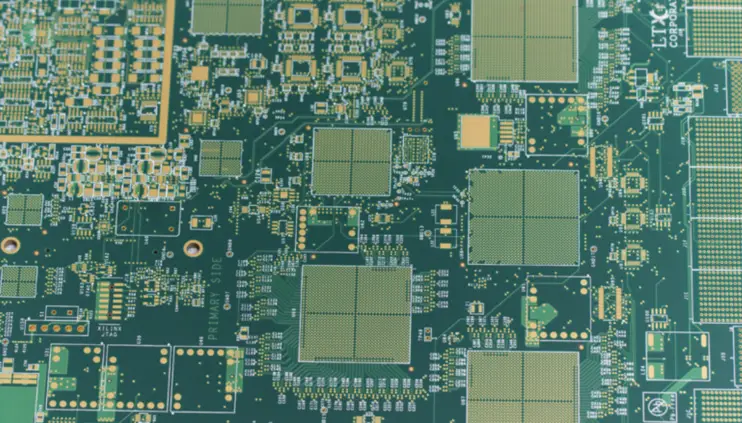
PCB Edge Clearance and Routing Keepout Rules Every board has an edge, and almost every manufacturing step treats that edge as a boundary that copper, components and tooling must respect. Edge clearance is the distance held between the outermost copper and the physical outline of the board, while the routing…
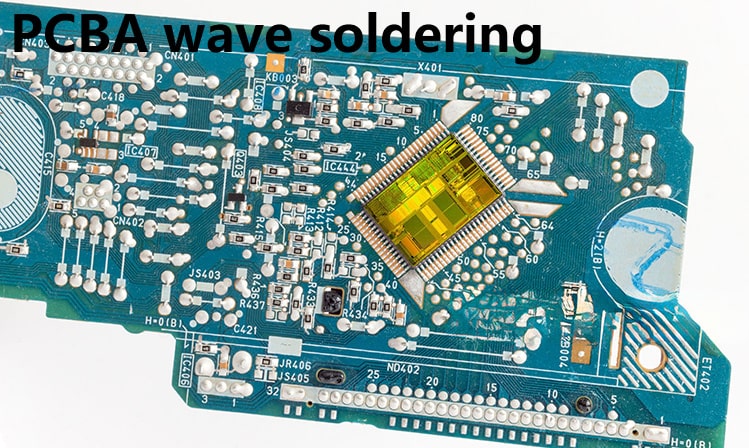
Cleaning After Wave Soldering A wave soldered board leaves the machine with flux residue on the underside and often on the top, and whether it has to be removed depends on the flux and on the product. The decision is the same one that applies to a reflowed board, with…
Adhesive and Coating Compatibility Adhesives and coatings are usually selected for their own properties and then asked to coexist on the same board. Where they do not, the failure appears as poor adhesion, a cure that never completes or a coating that will not cover a staked component. The interaction…
Inner Layer Oxide Treatment: Adhesion Control Guide Oxide treatment is the step that turns a clean copper inner layer into a surface that prepreg can bond to. The copper is oxidised on purpose so that the surface becomes a rough, chemically active layer that the resin can wet and lock…
Copper Surface Preparation: Plating Adhesion Guide Surface preparation is the least glamorous step in the plating line and the one that decides whether the deposit will stay on the board. Every subsequent process, from the electroless copper to the final finish, depends on the copper underneath being clean, uniformly roughened…
Solder Joint Inspection Frequency and Sampling Inspection frequency is a decision about risk, and the answer is different for a process that is stable and one that has just changed. The plan should be written from the defect history rather than from a habit that has survived several products. A…
Surface Finish and Solderability Compared The surface finish is the interface between the board and the solder, and it decides how well a joint forms and how long the board can be stored before it is assembled. The finishes differ in cost, in flatness, in shelf life and in the…
Component Moisture Sensitivity Levels Explained A moisture sensitivity level is a statement about how long a package may be exposed to ambient air before it must be baked, and it exists because plastic packages absorb water. The level is a property of the package, and the floor life that follows…
Solder Paste Printing Defect Causes Most solder defects are created at the printer, and most of them are visible in the paste deposit before the board ever reaches the oven. Learning to read the deposit is therefore the fastest route to a stable process. The defects fall into a small…