
Solder Joint Inspection Frequency and Sampling
Inspection frequency is a decision about risk, and the answer is different for a process that is stable and one that has just changed. The plan should be written from the defect history rather than from a habit that has survived several products.
A frequency that is too low allows a drift to continue undetected, while one that is too high consumes capacity and attention that would be better spent on the cause. The balance is found by measuring the process.
What Sampling Is For
Sampling detects a change in the process rather than a defect in an individual board, so the statistics of the sample matter more than the number of boards inspected. A sample that is not representative tells nothing.
The sample should be spread across the batch and across the panel, since a defect that occurs at one position will be missed by a sample taken from a single board.
Defect Rate and Sample Size
The sample size needed to detect a change depends on the rate being detected and on the confidence required. Detecting a rare defect requires a large sample, which is a reason to rely on process control for rare defects rather than on inspection.
Where the defect cannot be detected by sampling at a reasonable size, the control has to move upstream to the parameter that causes it. This is the argument for measuring the process rather than the product.
Inspection After a Change
A higher frequency is justified after a change of product, paste, stencil, operator or machine, because the process is not in its proven state. The elevated frequency should be defined with a return to normal.
The change record and the inspection plan should be linked, so that the elevation is lifted when the evidence supports it rather than when the pressure to reduce cost returns.
Process Control and Inspection
Where a parameter is measured and controlled, inspection can be reduced, because the parameter predicts the defect. A printer with a paste volume measurement needs less product inspection than one without.
This relationship should be explicit in the plan: the sampling level follows the level of process control in place. That is the principle behind the parameters described in manufacturing tolerances.
Acceptable Quality Limits
A sampling plan with an acceptable quality limit defines how many defects in a sample are accepted, and it is a commercial compromise rather than a technical guarantee. It should be understood as such.
Where the product is safety related, a sampling plan is inappropriate for the critical characteristic, and the characteristic should be controlled by process or verified on every unit.
Automated Inspection Frequency
An automated station inspects every board, but the programme and the limits still need a frequency of their own: a review interval for false calls, escapes and limit changes. The machine does not remove the need for a plan.
The plan should also define what is done with the data, since a station whose data is not reviewed provides a record and not a control.
Operator Inspection and Attention
Manual inspection is subject to attention limits, so a plan that relies on it for a large volume will fail regardless of the frequency. Visual inspection is best used for the features that cannot be measured automatically.
Rotation, breaks and a defined magnification all support the inspection, and the frequency should reflect the time each board actually requires.
Recording and Response
The results should be recorded by batch so that a trend can be seen, and the response to a finding should be defined in advance. A finding with no defined response becomes a note in a file.
Where a defect is found, the batch should be contained at the point of discovery rather than at the end of the line, which is a reason for placing inspection near the process that creates the defect.
Reviewing the Plan
The plan should be reviewed at a defined interval and whenever the yield changes, with the sample size adjusted from the data. A plan that has never been revised is usually either excessive or insufficient.
The review belongs with the yield analysis that shows where the defects are coming from, as described for yield analysis.
Additional Considerations for This Build
Practical attention to escape rate pays for itself here, because it decides whether the finished board behaves as the drawing intended. Where the requirement is not stated on the fabrication drawing or in the assembly notes, the shop has to assume a default, and that default is rarely the value the design was simulated with. Stating escape rate explicitly, together with the tolerance that applies, removes the assumption and keeps the result predictable from batch to batch.
Process Control and Verification
On a design of this kind, process control is the item that decides how the rest of the board is arranged. Documenting the assumption is part of the design work, and a short note on the drawing prevents a question that would otherwise arrive a day later and cost a day of schedule. The process window is set by the narrowest step in the flow, so an improvement anywhere else shows up as margin rather than as yield until that step is addressed.
A short note on the drawing about handling, storage or packaging is often worth more than an extra decimal place on a tolerance. Where a value sits close to a process limit, the drawing should say so, since the shop can then open the process window rather than working to a nominal figure that carries no tolerance.
A stack-up that is drawn rather than described removes most of the ambiguity from a quotation, and it lets the fabricator price the board against the dielectric and copper weights that will actually be used. Where the requirement is not written down, the shop supplies its own default, and the default is chosen for the process rather than for the design.
Related reading: our fabrication notes, board quality and design release notes cover the same ground.
Process Control and Verification
On a design of this kind, process control is the item that decides how the rest of the board is arranged. Documenting the assumption is part of the design work, and a short note on the drawing prevents a question that would otherwise arrive a day later and cost a day of schedule. The process window is set by the narrowest step in the flow, so an improvement anywhere else shows up as margin rather than as yield until that step is addressed.
Process Control and Verification
On a design of this kind, process control is the item that decides how the rest of the board is arranged. Documenting the assumption is part of the design work, and a short note on the drawing prevents a question that would otherwise arrive a day later and cost a day of schedule. The process window is set by the narrowest step in the flow, so an improvement anywhere else shows up as margin rather than as yield until that step is addressed.
A first article check confirms that the process and the drawing agree on the points listed above, and that the coupon data supports the values used in the design.
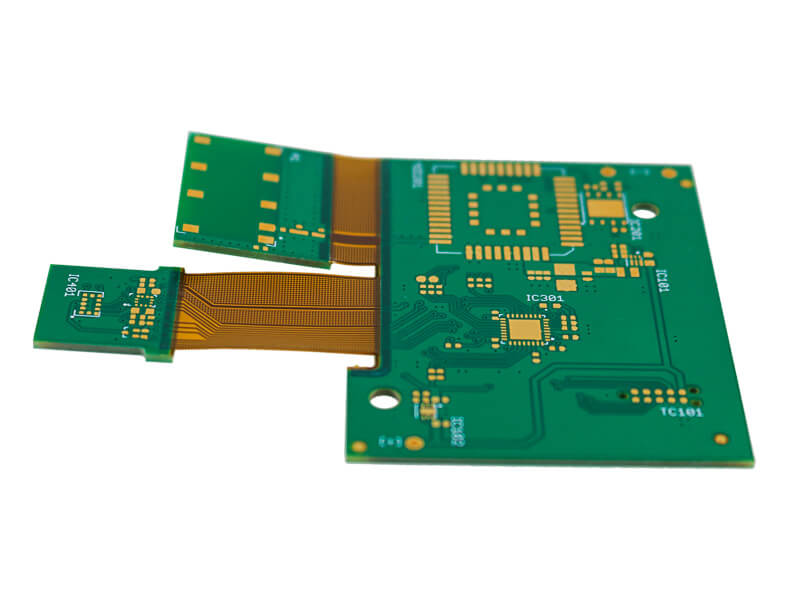
Where a measurement falls outside the expected window, the sample is retained so that the cause can be established before the balance of the batch is released.
A first article check confirms that the process and the drawing agree on the points listed above, and that the coupon data supports the values used in the design.

Where a measurement falls outside the expected window, the sample is retained so that the cause can be established before the balance of the batch is released.
FAQ
Can inspection frequency substitute for process control? No. Sampling detects a change rather than preventing one, and rare defects are usually missed.
Should every batch be sampled? Every batch should be recorded, and the sampling should follow the stability of the process and the criticality of the characteristic.
What is the right frequency after a change? A higher one with a defined exit criterion, based on a number of consecutive conforming batches rather than on a feeling.
Who should set the frequency? The process owner with the quality function, since it is a technical judgement about risk rather than a commercial one.