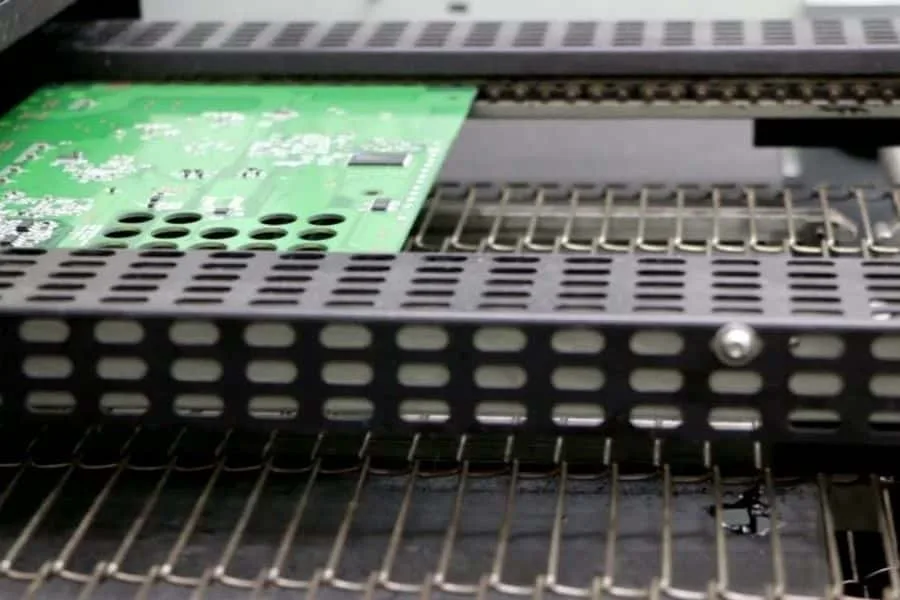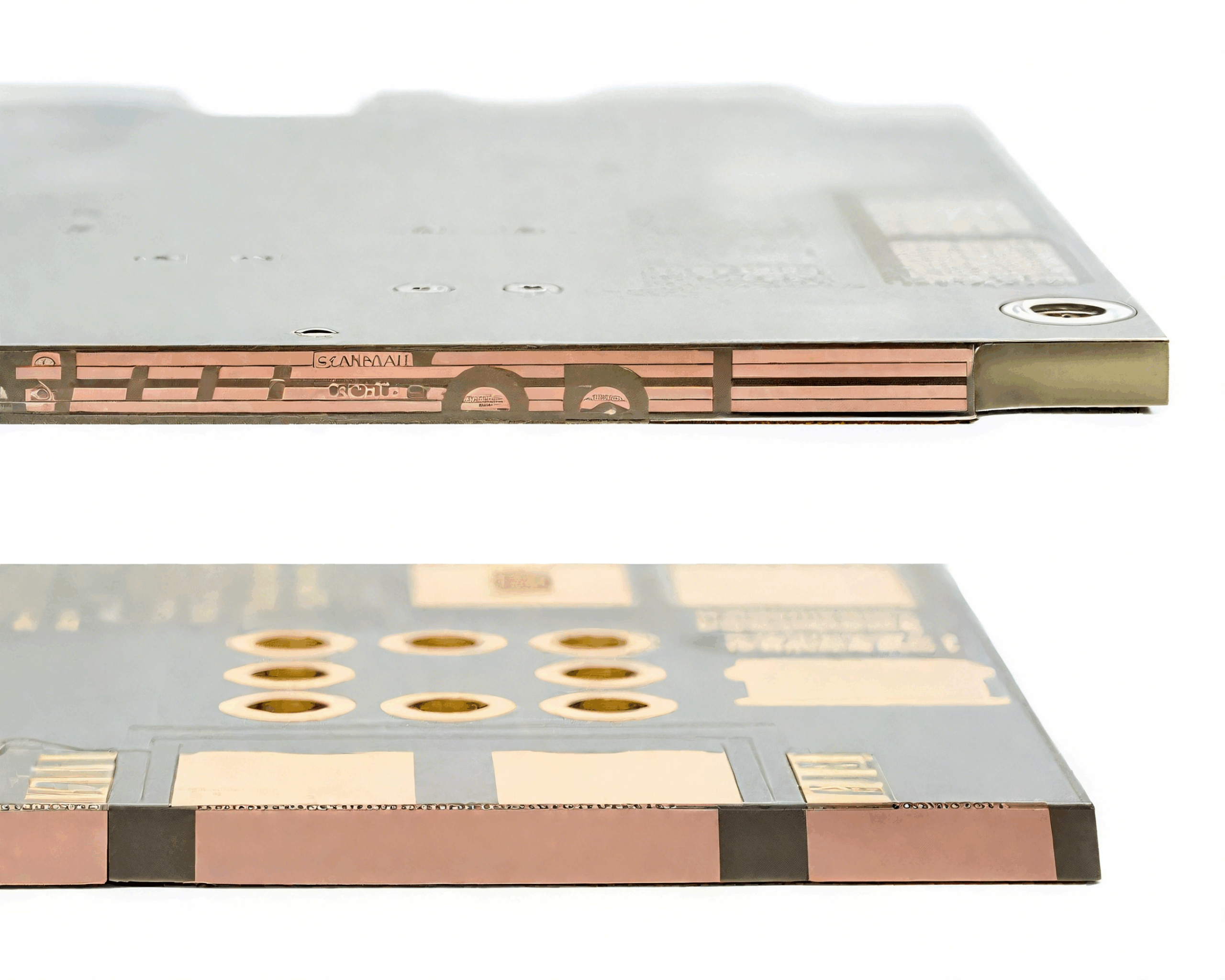
PCB Warpage, Bow And Twist Control A printed circuit board is a laminate of resin, glass, and copper, and those materials expand at very different rates when they are heated. The result is that a board which looks flat on the bench can bend or twist during assembly, and the…
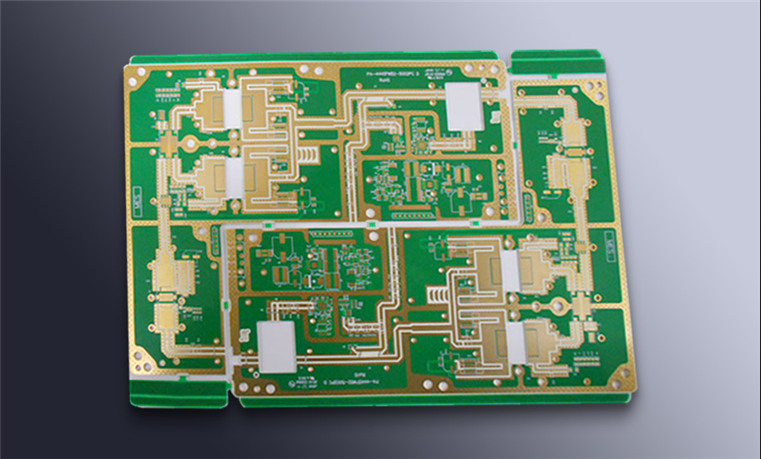
Panel Routing and Depaneling Method Selection Guide Every panel eventually becomes individual boards, and the method used to separate them determines how much mechanical stress the assembly absorbs on its way to the customer. Depaneling is often treated as a packaging detail, but it is a mechanical process applied to…
Selective Soldering: Preparation, Placement and Process Control Through hole parts did not disappear when surface mount took over. Connectors, relays, transformers and anything that has to survive a mechanical load are still inserted and soldered, and on a board that is otherwise reflowed, through hole joints are made in a…
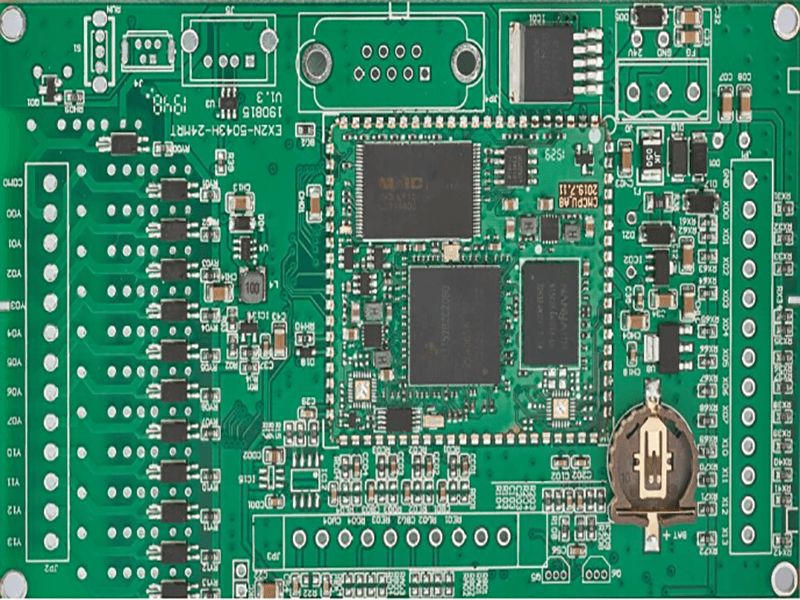
PCB and Integrated Circuit Relationship in Board Design An integrated circuit is a complete circuit formed on a piece of semiconductor, and a printed circuit board is the structure that connects several of them into a product. The relationship between the two is what decides most of the layout and…
IGBT Snubber Circuit Design An insulated gate bipolar transistor turns off a current in a circuit that always contains some inductance, and the energy stored in that inductance has to go somewhere. A snubber circuit gives it a defined path, which limits the voltage overshoot across the device and moves…
Tablet PCB Design Parameters for Smart Battery Packs A tablet is thin, sealed and expected to run for a full working day, which makes its battery pack part of the electrical design rather than an accessory. The tablet pcb inside the pack carries the protection, the measurement and the communication…
Impedance Tolerance Stackup and Material Selection Specifying fifty ohms is easy. Guaranteeing fifty ohms across a production panel is a manufacturing problem with several independent contributions, each of which varies. Understanding where those contributions come from is what allows a designer to choose a realistic impedance tolerance, a suitable material…
MOSFET Parallel Connection Circuit Design Paralleling MOSFETs is the standard way to carry more current than a single device can handle, and it works well when the layout and the gate drive are symmetric. It fails when one device takes more than its share, and the failure is usually thermal…
Solder Paste Inspection: What SPI Measures and Why Solder paste inspection measures the deposit that printing leaves on the pads, before any component is placed. It is the one process in surface mount assembly where the input can be measured directly, and a printer that is drifting will show up…
Instrumentation Amplifier: Design Rules and Process Limits An instrumentation amplifier is chosen for its common mode rejection and its stable gain, and it is often blamed for noise that comes from somewhere else. Splitting the noise into the contributions of the amplifier, the source impedance and the gain setting network…