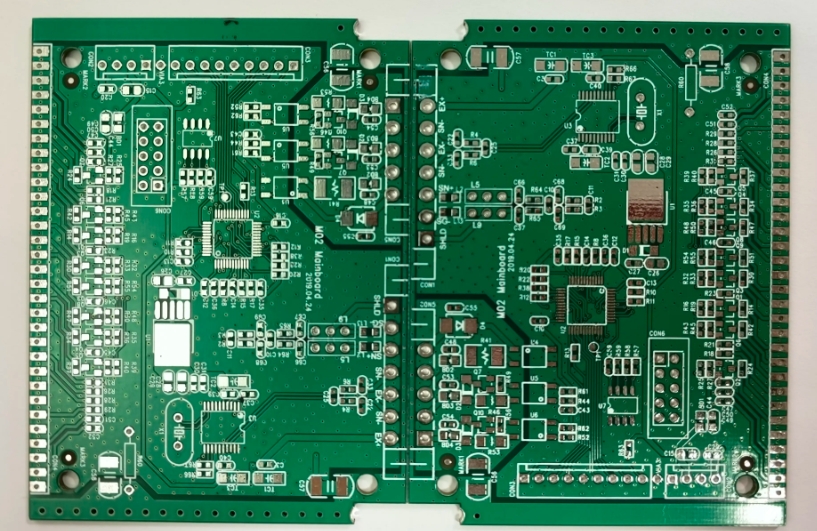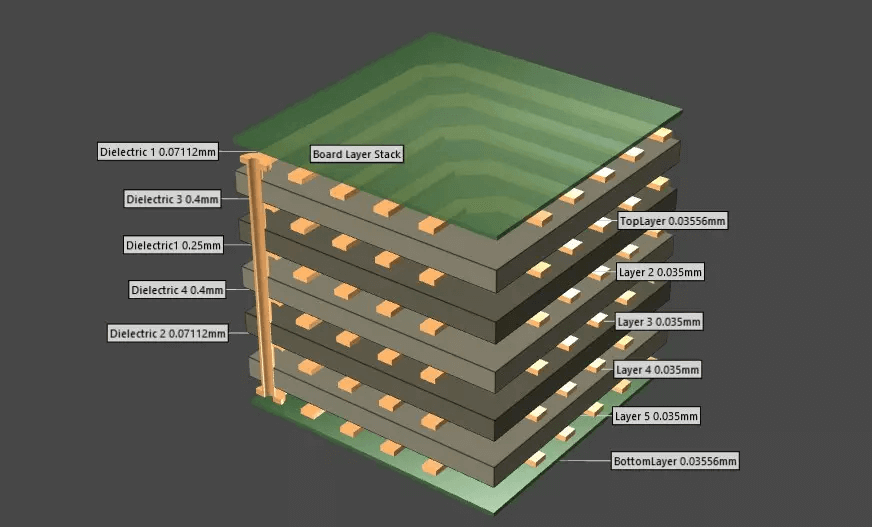
Connector Selection: Five Parameters That Decide Reliability A connector is the one component on a board that is designed to be connected and disconnected, and it is often the part that fails first. Connector selection means answering five questions, and the answers interact: a part chosen for its high speed…

Heavy Copper Traces: Sizing for Current and Thermal Rise Heavy copper is specified when a board has to carry tens of amperes rather than a few hundred milliamps, and the decision changes the fabrication process as much as the layout. Thicker copper etches differently, laminates differently and plated differently, so…
SMT Line Balancing and Takt Time in Production A surface mount line is a chain of machines, and a chain moves at the speed of its slowest link. Line balancing is the practice of matching the work at each station so that no machine waits and no machine becomes a…
Solder Pot Maintenance: Contamination, Dross and Alloy Control A solder pot is a reservoir of molten metal that dissolves everything it touches. Over weeks of production it accumulates the metals from the boards, the components and the plated finishes that pass through it, and its composition drifts away from the…
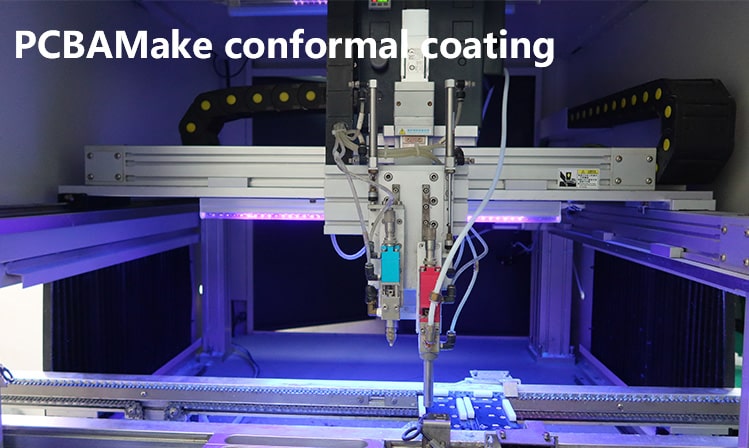
Conformal Coating Application: Masking, Jetting and Coverage Conformal coating protects an assembly from moisture, contamination and corrosion, and it does so only where it covers the surface completely. The application method determines whether the coverage is complete, and the masking determines whether the parts that should not be coated remain…
Power Sequencing and Rail Tracking Design A board with several supply rails is not powered up by connecting a supply to it. Each rail has to reach its nominal value in the right order and within a defined time, or the devices that span two rails can be damaged, latch…
Battery Fuel Gauge and Coulomb Counting Design A fuel gauge answers a simple question that is surprisingly difficult to measure: how much energy is left in the battery. The cell voltage moves with load and temperature, the capacity changes as the battery ages, and the current that has to be…
IPC-A-610 and J-STD-001 Acceptance Criteria Compared Two documents govern most electronics assembly work, and they are frequently confused. IPC-A-610 describes what a finished assembly should look like, while J-STD-001 describes how it should be made. One is an inspection standard and the other is a process standard, and knowing which…
PCB Design Key Points: Routing, Ground and Decoupling Most of the problems that appear in a finished board trace back to a small number of pcb design decisions taken early: how the signal flows, where the ground reference is, how the supply is decoupled and how much space the routing…
Hand Soldering A QFN: Step By Step A QFN package has no leads to solder. Its connections are flat pads on the underside of the body, arranged around the perimeter, with a large exposed pad in the centre that serves as both the thermal path and, usually, the ground connection.…