Plating Heat Exchanger Control: Temperature Stability in the Tank A plating heat exchanger keeps a plating tank at the temperature its chemistry needs, and it does so while the tank is being loaded with work, filtered and dosed. It is an unnoticed part of the process until the deposit starts…
Voids Under a QFN Thermal Pad: Causes and Limits A quad flat no-lead package conducts most of its heat into the board through the exposed pad on its underside, and that pad is soldered to a matching copper area on the board. The joint is large, thin and covered by…
Drill Collet Maintenance: Grip, Tool Change and Hole Quality A collet is the holder that grips the drill shank, and it is the last mechanical link between the machine spindle and the cutting edge. Its condition decides whether the tool runs true, whether it is held at the right depth…
Spray Etching Uniformity Across a PCB Panel Spray etching removes copper by impinging a fine mist of etchant onto the surface, and the uniformity of that removal is the specification that matters on a fine line panel. Two panels can leave the etcher with the same average line width and…
Solder Mask Viscosity Control: Mixing, Thinner and Pot Life Solder mask viscosity decides how the ink behaves in the screen printer, and it changes from the moment the can is opened. It affects the thickness of the printed film, the definition of the openings and how the ink behaves when…
Plating Rack Contact: The Hidden Variable in Copper Thickness In an electroplating line the rectifier sets a voltage and the panel receives a current. What the panel actually receives depends on the path between them, and that path runs through the rack, the contacts, the panel edge and the copper…
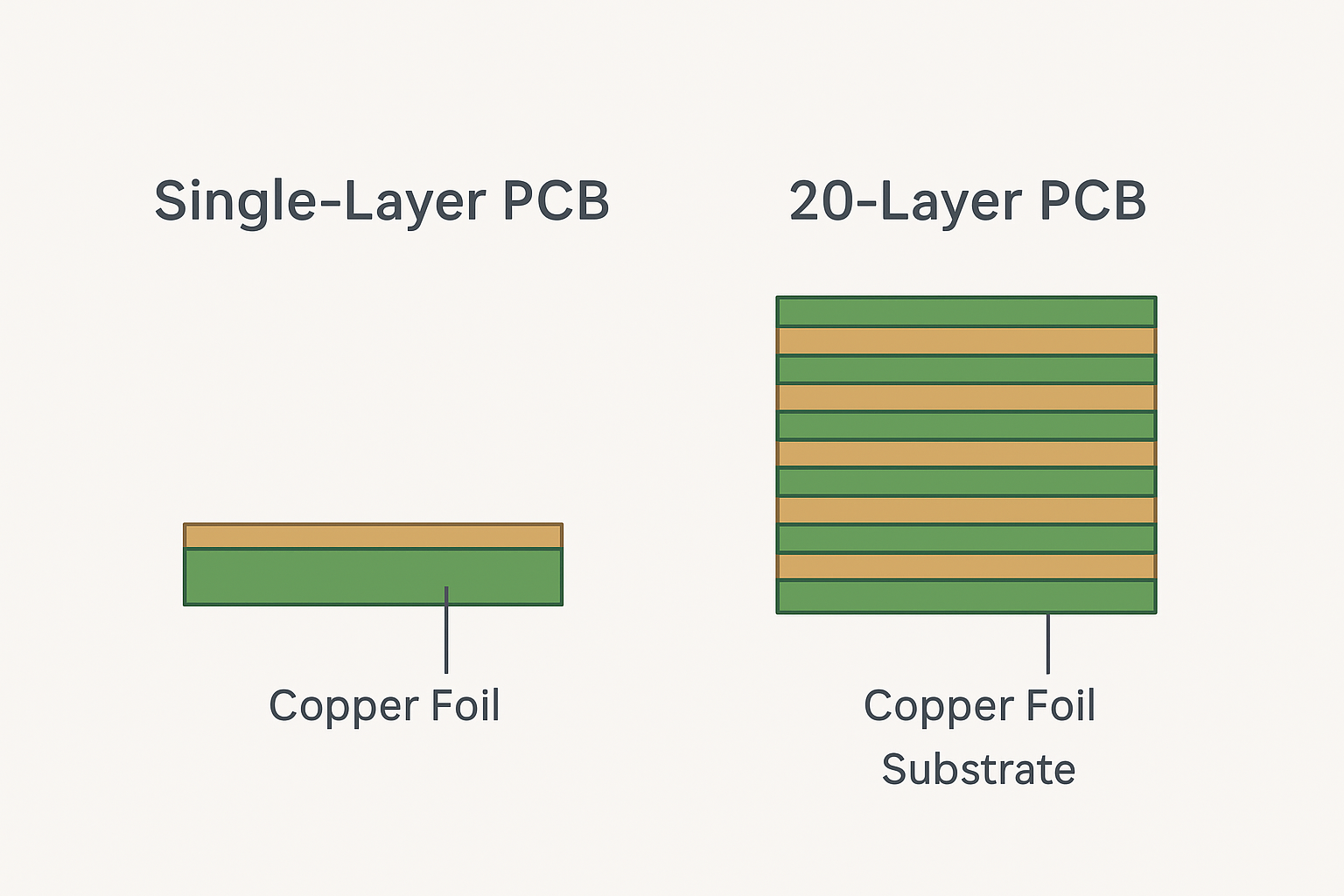
Copper Foil Profile After Etching: Width, Angle and Undercut The copper foil that remains after etching is not a rectangular bar with vertical walls. The etchant attacks the top surface and the sides at the same time, so the cross section has a trapezoidal shape with a sloped wall and…
Reflow Oven Belt Speed: Verification and Process Control Reflow oven belt speed sets how long a board spends in every zone, so it is the variable that converts a temperature profile into a time at temperature. The zones decide the shape of the curve and the belt speed decides the…
Reflow Zone Temperature Verification: Beyond the Profile A profile is a measurement of one assembly on one day. The zone controllers report their own temperature, the board passes through, and the thermocouples produce a thermal profile that is filed with the product record. What that curve cannot show is whether…
Solder Balling in Reflow: Profile and Paste Drivers Solder balling is the ring of small spheres that appears on the solder mask around a reflowed joint. Each sphere is a droplet of paste that melted but did not merge with the main fillet, and it was left behind when the…