White Solder Mask: Reflectance, Process and Trade-offs Why White Solder mask is usually chosen for what it protects rather than for what it looks like, but on some products the colour is functional. A white mask reflects light instead of absorbing it, and on a board carrying LEDs that has…
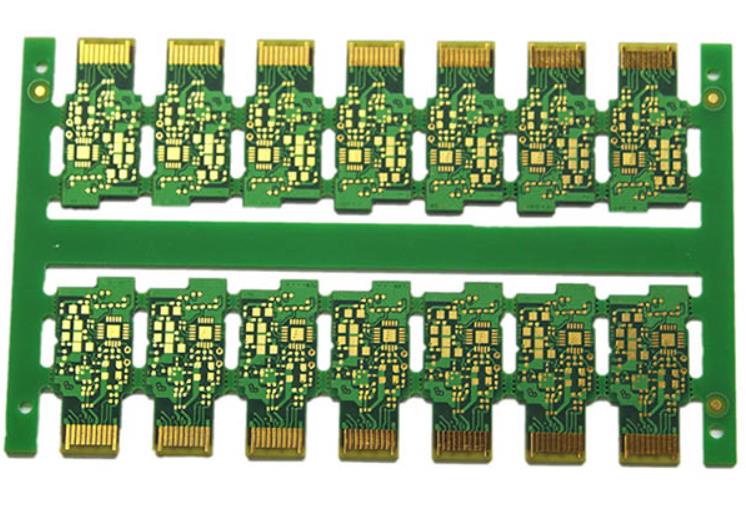
Silver Plating PCB: Immersion Silver and Its Trade-offs Where Silver Sits Among the Finishes Immersion silver is one of the flat finishes, alongside ENIG, immersion tin and OSP. It is applied by a displacement reaction, depositing a thin layer of silver, typically of the order of 0.1 to 0.3 microns,…
Single Sided PCB Quick Turn: Design Rules and Lead Time A Simple Board With a Fast Clock A single sided board carries one layer of copper, with every component mounted on the same side. It is the oldest and simplest printed circuit construction, and it remains the fastest to produce…
Rigid Flex Stackup Design: Layers, Bend Areas and Stiffeners Why the Stackup Is the Hard Part A rigid flex board is a single assembly that contains rigid sections carrying the components and flexible sections that fold to connect them. It replaces cables and connectors with a continuous piece of circuitry,…
Any Layer HDI: Every Layer Interconnected by Microvia What Makes It Different From Ordinary HDI Conventional high density interconnect construction puts microvias on the outer layers, connecting the surface to the first inner layer or the first two. The core of the board is built with ordinary through vias, mechanically…
Immersion Tin vs ENIG: Choosing a PCB Surface Finish Why the Finish Is a Design Decision The surface finish is the interface between the board and everything that happens to it afterwards: the solderability of the pads, the shelf life before assembly, the reliability of the joints, and on some…
Guard Trace PCB: Reducing Crosstalk and Leakage Two Problems, One Name A guard trace is a conductor placed alongside a sensitive net to protect it. The name covers two quite different techniques, and confusing them leads to designs that cost area without delivering the intended benefit. The first is the…
Ground Stitching in PCB Design: Planes, Returns and Resonance What Stitching Actually Solves Ground stitching is the practice of connecting ground copper on different layers with an array of vias. It is often described as a way to make the ground solid, which is true but not useful. The specific…
Via Fence PCB: Shielding RF Traces and Board Edges What a Via Fence Does A via fence is a row of ground vias placed along a trace, around a circuit block or along the edge of a board, connecting the ground planes on the layers above and below. It is…
Trace Skew in Differential Pairs: Causes and Fixes Why a Pair Has to Arrive Together A differential pair works because the two traces carry equal and opposite signals, and the receiver responds to the difference between them. That mechanism depends on the two signals arriving at the same time. Any…