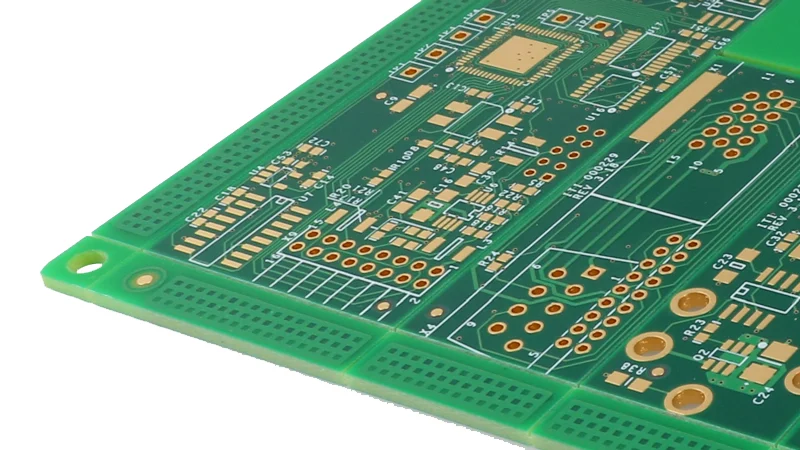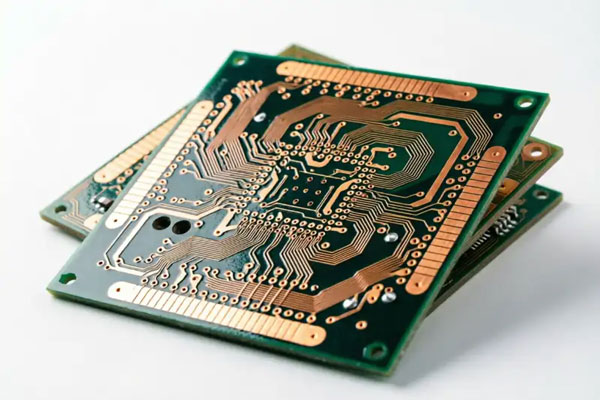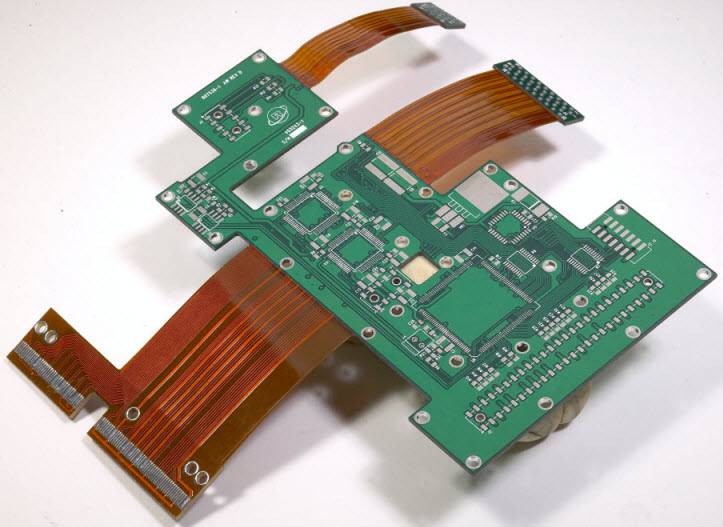
Blind and Buried Vias: Uses, Limits and Cost Blind and buried vias let a designer move a signal between layers without drilling through everything above and below it. That is worth real money on a dense board, and it is also one of the few features where a layout decision…
Copper Base PCB: When Copper Beats Aluminium A copper base board is a metal core board whose metal is copper rather than aluminium. The difference sounds minor, and in practice it changes the thermal budget of a design, the weight, the cost and what the mechanical department can do with…
PCB Volume Production Cost: What Actually Drives the Price At prototype quantity a bare board price is mostly tooling, setup and paperwork. At volume the same board is priced by what it consumes in material and machine time, and the levers that move the number change completely. This article breaks…
PCB Jitter: Sources, Measurement and Layout Fixes Jitter is the reason a link that works perfectly at room temperature on the bench fails at temperature in the field, and the board is usually blamed last even though it is often responsible. This article explains what jitter is, which parts of…
PCB Silkscreen Legend: Rules for Legible Boards The silkscreen is the last layer added to a board and the first one anybody reads. It carries the reference designators that make assembly possible, the polarity marks that stop a part being fitted backwards, and the board identifier that ties a unit…
Thermal Relief Pads: Spokes, Soldering and Current A thermal relief is a small piece of geometry that decides whether a component can be soldered at all. It is the difference between a pad that is connected to a copper plane by four narrow spokes and a pad that is welded…
EMI Shield Cans: Design, Grounding and Assembly A shield can is the most direct way to stop a circuit from radiating or from being disturbed by a nearby one, but it only works if the board underneath is designed for it. A can placed on a footprint with no ground…
PCB Teardrops: Why They Matter and How to Size Them A teardrop is a small addition to a design that costs nothing to make and prevents a whole class of field failures. It is the fillet of copper added where a trace enters a pad or a via, and it…
Copper Thieving for Even Plating and Etching Copper thieving is one of those features that appears on a finished board without anyone asking for it, and it is usually the difference between a panel that plates evenly and a panel whose traces vary from one edge to the other. This…
Castellated Holes: Edge Plating for Modules and SMT A castellated hole is the feature that lets a small circuit board be soldered onto a larger one as if it were a component. It appears on wireless modules, sensor boards, power converters and LED drivers, and it is the reason those…