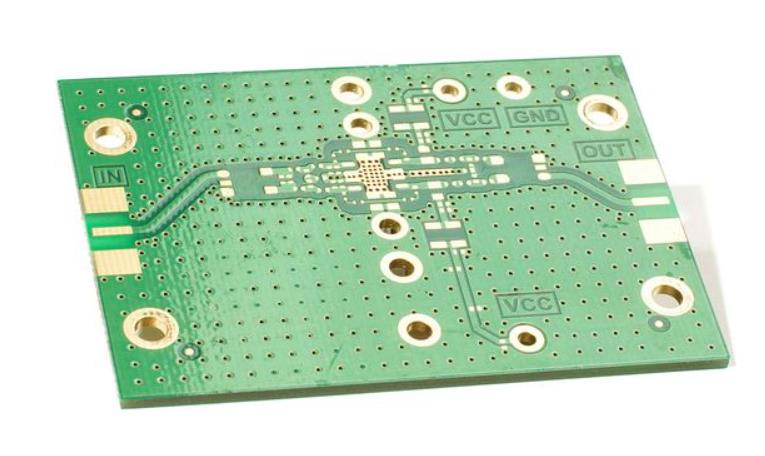
Immersion Silver PCB: Flat Pads, Lead Free and What It Costs A Finish Chosen for Flatness Surface finish is the part of the board specification that gets the least attention and causes a surprising share of assembly problems. It has three jobs: keep the copper solderable until the board is…
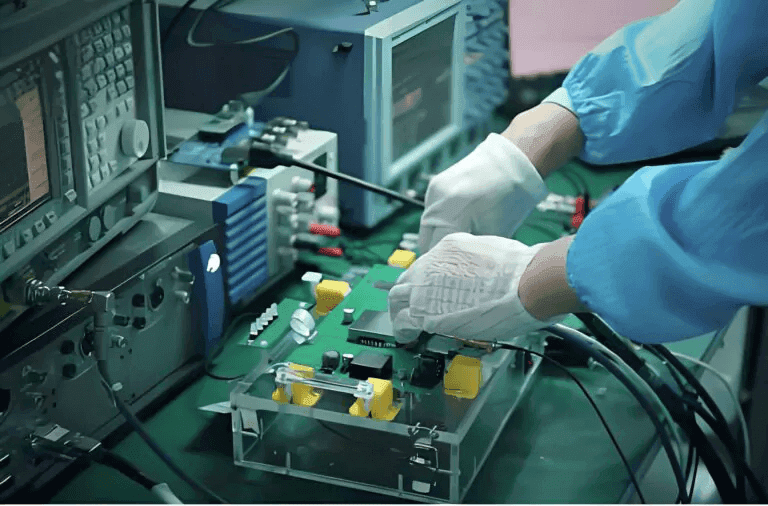
Imaging System PCB: Design for Sensors, Bandwidth and Noise The Board Behind Every Image An imaging product is judged by the picture it produces, and the picture is limited by the board that carries the sensor. Between the pixel array and the processed output sits a circuit that has to…
Military PCB Assembly: Standards, Materials and Testing Assembled for Conditions That Do Not Forgive A commercial board is designed around a use case. A military board is designed around a set of conditions: temperature extremes, sustained vibration, humidity, salt, shock and electromagnetic interference, often all present at once, in equipment…
Teflon PCB: PTFE Materials for RF and High Speed Designs Where FR-4 Stops Working Every material choice in electronics is a compromise, and FR-4 is the compromise that suits the most designs. It is cheap, easy to process, mechanically sound and electrically adequate below a few gigahertz. Push a design…
FR4 Material Properties: Tg, Dk, Df and Thermal Behaviour The Default That Is Rarely Understood FR-4 is the material most boards are made from. It is flame retardant, mechanically sound, electrically adequate for most designs and available everywhere at a predictable price. Because it is the default, it is also…
Heavy Copper PCB: 4 oz vs 10 oz vs 20 oz Compared When Standard Copper Is Not Enough Most boards are built with one or two ounces of copper. That is enough for signal routing and for the modest currents of consumer electronics, and it keeps the process comfortable for…
Flexible PCB Materials: PI, PET and LCP Compared The Material Decides What the Design Can Do A flexible circuit is only as good as the film it is built on. Two circuits can have identical copper patterns and behave completely differently because one uses a polyimide base and the other…
Custom PCB Price: What Actually Drives the Cost Why Two Quotes for the Same Board Rarely Match Ask three fabricators to quote the same design and the numbers will differ, sometimes by a factor of two. The reason is not usually the margin. It is that a printed circuit board…
Stepped Rigid-Flex PCB: Variable Thickness in One Board A Board That Changes Thickness on Purpose A rigid-flex circuit already combines two very different constructions in one part: rigid sections that carry components, and flexible sections that bend and fold. A stepped rigid-flex board takes the idea a step further. Instead…
Flexible PCB Thickness: Choosing Between 0.05 mm and 0.5 mm Thickness Is the First Decision in a Flex Design On a rigid board, thickness is largely a mechanical detail. On a flexible circuit it is the parameter that determines almost everything else: how tightly the board can bend, how many…