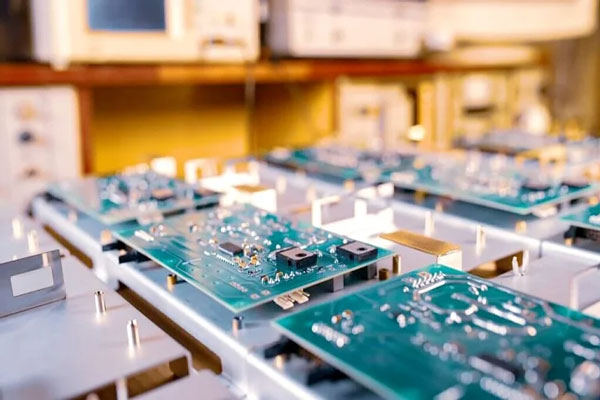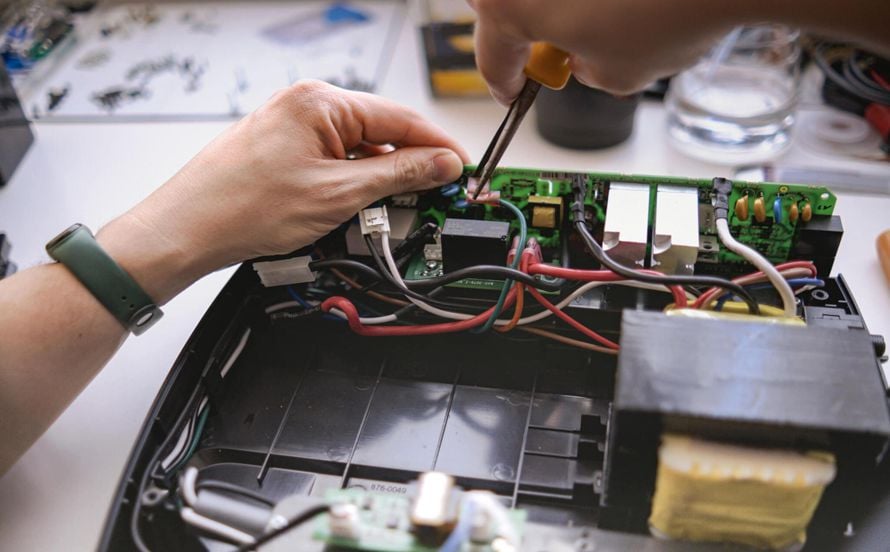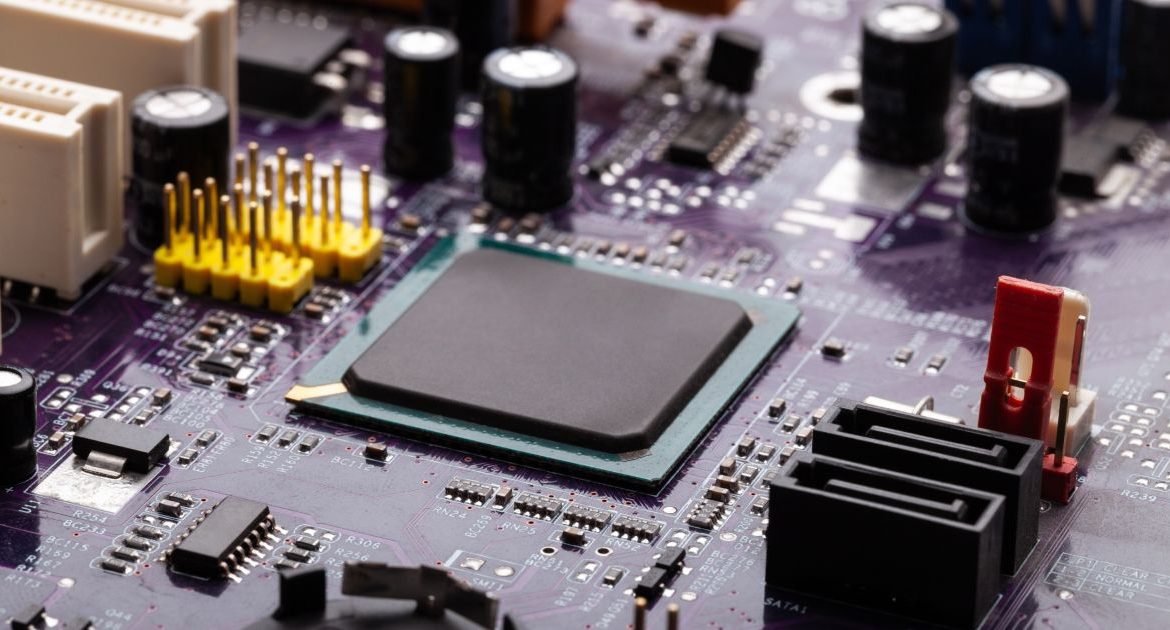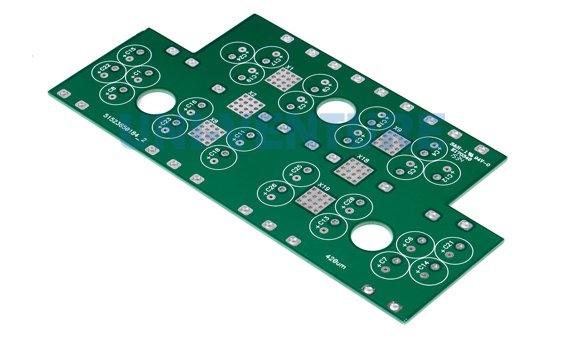
Express PCB: How Fast Turnaround Prototyping Works When the Schedule Is the Constraint Most board design decisions are made against cost, performance or size. Express PCB exists for the projects where the binding constraint is time. A schematic that has just been finished, a design that has to be proven…
Copper Substrate PCB: Copper Base Plates for High Power The Top of the Metal Core Family Metal core boards exist to move heat through a conductor instead of through a laminate. Within that family the base metal sets the ceiling, and copper sets it highest. An aluminium base conducts heat…
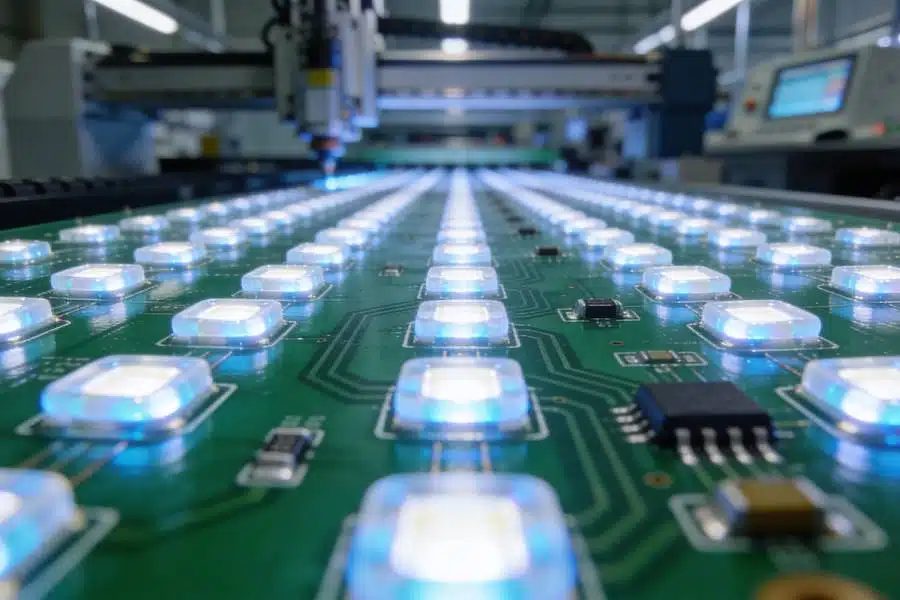
LED Lighting PCB: Materials, Thermal Design and Assembly The Board Is the Thermal Design An LED is a semiconductor, and like every semiconductor it degrades faster when it runs hot. That single fact makes the circuit board carry more responsibility than in almost any other lighting product. The board has…
Aluminium Nitride Substrate: Properties, Metallization and Use The Ceiling That FR-4 and Metal Core Boards Hit Most thermal problems are solved by moving to a metal core board. An aluminium or copper base with a thin dielectric spreads heat well, costs far less than a ceramic and is routinely manufactured…
Coin Insertion PCB: Embedded Copper for Heat and Current Why a Board Needs Metal Inside It Power density is the constraint that shapes modern boards. A MOSFET, an insulated gate bipolar transistor module or a power management IC can dissipate tens of watts from a package a few millimetres on…
High Frequency RF PCB: Materials, Stack and Design What Makes a Board High Frequency A board is high frequency when the behaviour of its conductors stops being a wire problem and becomes a wave problem. The practical threshold is not a specific number but a relationship: when a trace is…
Rogers 5870 PCB: The Lowest-Dk PTFE Laminate Where 5870 Sits Rogers 5870 is a polytetrafluoroethylene laminate reinforced with glass microfibre, produced in the same family as 5880 and aimed at the applications where the lowest available dielectric constant and the lowest loss are the deciding factors. Its dielectric constant is…
6-Layer High Frequency PCB: Stack and Materials Why Six Layers Is the Common Answer A high frequency design that also has digital and power circuitry tends to end up at six layers. Two layers cannot give the radio frequency section a ground plane and the digital section a separate return;…
Nickel Flash Gold PCB: A Thin Gold Finish Explained What the Finish Actually Is Nickel flash gold is a plated finish of nickel with a very thin layer of gold on top, applied by the same electrochemical sequence used for electroless nickel immersion gold but with a much shorter gold…
16-Layer PCB: Stack-Up and Manufacturing Limits What Changes at Sixteen Layers A sixteen layer board differs from a twelve layer board by more than four layers. The board is thicker, the through vias are longer, the accumulated registration error across the stack is larger, and the number of process passes…