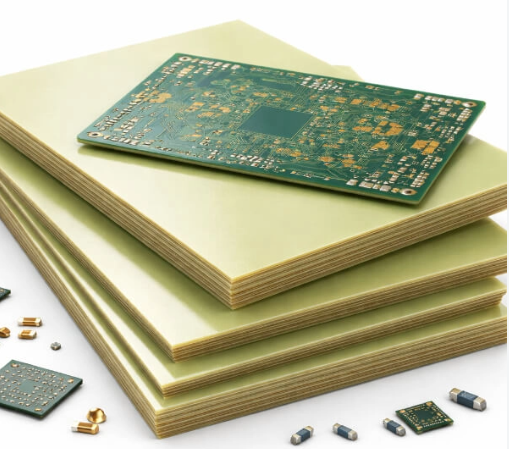
Additive PCB Manufacturing: SAP and mSAP for Fine Lines Why Additive Processes Exist Conventional board fabrication is subtractive. It begins with copper already covering the laminate and removes everything that is not part of the circuit, which means the process is limited by how precisely the etchant can be told…
Single-Sided PCB Manufacturing: When One Layer Is Enough What a Single-Sided Board Really Is A single-sided printed circuit board carries one layer of copper. Every connection the circuit needs is made on that one layer, and components are mounted on one side with their leads or pads soldered on the…
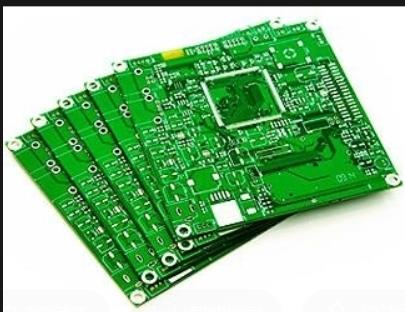
Bare PCB Fabrication: What You Get Before Assembly What a Bare Board Is A bare board, also called a plain circuit board, is a printed circuit board that has finished the fabrication stage and has not entered assembly. Everything the circuit needs to be built on is present: the laminate,…
POFV Via Filling: Plated Over Filled Vias Explained What POFV Means POFV stands for plated over filled via. The via is first filled with a material, normally a filled epoxy or a conductive paste, and then copper is plated over the filled barrel so the surface of the board stays…
Corrective Action in PCB Manufacturing What Corrective Action Is For Corrective action is the structured response to a problem that has already occurred. Its purpose is not to repair the affected units, which is containment, but to find out why the problem happened and to change the process so that…
Traceability in PCB Assembly What Traceability Means Traceability is the ability to connect a finished assembly back to the materials, the processes, and the conditions that produced it. In its simplest form it is a record that a board was built on a certain date, from a certain lot of…
Low Temperature Soldering Processes Why Lower Temperatures Are Attractive A lower soldering temperature reduces the thermal stress on everything on the board. Components with limited temperature ratings, large electrolytic capacitors, optical devices, and parts with internal adhesives all benefit when the peak temperature falls. The board itself is also stressed…
Solder Alloy Selection for Assemblies Why Alloy Choice Matters The alloy sets the temperature the process has to reach, the strength and ductility of the joint, and the behaviour of the solder under thermal cycling. Changing the alloy changes the profile, the flux compatibility, the stencil, and sometimes the components…
Solder Paste Dry Out and Print Defects What Dry Out Is Solder paste is a suspension of alloy powder in a flux vehicle that contains solvents. While the paste is in a sealed jar, the solvent stays in the mixture and the rheology is stable. Once the paste is on…
Reflow Profiling Methods and Thermocouples Why the Profile Must Be Measured The oven setpoints describe what the machine is trying to do; the profile describes what the board actually experiences. A board passing through the same oven at the same settings can see very different temperatures depending on its thickness,…