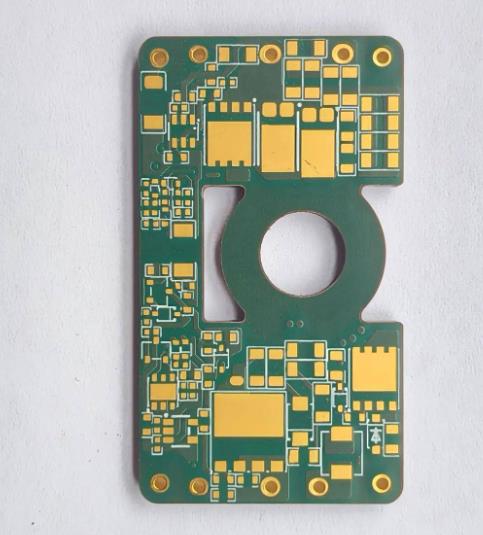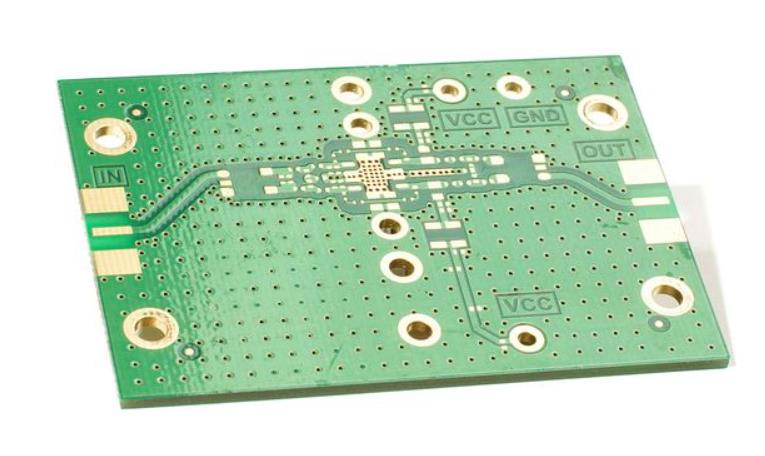
EMI Shielding on Assembled Boards Why Shielding Is Added at Assembly Electromagnetic interference is a system problem, but the first line of defence is often at the board. A shield placed over a noisy circuit keeps its emissions inside, and a shield over a sensitive circuit keeps external fields out.…
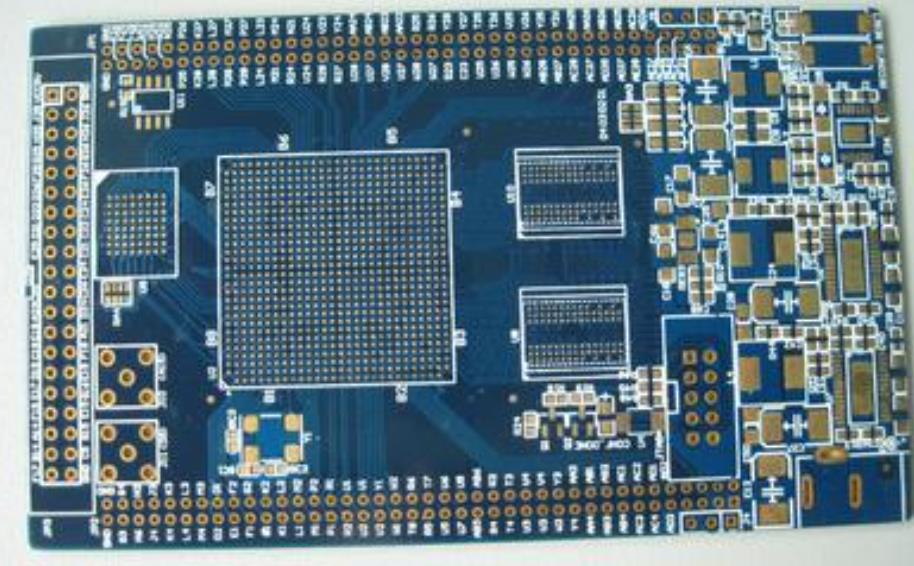
HDI Design Rules for Dense Boards What Makes a Design HDI High density interconnect is defined by the use of microvias, laser-drilled holes that are much smaller than conventional plated through holes, combined with finer traces and tighter spaces than a standard board allows. The result is more routing per…
Microsection Analysis of PCB Quality What a Microsection Shows A microsection is a cross-section of a printed circuit board that has been mounted in resin, ground and polished back to a plane, and examined under a microscope. It turns the board’s internal structure into something that can be measured: copper…
Bend Radius in Flexible Circuits Why Bend Radius Matters A flexible circuit earns its place by bending, and the radius of that bend determines how much strain the copper sees. Bend the flex too tightly and the copper, which is the least ductile of the materials in the stackup, will…
Stiffeners for Rigid-Flex Assemblies Why Stiffeners Are Used A flexible circuit bends, and that is usually the point. But there are places on the same circuit where bending is a problem: under a connector that must be plugged and unplugged, around a component that must stay flat, or at an…
Thermal Interface Materials and Gap Fillers What a Thermal Interface Material Does Two surfaces that look flat are not, at the microscopic scale. When a heat sink is placed on a component, the contact is made at a few high points, and the air in the gaps between them is…
Masking for Conformal Coating Why Masking Is Needed Conformal coating protects a board by covering it, and there are places where coverage is not wanted. Connectors need metal-to-metal contact, test points need to be probeable, and some components cannot tolerate a coating on their surfaces. Masking keeps the coating off…
Hand Soldering Quality and Operator Skill Where Hand Soldering Still Matters Hand soldering has not disappeared with the growth of surface mount assembly, because there are joints that machines cannot reach. Rework on a populated board, wire attachments, connectors added after reflow, and prototypes built without stencils all depend on…
Component Shift and Mid-Reflow Movement What Component Shift Looks Like Component shift is a displacement of a part from its placed position during reflow. The part may slide slightly along its pads, rotate a few degrees, or lift at one end. Unlike tombstoning, where the part stands on one end,…
Stencil Aperture Design for Fine Pitch Why Aperture Design Decides Print Quality The stencil aperture is the mould that gives each solder paste deposit its shape and volume, and almost every print defect can be traced to it. An aperture that is too small releases paste poorly; one that is…