Solder Mask Crosshatch Test: 6 Adhesion Rules The solder mask crosshatch test scores the adhesion of the mask by cutting a grid of lines through it, pressing adhesive tape over the grid and pulling the tape away. Mask that comes off with the tape has failed to bond, and the…
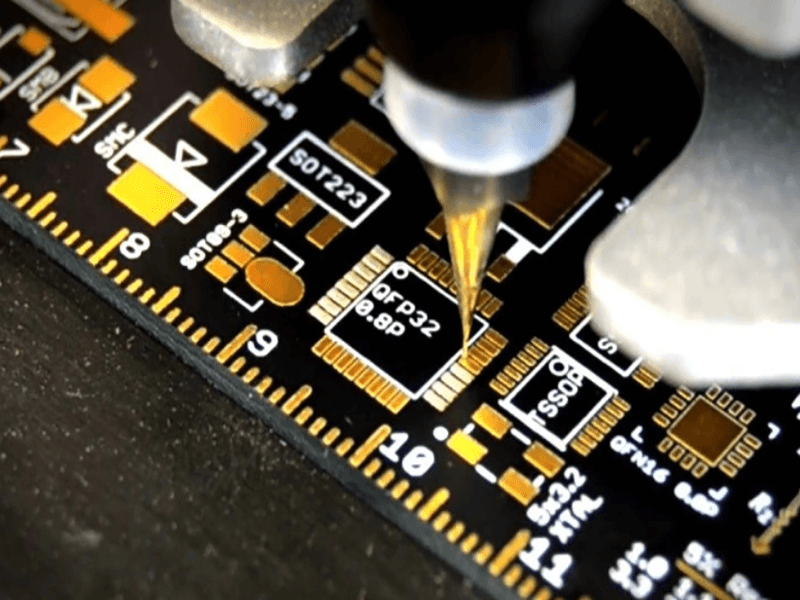
Stencil Aperture Wall Angle: 6 Rules for Paste Release The stencil aperture wall angle is the slope of the aperture side wall between the top face and the board face of the foil, and it decides how much printed paste stays on the pad instead of clinging to the stencil.…
Water Break Test: 4 Ways to Read Panel Cleanliness The water break test is the oldest surface check in a plating shop, and it is still the fastest. A clean panel holds a continuous film of water after rinsing, while a contaminated one breaks into droplets or pulls back into…
Alkaline Etch Bath: 4 Parameters That Set Line Width The alkaline etch bath is the ammoniacal alternative to cupric chloride, and it is used where the resist or the finish demands an alkaline chemistry. Copper dissolves into the solution as an ammine complex, and the bath has to be held…
Humidity Indicator Card Control for MSD Storage: 6 Rules A humidity indicator card is a small piece of paper with dots of treated salt that change colour as the air around them becomes wetter. It costs very little, it has no electronics, and it is the only evidence most workshops…
Drill Chip Load: 6 Rules for Clean PCB Holes Drill chip load is the thickness of laminate that one cutting edge removes on every revolution of the bit, and it is the number that decides whether a drilled hole comes out clean or torn. Set it too low and the…
Solder Pot Level Control: 7 Rules for a Stable Wave The alloy level in a soldering machine is the parameter that most often changes without anyone deciding to change it. Every board that crosses the wave takes solder out of the pot and leaves oxide on the surface, so the…
Plating Rack Insulation: 4 Signs the Coating Has Failed Plating rack insulation is the dielectric layer that covers every part of a rack except the contact points, and it exists so that current flows to the panels rather than to the frame. Where the coating is intact, the metal underneath…
Chip-Out at PCB Edges: Router Bit and Feed Control Chip-out is the mechanical loss of resin and glass fibres from the edge of a board when the outline is cut, leaving a notch, a ragged lip or a small crater where the laminate should be solid. It shows up on…
Copper Thickness Coupon: 4 Rules for Panel Placement A copper thickness coupon is the sample that travels through plating with the panel so that the deposit can be measured without destroying the product. Where that coupon sits on the panel decides what the number means, because the copper does not…