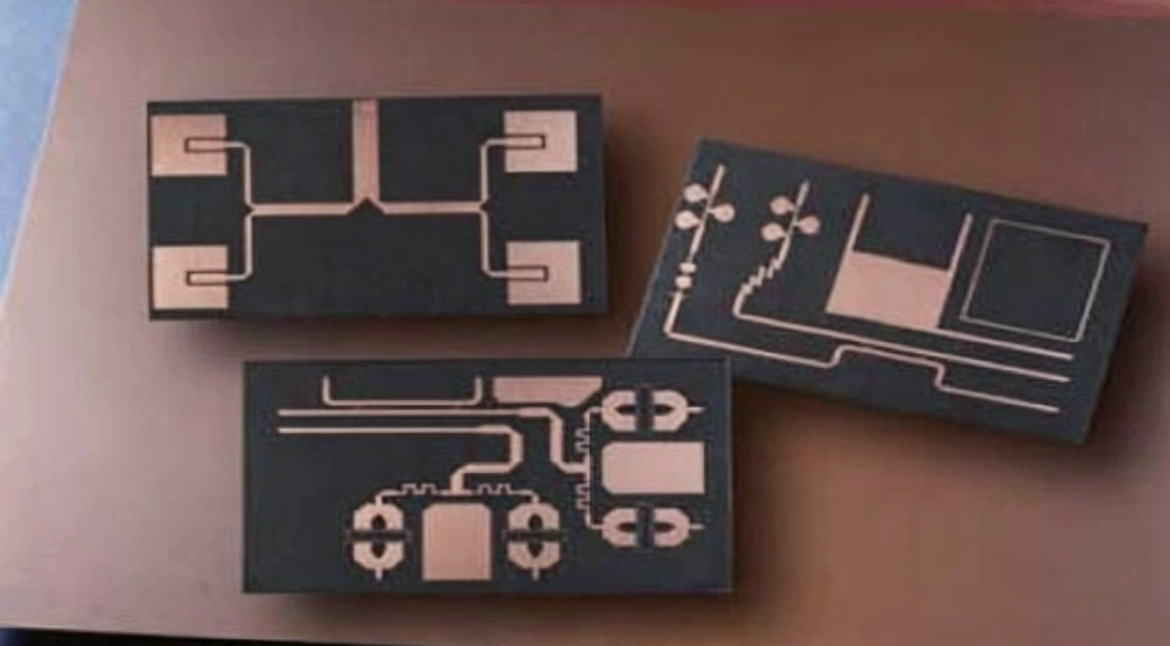
Impedance Control Verification: TDR Coupons and Trace Width A board can be etched perfectly and still fail its impedance control requirement, because impedance is set by the dielectric thickness and the dielectric constant as much as by the trace width. Verification therefore belongs on a coupon that shares the production…

Via Tenting and Solder Mask Plugging: Parameters That Hold A via tenting decision looks trivial on a fabrication drawing and causes some of the most expensive rework in assembly, because a tent that survives HASL and storage may still rupture in the reflow oven. The mask film over a via…
Solder Pot Maintenance: Dross Control and Alloy Contamination A solder pot is a chemical reactor that runs unattended for months, and the alloy inside it changes every shift. Copper dissolves from boards and plated holes, iron and zinc arrive as plating and component contamination, and oxide skins off as dross…
Stencil Cleaning: Wipe Frequency, Solvent and Vacuum Assist Every print cycle leaves a film of paste on the underside of the stencil, and that film does not stay harmless. It builds in the apertures until deposits fall short, and the board that comes off the line looks correct until the…
Depanelization Stress: Strain Gauge Measurement and Limits A multilayer ceramic capacitor that cracks during depanelization usually passes every test performed at the time, and fails months later as a short or as an open. The way to see the damage before it happens is to measure the strain the board…
Reflow Oven Calibration: Zones, Thermocouples and Maintenance A reflow oven is trusted to reproduce a profile that was measured once, and that trust depends on the zones holding their temperature, on the conveyor running at the speed it reports and on the thermocouples being what they claim to be. Calibration…
Board Support and Clamping in Stencil Printing Solder paste is printed through a stencil that has to touch the board everywhere, and a board that is not flat cannot be touched everywhere. Support and clamping are therefore printing parameters, and their effect is seen as a volume variation across the…
BGA Voiding: Causes, Measurement and Process Control A void is a space inside a joint where alloy should be, and in a ball grid array it is measured as a percentage of the joint area on an X-ray image. Whether that percentage matters depends on where the void sits, and…
CAF: Design Rules and Process Limits A conductive anodic filament is a path of copper that grows through a laminate along the interface between the resin and the glass, and it grows only when three conditions are present at once: a voltage, moisture and an ionic path. CAF resistance is…
Through-Hole Rework: Desoldering Without Damaging the Barrel Rework on a through-hole joint puts heat, mechanical force and a vacuum into a barrel that is a few tenths of a millimetre of plated copper, and the damage it can cause is not visible from the surface. The method matters as much…