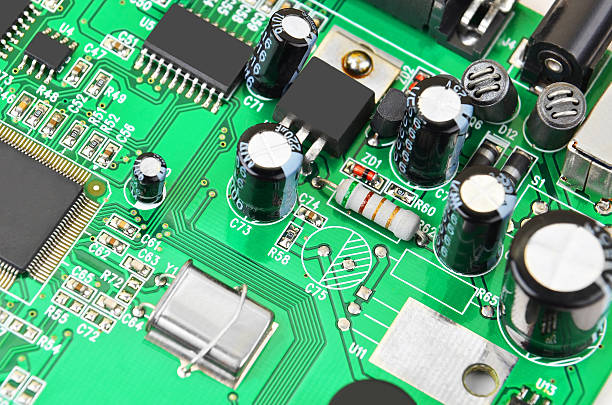
PCB Storage Temperature Guidelines for Maintaining Circuit Board Quality From production completion to final assembly, PCB Circuit Board storage conditions have a significant impact on product quality and reliability. Among various environmental factors, temperature is one of the most critical parameters because it directly affects the material properties, structural…
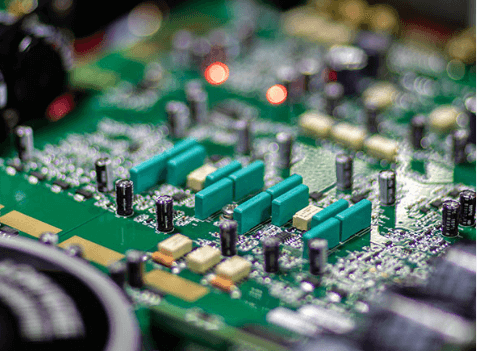
Advantages of PCB Metal Edge Plating Technology In modern PCB Manufacturing, metal edge plating is a specialized process that plays an important role in improving circuit board stability, reliability, and environmental adaptability. Although this technology is not as widely recognized as traditional PCB processes, it provides significant performance improvements…
Aerospace PCB Inspection Standards for High-Reliability Aviation Electronics In aerospace electronics, PCBs serve as the core control platform for electronic systems, and their quality directly affects flight safety and equipment reliability. Strict Aerospace PCB Inspection Standards are essential for identifying potential defects, preventing failures, and ensuring stable operation of…
Carbon Ink PCB Manufacturing Process and Applications In modern PCB Manufacturing, carbon ink technology has become an important solution for specific electronic applications due to its unique conductive layer processing method. Unlike traditional copper etching processes, carbon ink PCB technology creates conductive paths through screen printing and curing processes. With…
Medical Certified PCB Manufacturer for Reliable Healthcare Electronics In the healthcare industry, the stable operation of every precision medical device directly affects patient safety. As the core electronic component of medical equipment, printed circuit boards (PCBs) must achieve exceptional reliability, accuracy, and long-term stability. The same discipline applies to…
Rolled Copper Foil Thickness in PCB Manufacturing In PCB Manufacturing, rolled copper foil serves as a critical conductive material that directly influences the electrical and mechanical performance of printed circuit boards. Unlike electrolytic copper foil, rolled copper foil is produced through a mechanical rolling process, giving it superior flexibility, elongation…
4-Layer PCB Manufacturing Process: Complete Production Steps A 4-Layer PCB Manufacturing Process combines advanced fabrication technologies and strict quality control procedures to create reliable circuit boards with higher wiring density and improved signal performance. The same discipline applies to 4-Layer PCB Manufacturing Process, where a small process drift turns…
High-Speed PCB Applications: What Products Use High-Speed PCB Technology? High-Speed PCB technology has become a critical component in modern electronic systems where fast data transmission, signal integrity, and reliability are essential. With the rapid development of 5G communication, artificial intelligence, cloud computing, autonomous vehicles, and advanced medical systems, the…
Copper Etching Technology PCB: Process, Principles, and Advantages Printed circuit boards (PCBs) are essential components in modern electronic products, and their manufacturing technologies continue to evolve to meet increasing performance requirements. Among these technologies, copper etching is one of the most critical processes that directly determines PCB precision, circuit…
What Is a First Order Via in PCB? In PCB Manufacturing, various technologies and components work together to ensure the efficient operation of modern electronic devices. Among them, the first order via is an important interconnection technology that plays a significant role in advanced PCB design and fabrication. Understanding…