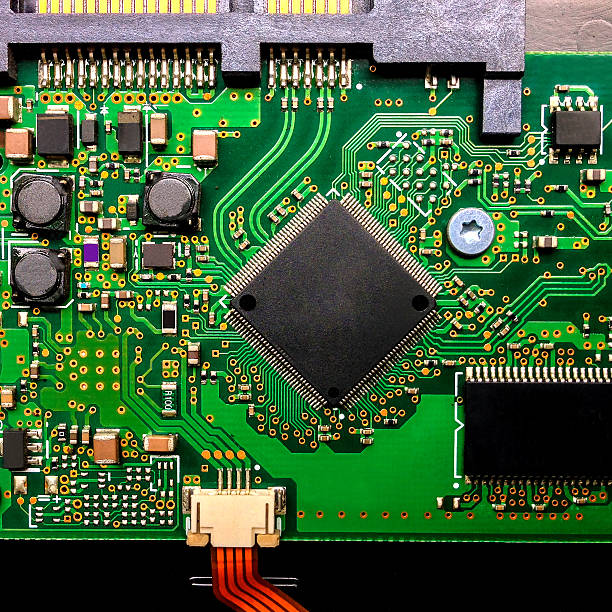
Classification of Rolled Copper Foil Rolled Copper Foil has become an essential material in advanced electronic manufacturing due to its excellent physical properties, mechanical flexibility, and electrical performance. With the rapid development of electronic products toward miniaturization, high performance, and high reliability, the requirements for copper foil materials have…
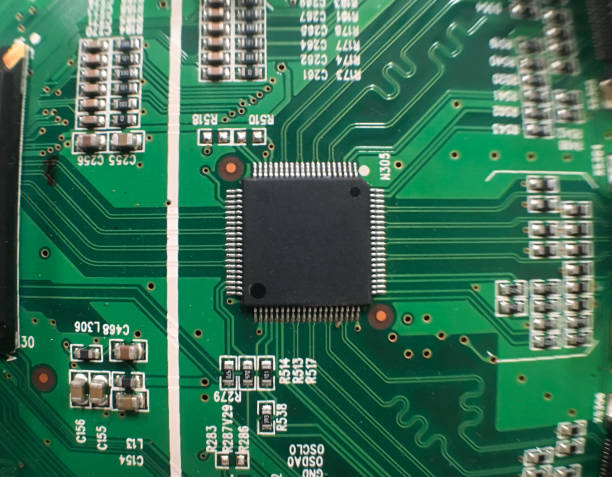
Medical PCB Manufacturing Requirements and Quality Control Standards The reliability and safety of medical equipment are directly related to patient health and life safety. As the core component responsible for electrical connection and signal transmission, printed circuit boards (PCBs) play a critical role in medical devices. Compared with standard…
Aerospace PCB Manufacturer Requirements and Production Capabilities Printed circuit boards are critical components in aerospace electronic systems, serving as the foundation for electrical connections and electronic functions. Their quality and performance directly affect flight safety, system reliability, and mission success. Manufacturers producing Aerospace PCB products must meet extremely strict…
Common Automotive PCB Materials Electronics Applications SEO Description: Explore the most commonly used automotive PCB materials, including FR-4, high Tg materials, metal core PCBs, high-frequency materials, and rigid-flex PCB substrates for reliable vehicle electronics. The same discipline applies to Automotive PCB Materials, where a small process drift turns into a…
Temperature and Pressure in Multilayer PCB Lamination In the PCB manufacturing process, lamination is one of the most critical stages that determines product quality and reliability. By applying controlled temperature and pressure, multiple substrate layers and copper foils are bonded together to form a complete multilayer circuit structure. During…
PCB Electroless Copper Plating Time As the foundation for electronic components and electrical connections, printed circuit boards (PCBs) directly influence the performance and reliability of electronic systems. Electroless copper plating is one of the most important processes in PCB manufacturing because it creates a conductive copper layer on the…
Common High-Speed High-Frequency PCB Materials The transmission of high-speed and high-frequency signals places extremely demanding requirements on printed circuit board (PCB) performance. Materials used for these applications must provide low dielectric constant, low dielectric loss, excellent signal integrity, and stable physical and chemical properties. The same discipline applies to…
BMS PCB Requirements for Electric Vehicle Battery Management Systems Battery Management Systems (BMS) are critical components in electric vehicles, responsible for monitoring battery status, managing charging and discharging processes, balancing individual battery cells, and ensuring overall battery safety. As electric vehicle technology continues to advance, BMS systems require printed…
0.15mm Mechanical Blind and Buried Via PCB As electronic devices continue becoming smaller, thinner, and more powerful, PCB routing density has become one of the major limitations affecting system performance. The 0.15mm Blind Via PCB technology provides an advanced interconnection solution for high-density multilayer circuit boards by creating compact…
1oz Copper PCB 4-Layer Controlled Impedance PCB for High-Speed Electronic Applications In modern electronic systems, PCBs serve as the essential platform for component connection, signal transmission, and power distribution. Among various PCB solutions, the 4-Layer Impedance PCB with 1oz copper thickness has become an important choice for communication equipment, computing…