Automotive Dashboard PCB: Design, Manufacturing and Cost Guide
Why the Automotive Dashboard PCB Matters
In modern smart vehicles the dashboard has moved far beyond mechanical gauges. It is now a digital, intelligent interaction surface, and the automotive dashboard PCB is the electronic foundation that makes it work. Electric vehicles, connected cars and autonomous driving platforms keep raising the demand for highly reliable instrument cluster boards that operate for the life of the vehicle.
This guide covers the functions, core components, design points, manufacturing process, material choices and 2026 cost ranges of automotive dashboard PCBs, helping engineers and buyers understand what makes an instrument cluster board different from other automotive electronics.
gopcb manufactures automotive grade boards through its PCB manufacturing service.
What Is an Automotive Dashboard PCB?
An automotive dashboard PCB is the core circuit board inside the vehicle instrument system. It controls the display modules, indicator lamps and data exchange with the vehicle electronics. Its main jobs are to act as the control center of the cluster, communicate with sensors and ECUs, and present accurate real time vehicle information to the driver.
The dashboard PCB differs from other automotive boards by role. An ECU board manages powertrain and control functions, an infotainment board handles multimedia and navigation, and the dashboard board is responsible for display and human machine interaction, which places its own demands on brightness, refresh rate, EMC and long service life.
Main Functions of the Instrument Cluster Board
Display control drives the speedometer, tachometer and fuel gauge plus LCD, TFT or OLED digital screens. Signal processing receives data from sensors and ECUs and converts it into readable information. Indication and alarm systems manage the engine fault light and ABS, battery and oil pressure warnings. Human machine interaction supports buttons, touch panels and smart cluster interfaces, and power management provides voltage regulation and overvoltage and overcurrent protection for the whole cluster.
Because the cluster is the primary interface between the driver and the vehicle state, every one of these functions must work instantly and without glitches in sunlight, darkness, cold and heat.
Core Components of a Dashboard PCB
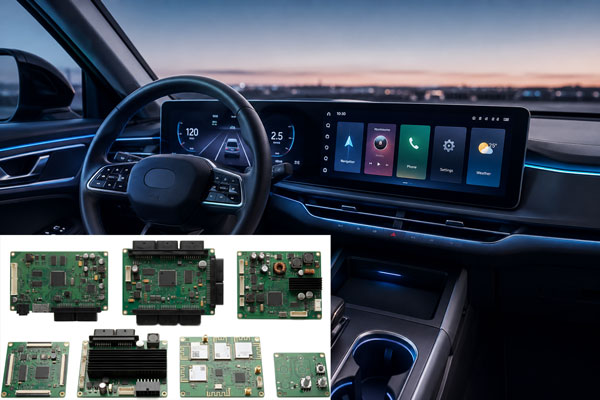
The brain of the cluster is the microcontroller, which performs data processing and logic control. Sensor and interface modules support CAN and LIN protocols so the board can talk to the vehicle network. Display driver chips control screen quality and refresh rate, passive components stabilize signals, connectors provide reliable module links and the power module adds regulators and protection circuits for safety.
Component selection follows automotive grade rules. Parts must survive the operating temperature range of about minus 40 to 125 degrees Celsius, tolerate vibration and humidity, and keep consistent behavior over years of duty, which is why standard commercial components are not acceptable in the cluster path.
Types and Materials of Instrument Cluster PCBs
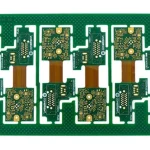
Dashboard boards come in single and multilayer versions. A single layer board is simple and cheap, while four to eight layer boards handle complex cluster systems with dense routing and power planes. Rigid boards are the traditional choice, flexible PCBs fit curved and space limited housings, and rigid flex boards combine strength with flexibility for high end digital clusters.
The common substrate is FR-4, with high Tg material for heat resistance and dedicated automotive grade laminates for the highest reliability classes. Surface finishes are usually ENIG for fine pitch display connectors or HASL for cost sensitive designs, and the final choice must satisfy both the SMT process and the long automotive life requirement.
Key Design Points for Dashboard Boards
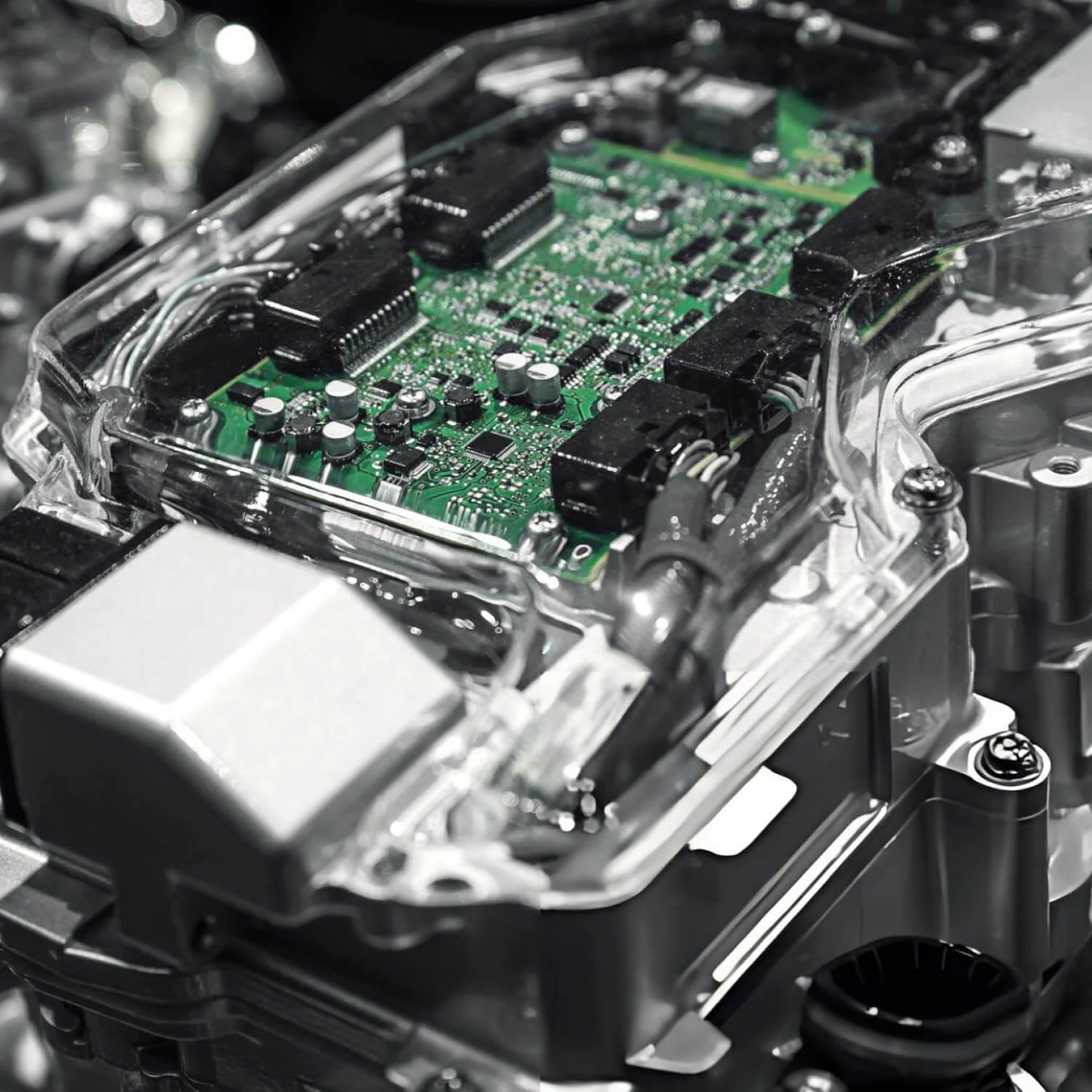
High reliability design starts with the minus 40 to 125 degree Celsius operating range, vibration resistance and moisture protection. EMI and EMC design keeps electromagnetic interference away from sensitive display signals and improves signal integrity. Thermal management uses optimized copper weight and heat spreading structures so the display driver and MCU stay cool. Miniaturization relies on HDI technology for compact housings, and certification follows IPC standards and the IATF 16949 automotive quality system.
Display signal routing deserves special attention. Differential pairs for high speed video must be impedance controlled with continuous reference planes, and the backlight and display power should be separated from the logic supply to avoid brightness flicker and data corruption.
Manufacturing and Assembly Process
Production follows the automotive flow: PCB design and layout, material selection, board fabrication with etching, drilling and plating, solder mask and surface finish, SMT assembly and electrical test. Inspection combines AOI, ICT and functional test so opens, shorts, missing parts and programming errors are caught before the cluster reaches the vehicle maker.
Automotive programs also demand traceability. Each board should be linked to its lot, material batch and test record, because a field failure analysis without traceability is nearly impossible. gopcb supports this with dedicated quality records through its PCBA testing service.
Common Problems and Solutions
Signal interference is solved with optimized routing and grounding. Thermal stress is reduced with higher copper weight and heat spreading design. Component failure is prevented by selecting automotive grade parts, and high design complexity is managed with simulation and HDI technology. Each of these is a design stage decision rather than a production fix, which is why the DFM review should happen before the layout is frozen.
An early PCB design and layout review catches clearance, via and stack-up issues that would otherwise appear as intermittent cluster failures on the road.
2026 Automotive Dashboard PCB Cost Reference
Pricing depends on layer count, complexity, material, finish and quantity. Two layer prototypes typically run 50 to 150 USD, four layer boards 100 to 300 USD, six to eight layer boards 300 to 800 USD and rigid flex designs 500 USD or more. In volume, unit prices drop to roughly 0.5 to 1.5 USD for two layers, 1 to 3 USD for four layers, 3 to 8 USD for six to eight layers and 10 USD or more for rigid flex boards.
The main cost drivers are layer count and complexity, material type, surface finish and production volume. For volume pricing, panel optimization and a committed annual forecast make the largest difference. gopcb also offers PCB assembly so the cluster can move from bare board to tested assembly under one quality system.
How to Choose an Automotive Dashboard PCB Supplier
Look for IATF 16949 certification, real automotive electronics experience, support from prototyping to mass production and a complete quality control system. Ask how the supplier handles temperature cycling, vibration qualification, material traceability and AEC-class component sourcing. A manufacturer that treats the dashboard as automotive safety electronics rather than consumer PCBs will deliver the reliability the vehicle program needs.
FAQ
Which materials are used for automotive dashboard PCBs? FR-4, high Tg materials and automotive grade laminates are the common choices.
How do automotive PCBs handle high temperature? They use high Tg materials and optimized thermal design for the full engine and cabin environment.
How much does a dashboard PCB cost? Roughly 0.5 to 10 USD or more per board depending on complexity and volume, with prototypes from 50 USD up.
How long does production take? Prototypes take 3 to 7 days and volume production 2 to 4 weeks.
Which standards must the board meet? IPC standards and the IATF 16949 automotive quality system are required.
Get an Automotive Dashboard PCB Quote
The automotive dashboard PCB directly affects vehicle information display, interaction quality and safety, and its reliability has to match the harsh automotive environment. Digital clusters, EV growth and autonomous driving are all pushing demand for higher layer counts, HDI structures and rigid flex designs. gopcb provides automotive grade PCB manufacturing with IATF 16949 aligned quality control, quick turn prototypes, volume production and global delivery. Send your design files for a free DFM review and an automotive dashboard PCB quotation today.