Halogen-Free PCB vs FR-4: Material and Thermal Differences Halogen-free PCB and FR-4 PCB are usually presented as alternatives, but the comparison is misleading. FR-4 describes a material system, a woven glass fabric bonded with an epoxy resin, while halogen-free describes the chemistry used to make that resin resist burning. A…
Copper Inlay PCB: Embedded Copper for High-Power Thermal Management Copper inlay PCB technology places a solid copper block inside a cavity machined into the laminate, so heat from a power device travels into metal rather than through resin. Copper conducts at roughly 400 W/m·K while a typical FR-4 dielectric manages…
Hard Disk PCB: Controller, Motor Drive and Signal Paths A hard disk PCB is the board mounted on the outside of the drive, and it does everything except store the data. It converts the host interface into the signals the drive needs, drives the spindle motor, manages power, and processes…
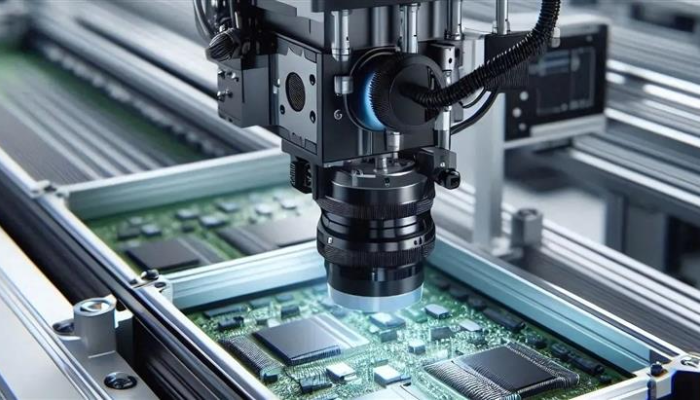
PCB in Circuit Test Limits: What the Tester Can Decide Buyers and engineers often focus on the finished product and forget the production line behind it. In practice, most field failures can be traced back to process decisions made during assembly. Understanding PCB in circuit test limits gives you a…
PCB End of Line Test Strategy: What to Test and Where Electronics manufacturing has become a discipline of small details. Solder paste volumes, placement accuracy, temperature profiles and inspection limits all add up to the final result. This guide looks at PCB end of line test strategy from the perspective…
Flexible PCB Material: Types, Properties and Selection Flexible circuits are built from a small number of materials, and almost every decision in a flex design comes down to choosing between them. The substrate determines how hot the circuit can get and how many times it can bend, the copper determines…
Copper Core PCB: A Complete Guide to Its Design A copper core board replaces the usual glass-reinforced dielectric with a metal plate, usually aluminium or copper, separated from the copper circuit by a thin insulating layer. The circuit is unchanged in function; what changes is that the heat generated by…
18 Layer PCB: Stackup, Lamination and Design Rules An eighteen layer board is not simply a bigger version of a six layer board. The layer count changes the fabrication process, the tooling, the achievable yield and the way the stackup is planned, and it introduces failure mechanisms that only appear…
Automotive PCB Design for EV, ADAS and Powertrain A modern vehicle is a collection of electronic systems with wheels attached, and automotive PCB design carries the discipline that goes with it. Boards must work from minus forty to well above a hundred degrees Celsius, survive vibration and contamination, and continue…
PCB Cpk on A Critical Dimension: Proving the Process Is Centred Electronics manufacturing has become a discipline of small details. Solder paste volumes, placement accuracy, temperature profiles and inspection limits all add up to the final result. This guide looks at PCB Cpk on a critical dimension from the perspective…