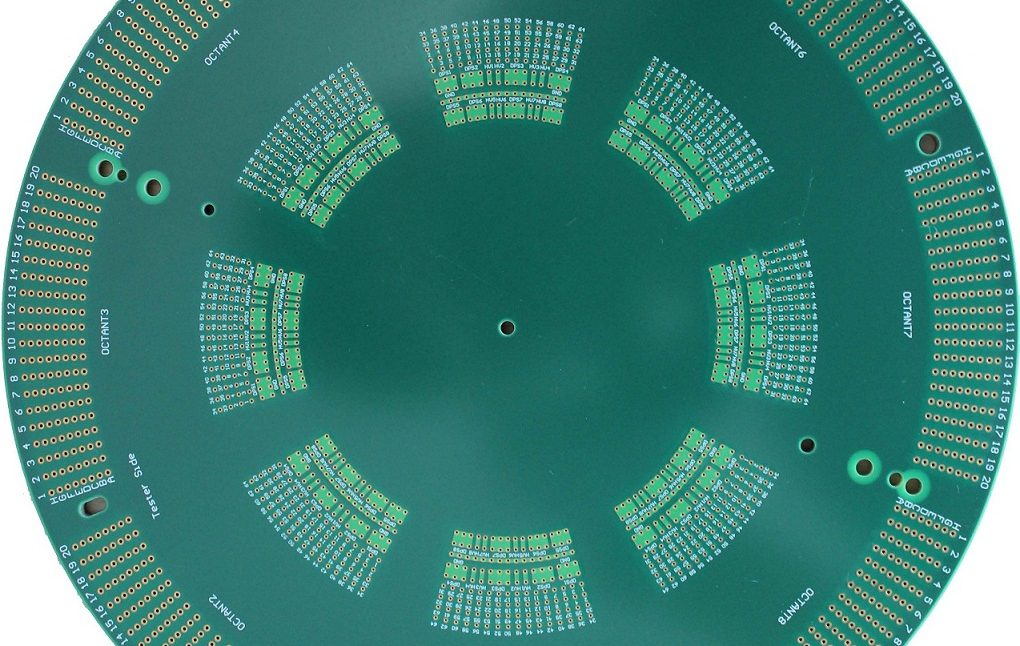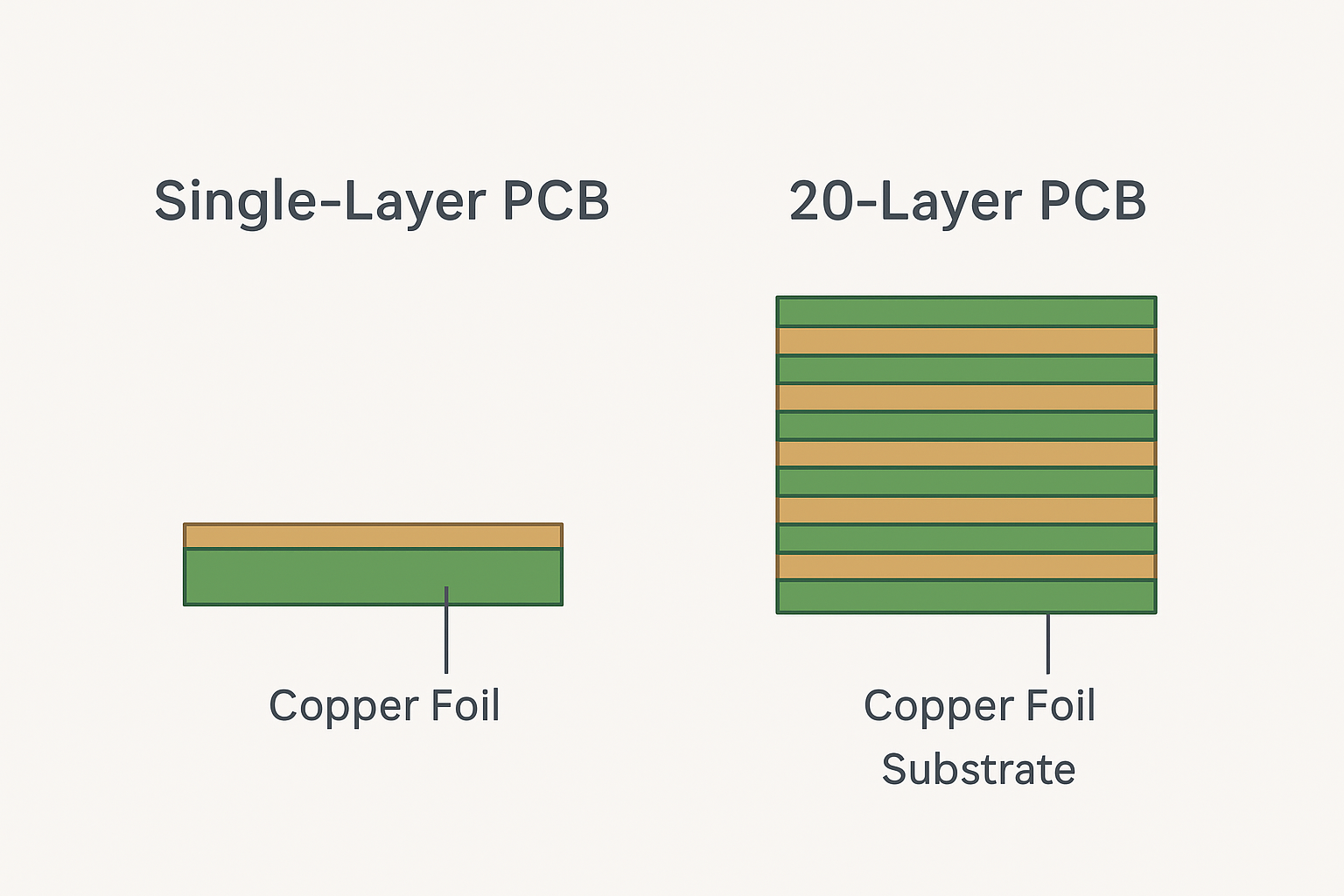
40-Layer PCB: Stack-Up, Materials and Process A forty layer board is at the far end of what conventional laminated printed circuit technology can deliver, and it is built for one reason: an application needs so many connections between so many devices that no smaller stack can carry them. Backplanes for…

PCB Prepreg Selection: The Glue Between the Layers Electronics manufacturing has become a discipline of small details. Solder paste volumes, placement accuracy, temperature profiles and inspection limits all add up to the final result. This guide looks at PCB prepreg selection from the perspective of a PCBA factory floor, covering…
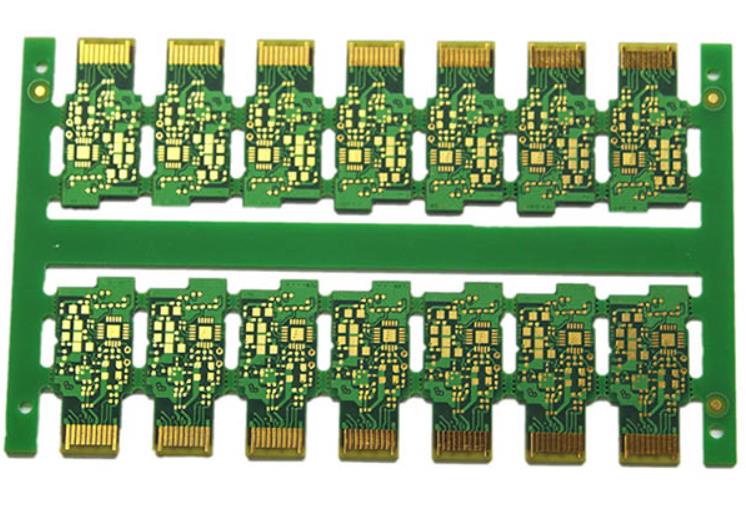
PCB V-Cut: V-Groove Panel Separation Explained V-cutting is the cheapest way to turn a panel of finished boards into individual units, and it works so well that it is often specified without much thought. The process scores a V-shaped groove along the lines where the boards must separate, leaving a…
Ceramic-Filled Laminates for Stable Microwave Performance Microwave circuits are sensitive to their substrate in a way that digital circuits are not. A filter, a coupler or a resonant antenna has a response that depends directly on the dielectric constant, and a change of a few percent shifts the centre frequency…
PCB Line Width Tolerance for Impedance: How Close Is Close Enough Electronics manufacturing has become a discipline of small details. Solder paste volumes, placement accuracy, temperature profiles and inspection limits all add up to the final result. This guide looks at PCB line width tolerance for impedance from the perspective…
PCB Cavity in A Multilayer Stackup: Making Room Inside the Board Modern electronics depend on boards that are assembled correctly the first time. Every product – a phone, a charger, a medical instrument or an industrial controller – relies on thousands of solder joints that must conduct current for years.…
Audio PCB Design: Noise, Grounding, and Layout Audio performance is one of the few specifications a customer notices immediately. A phone that sounds thin, an amplifier that hums, or a headset that clicks when a notification arrives are all failures of the board design as much as of the circuit.…
Through-Hole PCB Assembly: Where It Still Wins Surface mount technology dominates modern electronics, and yet a large share of critical products still uses pins that pass through the board. Automotive ignition circuits, aerospace avionics, industrial controllers, and power supplies rely on a through-hole PCB because the joint it produces is…
Printer PCB: A Beginner Guide to Design and Layout The board inside a printer is one of the most electrically hostile environments in consumer electronics. It controls motors that start and stop abruptly, drives a print head whose nozzles fire thousands of times a second, generates high voltage for the…
Piano Circuit Board: Design and Function Guide A digital piano is an instrument first and an electronic product second, and that ordering shapes its circuit board more than any consumer specification would. The player expects every key to respond immediately, to repeat at speed and to produce a different sound…