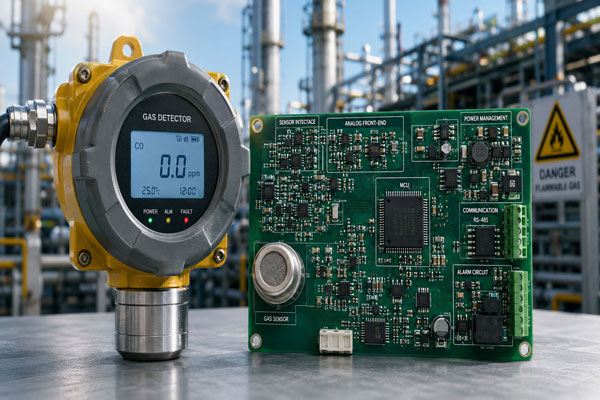
Potting Compounds and Dispensing Adhesives on PCBs Not every board lives in a dry, temperature-controlled cabinet. Products used outdoors, in vehicles, in kitchens or on factory floors are exposed to moisture, dust, salt and vibration, and the electronics inside them have to keep working for years. Potting and dispensing are…

Lead-Free Solder Versus Leaded Solder in Assembly Two families of solder alloy dominate electronics assembly, and the choice between them affects the thermal profile, the joint appearance, the reliability model and the mix of materials the supply chain will accept. Since lead is toxic and its use in electronics is…
The 3W Rule: Trace Spacing for Crosstalk Control Crosstalk is the least visible of the signal integrity problems and the one that designers most often try to solve with a rule of thumb. The 3W rule is the best known of those rules: keep the centre-to-centre spacing between two traces…
Board Outline and Mounting Design for PCB Layout Layout is usually described as an electrical discipline, but a large part of it is mechanical. The board has to fit inside an enclosure, be held in place, accept connectors that align with openings, and survive the assembly process. Every one of…
PCB Flux Compatibility with Conformal Coating: Will It Stick Buyers and engineers often focus on the finished product and forget the production line behind it. In practice, most field failures can be traced back to process decisions made during assembly. Understanding PCB flux compatibility with conformal coating gives you a…
PCB Water Soluble Flux Handling: Washing It Off Modern electronics depend on boards that are assembled correctly the first time. Every product – a phone, a charger, a medical instrument or an industrial controller – relies on thousands of solder joints that must conduct current for years. This article explains…
PCB No Clean Flux Process Window: Leaving It On Buyers and engineers often focus on the finished product and forget the production line behind it. In practice, most field failures can be traced back to process decisions made during assembly. Understanding PCB no clean flux process window gives you a…
PCB Flux Residue Effect on Reliability: What Is Left Behind Modern electronics depend on boards that are assembled correctly the first time. Every product – a phone, a charger, a medical instrument or an industrial controller – relies on thousands of solder joints that must conduct current for years. This…
PCB Frequency of Cleanliness Testing: How Often to Prove It Buyers and engineers often focus on the finished product and forget the production line behind it. In practice, most field failures can be traced back to process decisions made during assembly. Understanding PCB frequency of cleanliness testing gives you a…
Ground Current Paths and Second Harmonic Distortion An amplifier datasheet can promise distortion figures in parts per million and still perform badly on a real board. The reason is usually not the device but the copper underneath it. High-current output stages deliver large, rapidly changing currents into a load, and…