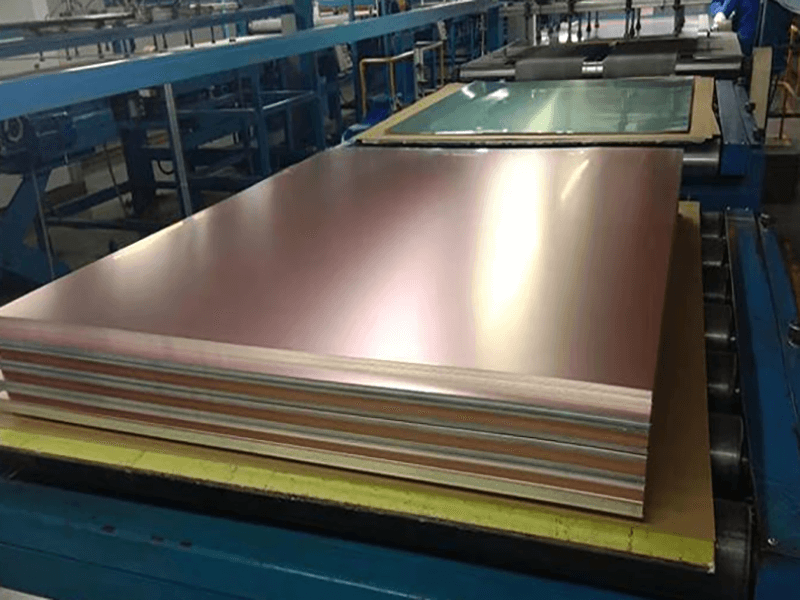
Copper Foil Roughness: Skin Effect, Insertion Loss and HVLP Options At low frequencies the surface of a copper trace is a detail, but as the skin depth shrinks towards the profile of the foil, the current is forced to follow every peak and valley. The path becomes longer than the…
Solder Mask Adhesion: Cure Verification and Tape Test Methods A solder mask that is under-cured looks perfect until the board reaches a soldering temperature or a cleaning bath, and then it lifts from the copper or blisters off a trace. Cure and adhesion are the same question asked twice, and…
Microsection Preparation: Cutting, Mounting and Measuring Plated Barrels A microsection is the only check that shows what is inside a plated hole, and almost every error in the answer comes from the way the sample was made rather than from the way it was measured. Cutting, mounting and polishing each…
Selective Soldering: Nozzle Wear, Flux Application and Pot Control Selective soldering replaces the wave for boards whose through-hole joints sit among tall surface mount parts, and it does so with a nozzle the size of a pencil. The process is governed by three things that wear or drift: the nozzle,…
Wave Solder Pallet Design: Fixtures, Shadowing and Through-Hole Fill A wave solder pallet carries the board across the wave, masks the side that must not be soldered and holds the assembly flat while it is hot. It also sits between the wave and the joint it is supposed to fill,…
Reflow Carriers for Thin Boards: Support, Warp and Placement Accuracy A board 0.6 mm thick with a large ball grid array on it will bend under its own weight as it crosses the oven, and the bending is what moves components after placement. A reflow carrier holds the panel flat…
Solder Paste Rheology: Viscosity, Metal Content and Printability A solder paste is a suspension of metal powder in flux, and the way that suspension flows decides whether the deposit is a clean brick or a smear. Viscosity is the single figure most often quoted, but it is only meaningful with…
Laser Cut Stencil: Design Rules and Process Limits Two stencils with the same aperture sizes can deposit different volumes, because the volume depends on the shape of the aperture wall as much as on its dimensions. A laser cut stencil and an electroformed stencil reach the same geometry by different…
Paste in Hole: Reflowing Through-Hole Connectors With Printed Paste Paste in hole prints solder into the barrel of a through-hole part and reflows it in the same pass as the surface mount devices, which removes a wave soldering step and the handling that goes with it. It works only when…
Back Drilling: Removing Via Stubs for High-Speed Signal Integrity A via that passes through a thick board and connects only the upper layers leaves a length of plated barrel hanging below the connection, and that unused barrel is an open transmission line hanging off the net. Back drilling removes it,…