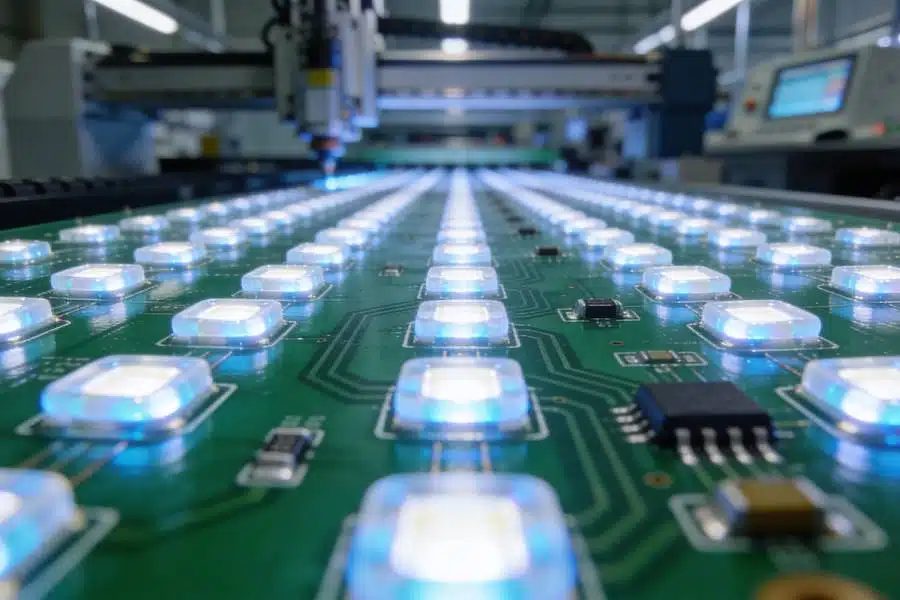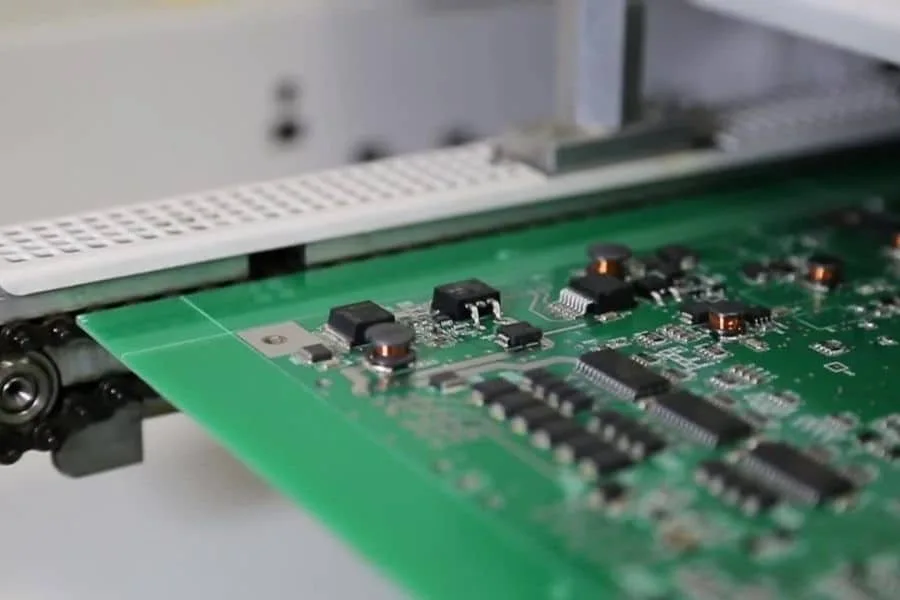
PCB Oven Zone Setup: Getting Ready Buyers and engineers often focus on the finished product and forget the production line behind it. In practice, most field failures can be traced back to process decisions made during assembly. Understanding PCB oven zone setup gives you a practical advantage when you choose…

Joint Appearance and Its Relation to Reliability A joint that looks acceptable is not necessarily a joint that will last, and the two questions are answered by different methods. Appearance is a proxy for the process, and reliability is a property of the structure. What Appearance Predicts Appearance predicts whether…
Powder Grade Choice: Type 4 or Type 5 Solder Paste Solder paste powder is graded by size, and the grade decides how the paste behaves on the smallest apertures of a board. Moving from a Type 4 to a Type 5 powder can rescue a marginal fine pitch print, but…
Board Handling Between Lines A board travels further than most people realise between the start and the end of a production line, and every transfer is an opportunity for damage. Handling defects are rarely dramatic: a chipped component, a hairline crack in a solder joint, an edge that has been…
Reflow Oven Fan and Duct Maintenance A convection reflow oven is a machine whose product is a temperature profile, and the profile depends on airflow as much as on heater power. Fans, ducts, plenums and filters determine how the heat reaches the board, and their condition drifts with flux condensation,…
Assembly Area Humidity and Dew Point Control An assembly area is controlled for humidity because the paste, the components and the coating all respond to it. The measurement that matters is taken where the work happens rather than at the air handling unit, and the two can differ by more…
Nozzle and Feeder Storage System Placement tooling is expensive, numerous and easy to lose control of. A feeder that is not stored properly gets damaged, a nozzle that is stored in the wrong tray is used on the wrong component, and a rack that has no identification becomes a place…
Fine Line Etching Process Control for Dense Circuitry Fine line etching is where a design that looked comfortable on screen becomes difficult in the tank. Removing thin copper without eating into the trace width depends on chemistry, resist quality, spray uniformity and bath control, and the tolerances tighten sharply as…
PCB Oven Zone Records: Writing It Down Buyers and engineers often focus on the finished product and forget the production line behind it. In practice, most field failures can be traced back to process decisions made during assembly. Understanding PCB oven zone records gives you a practical advantage when you…
PCB Oven Zone Audit: Checking the Practice Modern electronics depend on boards that are assembled correctly the first time. Every product – a phone, a charger, a medical instrument or an industrial controller – relies on thousands of solder joints that must conduct current for years. This article explains PCB…