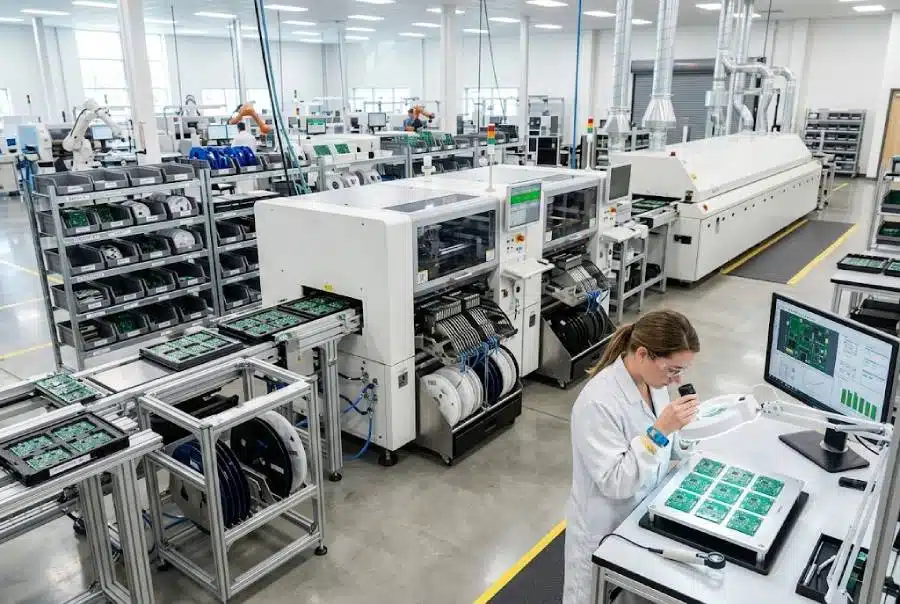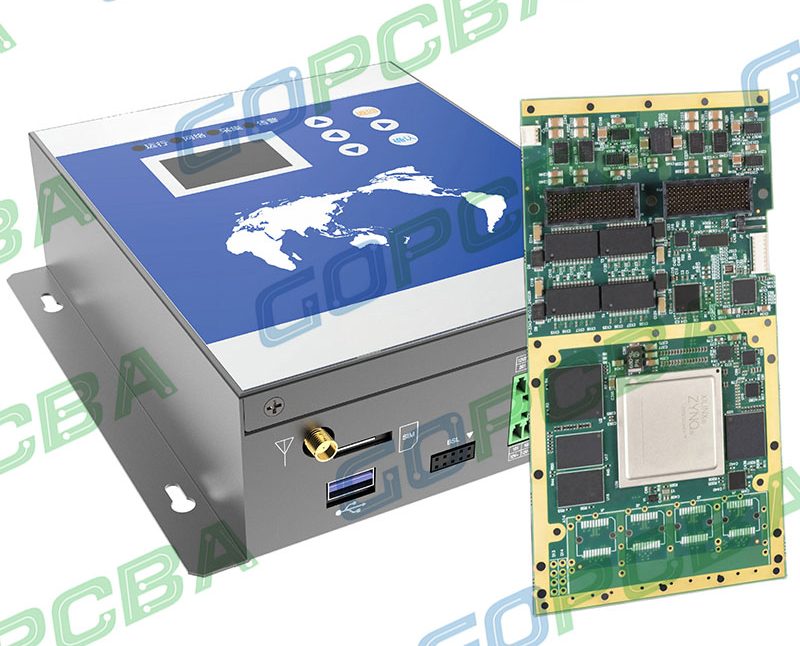
Work in Progress Control on the PCB Floor Work in progress is the material that has been started and not yet finished, and it is the most expensive inventory in a board shop. It has already consumed material, labour and machine time, it occupies space, it hides defects until they…
PCB Flatness Measurement Methods and Acceptance Limits Flatness is one of the few board properties that is easy to feel and hard to measure. A panel that rocks on a table is obviously warped, but the same panel measured with a height gauge may pass, because the result depends entirely…
Shift Handover Process in PCB Production Shift handover is the ten minutes where one crew tells the next what is running, what is waiting and what is wrong, and it is one of the most reliable sources of lost production in a board shop. Jobs are left in an uncertain…
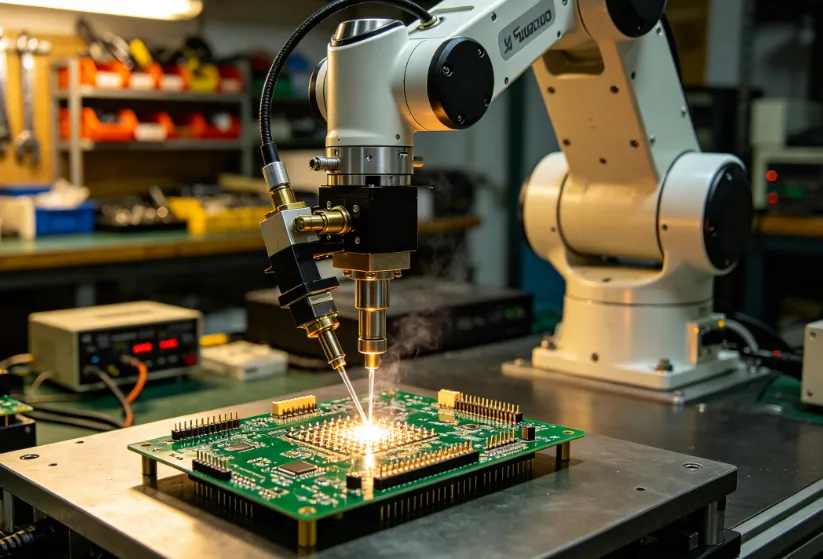
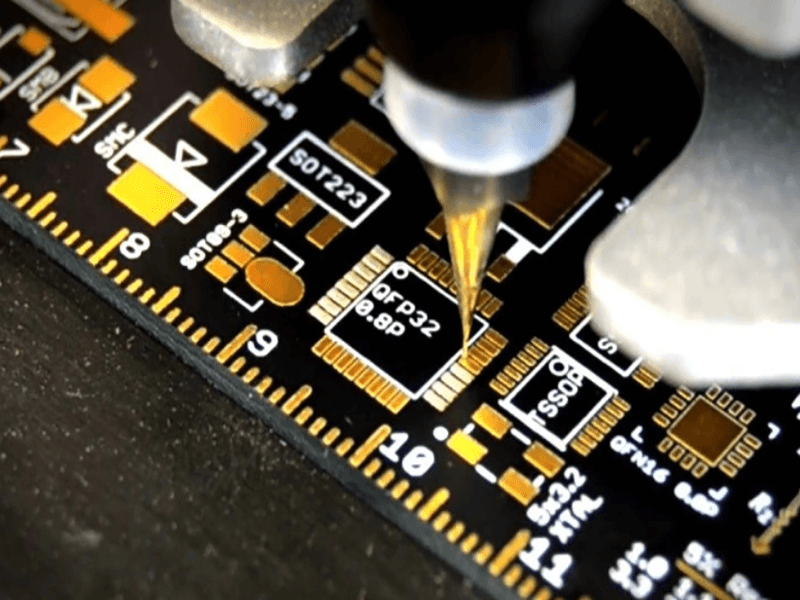
Selective Soldering: Practical Checks for Production Selective soldering makes a small fountain of molten solder and brings it into contact with one joint at a time. The nozzle that forms the fountain is the part that decides whether the process works, because it sets the shape of the flow, the…
Tombstoning And Reflow Thermal Imbalance Tombstoning is the defect in which a small chip component, usually a resistor or a capacitor, stands up on one end during reflow instead of lying flat. One termination is still attached to its pad and the other has been lifted clear, held by the…
Hole Wall Resin Smear And Desmear Drilling a hole in a printed circuit board generates heat, and the heat softens the resin around the hole. As the drill turns and withdraws, the softened resin is smeared across the hole wall like a thin film, and it can cover the copper…
PCB Selective Solder Timing: How Long It Takes Modern electronics depend on boards that are assembled correctly the first time. Every product – a phone, a charger, a medical instrument or an industrial controller – relies on thousands of solder joints that must conduct current for years. This article explains…
PCB Selective Solder Traceability: Following One Board Electronics manufacturing has become a discipline of small details. Solder paste volumes, placement accuracy, temperature profiles and inspection limits all add up to the final result. This guide looks at PCB selective solder traceability from the perspective of a PCBA factory floor, covering…
Ultrasonic Cleaning of Assembled Boards and Stencils Ultrasonic cleaning uses sound waves in a liquid bath to remove flux, paste and particulate contamination from an assembly. The waves create microscopic bubbles that collapse against the surface, and the energy released at each collapse lifts contamination from places that brushing cannot…
PCB Selective Solder Sample: Checking a Small Piece Buyers and engineers often focus on the finished product and forget the production line behind it. In practice, most field failures can be traced back to process decisions made during assembly. Understanding PCB selective solder sample gives you a practical advantage when…