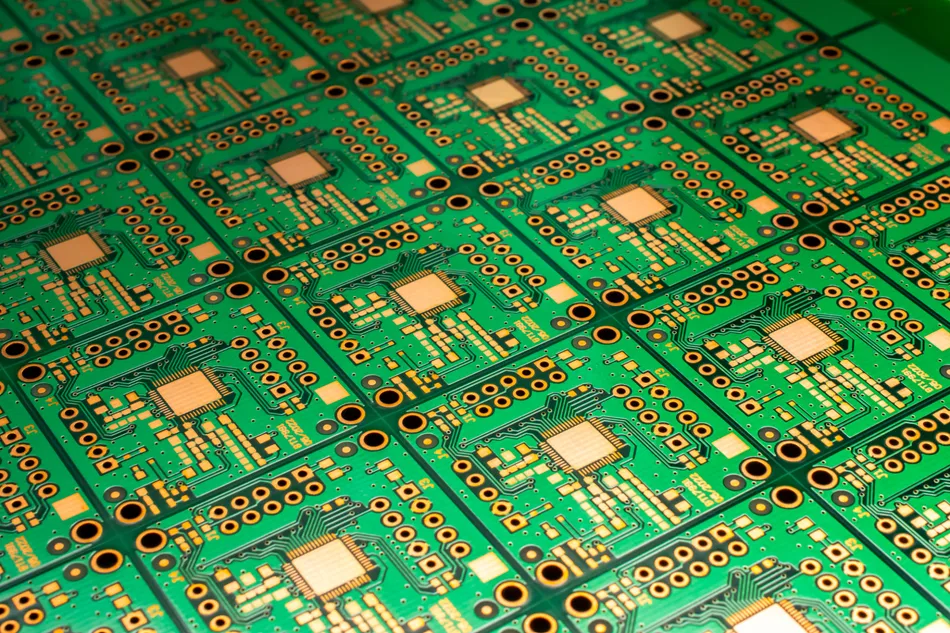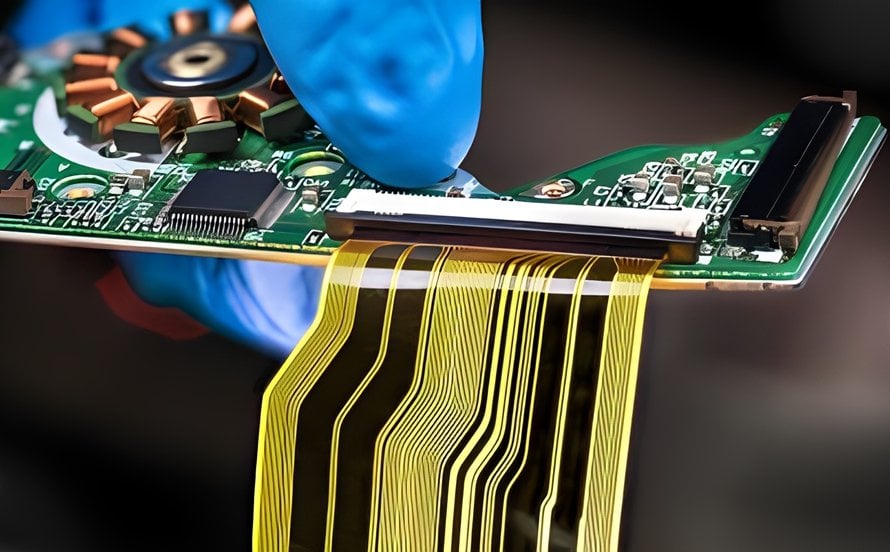
Back Drilling Design Guide Back drilling is the process that removes the unused part of a via barrel after plating. That unused part is the stub, and on a thick board it behaves as an open ended transmission line that resonates inside the band of a high speed link. The…
Mounting Hole Design, Plating And Clearance A mounting hole looks like the simplest feature on a printed circuit board and is one of the most frequently mis-specified. It may be a plain hole through the laminate, a plated hole that connects the board to a chassis, a hole with a…
Differential Pair Via Design Guide Every differential pair has to change layers somewhere, and the transition is where most of the signal integrity problems in a high speed link are created. A differential pair via is not two independent vias; it is a coupled structure whose symmetry decides how much…
Solder Joint Visual Inspection And Acceptance Criteria Visual inspection is the oldest and still the most common method of judging a solder joint. It is fast, it needs no capital equipment beyond a light and a lens, and it finds the defects that matter most in production. It is also…
Stencil Frame Tension and Mesh Mounting for Printing A stencil has to sit flat against the board, and it has to be flat while a squeegee presses it down and pulls across it. That flatness comes from tension in the mesh or the foil. When tension falls, the stencil sags…
Dielectric Loss Tangent Selection Guide The loss tangent of a laminate is the fraction of the energy in the field that is turned into heat as the signal passes. It is quoted as a small number, it changes with frequency and temperature, and it is the property that separates a…
Electrolytic Capacitor Placement And Loop Area Control An electrolytic capacitor is the largest component in most power circuits and the one whose position has the widest consequences. It sets the area of the loop that the switching current flows around, it is the component that dries out first when it…
Flex Rigid: Preparation, Placement and Process Control A flex rigid board is two constructions joined into one. Part of the board is a stack of rigid laminates; part of it is a thin flexible layer that can be bent; and the region where the two meet is the transition zone.…
CTE Mismatch PCB Design Guide CTE mismatch is the difference in thermal expansion between the materials in an assembly. A laminate expands by about fifteen parts per million per degree, a ceramic body by six, and a metal package by twelve. Every temperature change therefore moves the parts by different…
Backdrilling: Design Rules and Process Limits A plated through hole that connects an inner layer to the outside is drilled through the whole board, so the part of the barrel below the layer that matters is a length of copper that carries no signal. That unused length is the via…