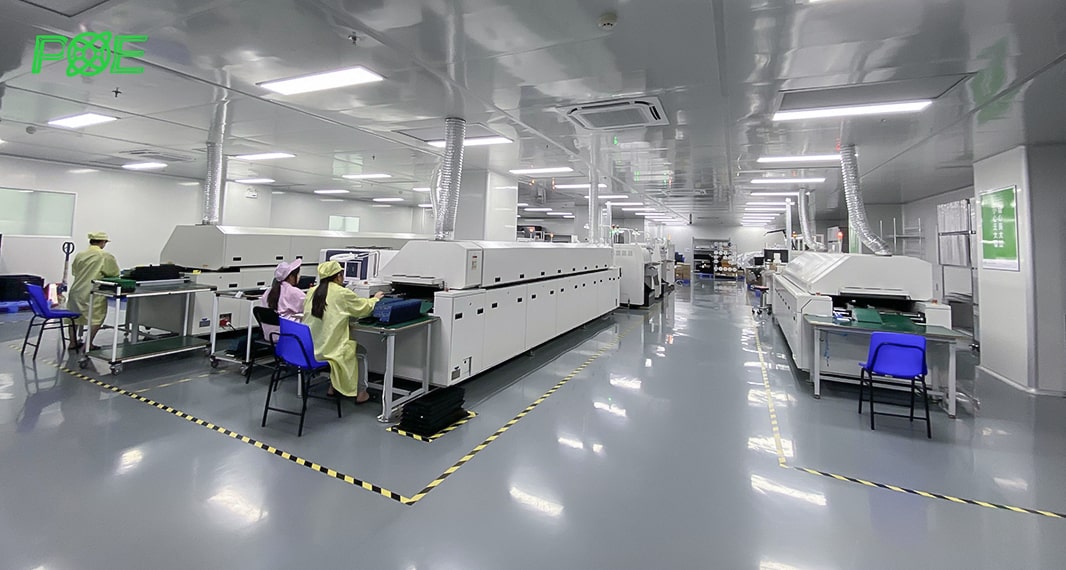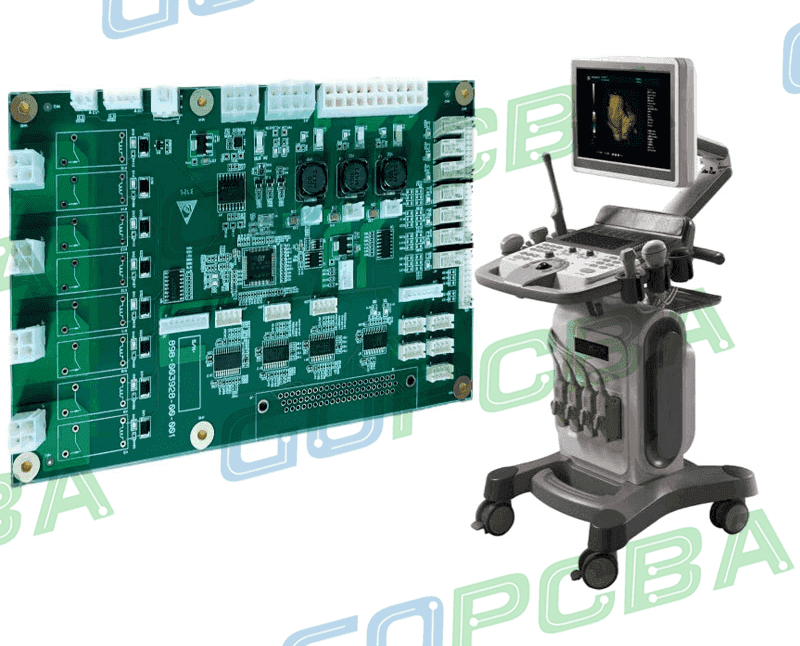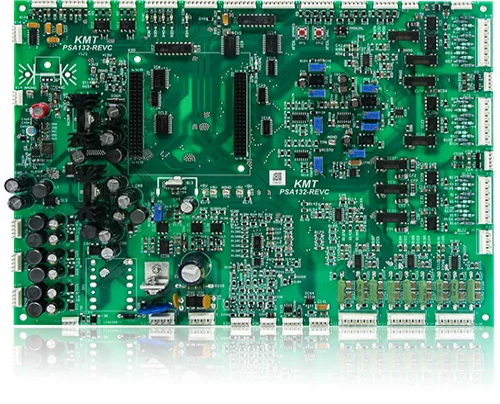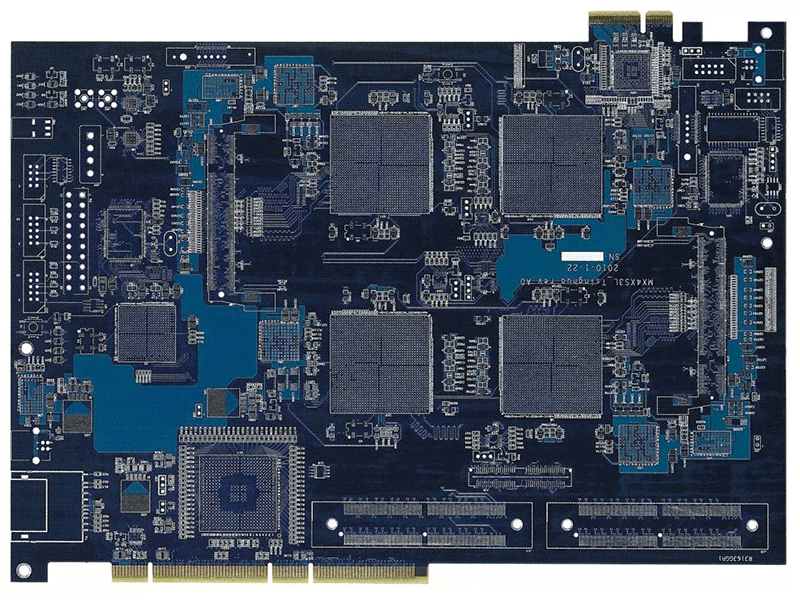
PCB Selective Reflow: Heating One Area at a Time Modern electronics depend on boards that are assembled correctly the first time. Every product – a phone, a charger, a medical instrument or an industrial controller – relies on thousands of solder joints that must conduct current for years. This article…

PCB Glue for the Second Side: Sticking Parts Down Modern electronics depend on boards that are assembled correctly the first time. Every product – a phone, a charger, a medical instrument or an industrial controller – relies on thousands of solder joints that must conduct current for years. This article…

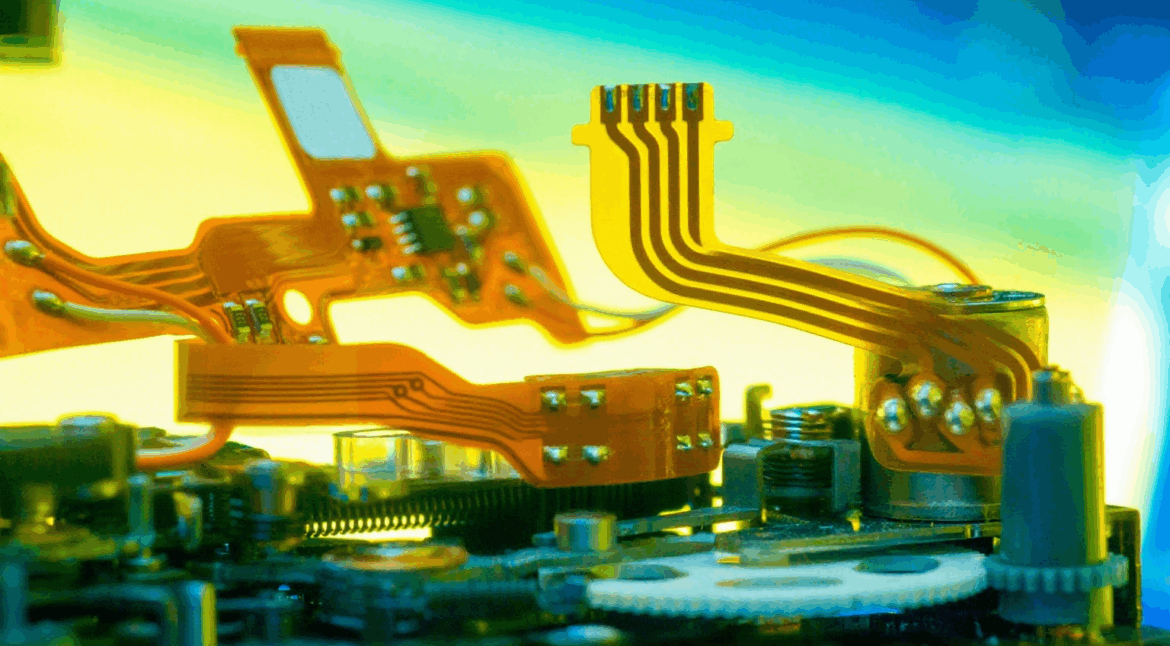
Rigid-Flex PCB for Wearables: Bend Radius and Stackup Rules A wearable device folds electronics into a shape that the human body dictates. The display, the sensor package, the battery and the radio rarely sit on one plane, and the space between them is measured in millimetres that also have to…
Managing PCB Design Rules Across Projects Every layout is driven by a set of design rules, whether or not anyone has written them down. If the rule set is well built, the tool catches the mistakes as they are made and the layout proceeds without rework. If it is left…
EMI Immunity in Mixed-Signal and Power Boards An interference problem always has the same three parts: something that generates noise, something that is sensitive to it, and a path between the two. Fixing a board that misbehaves means deciding which of the three can be changed most cheaply, and that…
PCB Pallet for Reflow: The Carrier Through the Oven Modern electronics depend on boards that are assembled correctly the first time. Every product – a phone, a charger, a medical instrument or an industrial controller – relies on thousands of solder joints that must conduct current for years. This article…

PCB Flatness After Reflow: Keeping the Board Level Electronics manufacturing has become a discipline of small details. Solder paste volumes, placement accuracy, temperature profiles and inspection limits all add up to the final result. This guide looks at PCB flatness after reflow from the perspective of a PCBA factory floor,…
Choosing a High-Frequency Laminate: Dk, Df and Process Trade-offs Choosing a high-frequency laminate is a compromise between electrical loss, dimensional stability, thermal behaviour and what the fabricator can actually process. Two materials with the same nominal dielectric constant can behave very differently in a pressed panel, and the difference usually…
Projector PCB: Architecture, Types and Design Considerations A projector packs a display engine, a bright light source, a video pipeline and a power supply into a box small enough to sit on a table. The electronics have to drive the light source with precise timing, move video data at high…
High Frequency Filter PCB: Layout and Tolerance Control A filter is one of the few circuits whose performance depends on the physical dimensions of the board rather than only on the components. In the lower megahertz range a filter is built from discrete parts, but as the frequency rises the…