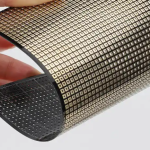
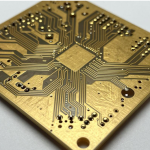
China has become an important global manufacturing base for printed circuit boards (PCBs) and PCB assembly (PCBA). With extensive manufacturing capabilities, mature electronics supply chains, competitive production costs, and increasingly advanced manufacturing technologies, Chinese PCB manufacturers serve customers across consumer electronics, industrial automation, automotive electronics, telecommunications, medical equipment, new energy, and other industries.
However, choosing a reliable PCB manufacturer in China is not simply about finding the lowest quotation. A suitable supplier should be evaluated based on manufacturing capabilities, material selection, quality management, engineering support, production capacity, lead time, certifications, communication, and the ability to support a project from PCB prototype manufacturing through mass production.
For companies developing new electronic products, working with an experienced manufacturer can significantly simplify the transition from design verification to production. Kingda provides professional PCB manufacturing, PCB prototype, rapid PCB prototype, and PCB assembly services, supporting customers from initial design validation through small-batch and volume production.
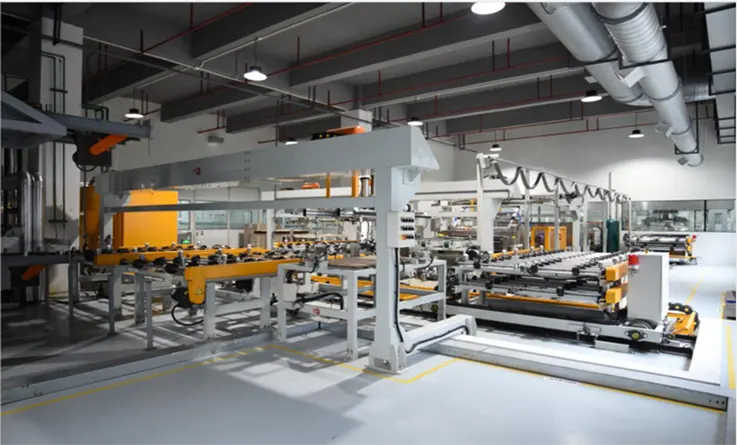
This guide explains how to evaluate Chinese PCB manufacturers, what capabilities to look for, how to compare suppliers, and why an integrated PCB and PCBA manufacturing partner can be valuable for electronic product development.
Top Considerations When Choosing a Chinese PCB Manufacturer
The Chinese PCB manufacturing market includes suppliers with very different capabilities. Some specialize in basic single- and double-sided boards, while others focus on HDI, high-speed, high-frequency, rigid-flex, heavy copper, metal core, or other advanced PCB technologies.
Before selecting a supplier, engineers and purchasing teams should evaluate several key factors.
1. PCB Manufacturing Capabilities
The first consideration is whether the manufacturer can produce the required board structure and materials.
Depending on the project, common requirements may include:
- Single-sided PCB
- Double-sided PCB
- Multilayer PCB
- HDI PCB
- High-speed PCB
- High-frequency PCB
- Rigid-flex PCB
- Flexible PCB
- Heavy copper PCB
- High-Tg PCB
- Metal core PCB
- Impedance-controlled PCB
- Fine-pitch PCB
- Prototype PCB
A capable supplier should also be able to explain the limitations of its production process, including minimum trace width and spacing, minimum via size, aspect ratio, layer count, copper thickness, board thickness, surface finish, and material options.
For complex projects, engineering support is just as important as equipment. A manufacturer should be able to review the design and identify manufacturability risks before production begins.
How Do I Find a Reliable PCB Manufacturer in China?
Finding a suitable Chinese PCB manufacturer requires more than searching for suppliers online. A systematic evaluation process can reduce quality, delivery, and communication risks.
Step 1: Define Your PCB Requirements
Before contacting manufacturers, prepare a complete technical package containing:
- PCB Gerber or ODB++ files
- BOM
- Pick-and-place files
- PCB specifications
- Material requirements
- Layer count
- Board thickness
- Copper thickness
- Surface finish
- Solder mask requirements
- Impedance requirements
- Special processing requirements
- Annual or monthly demand
- Prototype and mass-production quantities
Clear specifications allow manufacturers to provide more accurate quotations and identify technical issues earlier.
Step 2: Evaluate Engineering and DFM Support
Design for Manufacturing (DFM) is an important part of successful PCB production.
A professional PCB manufacturer should review factors such as:
- Trace width and spacing
- Pad and via design
- Copper distribution
- Drill sizes
- Annular rings
- Component clearances
- Solder mask openings
- Impedance structures
- Panelization
- Manufacturing tolerances
DFM analysis can identify potential production problems before fabrication, reducing the risk of scrap, redesign, and schedule delays.
For prototype development, this is particularly important because design changes are usually easier and less expensive before production begins.
Step 3: Verify Quality Management
Quality control should cover the entire manufacturing process rather than only the final inspection.
A reliable supplier should have clearly defined controls for:
- Incoming material inspection
- Lamination and drilling
- Pattern transfer
- Plating
- Etching
- Solder mask
- Surface finishing
- Electrical testing
- Final inspection
- Packaging and shipment
Depending on the application, customers may also require specific international certifications or industry standards.
Step 4: Check Production Capacity
Production capacity should match the customer’s requirements.
A manufacturer suitable for prototypes may not necessarily be suitable for large-scale production. Conversely, a large-volume factory may not provide the engineering flexibility required during early-stage product development.
When evaluating capacity, consider:
- Prototype capability
- Small-batch production
- Medium-volume production
- High-volume manufacturing
- Equipment capability
- Layer-count capability
- Material availability
- Component sourcing
- PCB assembly capacity
- Production scalability
An ideal manufacturing partner should be able to support the product as demand grows.
Step 5: Evaluate Lead Time and Communication
Lead time is particularly important for product development and urgent engineering projects.
Ask the supplier to clearly distinguish between:
- Engineering review time
- PCB fabrication time
- Component procurement time
- PCB assembly time
- Testing time
- Packaging time
- Shipping time
Communication is another important factor. A responsive engineering and sales team can help resolve design questions, material substitutions, production issues, and engineering changes more efficiently.
What PCB Services Should a Chinese Manufacturer Provide?
A professional PCB manufacturer in China should ideally provide more than basic board fabrication.
For modern electronic product development, customers may require a combination of:
PCB Prototype Manufacturing
PCB prototype manufacturing allows engineers to verify circuit performance, mechanical dimensions, component placement, and system integration before committing to larger production quantities.
Prototype production should focus on:
- Fast engineering review
- Accurate fabrication
- Consistent materials
- Reliable electrical testing
- Flexible quantity requirements
- Rapid engineering feedback
Rapid PCB Prototype
For projects with tight development schedules, rapid PCB prototype manufacturing can shorten the product development cycle.
Rapid prototyping is especially useful for:
- New product development
- Engineering validation
- Hardware debugging
- Proof-of-concept projects
- Design revisions
- Pilot production
However, speed should not come at the expense of material control or manufacturing quality.
PCB Assembly
Many customers need both bare boards and assembled circuit boards. A manufacturer offering PCB assembly can simplify the supply chain by integrating PCB fabrication with SMT and through-hole assembly.
Typical PCBA services include:
- Component sourcing
- Solder paste printing
- SMT placement
- Reflow soldering
- Through-hole assembly
- AOI
- X-ray inspection
- Functional testing
- Final inspection
Combining PCB fabrication and assembly can reduce supplier coordination and improve communication between board fabrication and assembly engineering teams.
Why Choose a One-Stop PCB and PCBA Manufacturer?
Working with separate suppliers for PCB fabrication and assembly can create additional coordination requirements.
A one-stop supplier can integrate:
PCB Design Review → DFM Engineering → PCB Prototype Manufacturing → PCB Assembly → Inspection & Testing → Design Optimization → Small-Batch Production → Volume Manufacturing
This integrated process allows engineering information to move between fabrication and assembly teams more efficiently.
For example, if a PCB assembly issue is related to pad geometry, solder mask openings, component clearance, or PCB thickness, an integrated manufacturer can coordinate the relevant engineering teams instead of requiring the customer to manage communication between multiple suppliers.
Kingda provides integrated PCB manufacturing and PCB assembly solutions, helping customers move from initial design verification and PCB prototype manufacturing toward small-batch and volume production.
What Types of PCBs Can Be Manufactured in China?
Different electronic applications require different PCB technologies.
Multilayer PCB
Multilayer PCBs are widely used in industrial equipment, computers, communication systems, medical electronics, and automotive electronics.
Additional layers provide greater routing density and allow power and ground structures to be optimized for complex circuits.
HDI PCB
HDI PCB technology is used when designers need higher routing density and smaller form factors.
HDI manufacturing may incorporate:
- Microvias
- Blind vias
- Buried vias
- Fine lines and spaces
- High-density interconnections
- Sequential lamination
HDI is commonly used in compact communication equipment, mobile electronics, automotive electronics, and other high-density applications.
High-Speed PCB
High-speed designs require careful control of signal integrity.
Important factors include:
- Controlled impedance
- Differential pair routing
- Trace geometry
- Dielectric properties
- Layer stack-up
- Crosstalk
- Return paths
- Via transitions
A manufacturer should be capable of producing the specified stack-up and maintaining the required impedance tolerances.
High-Frequency PCB
High-frequency PCBs are used in RF, wireless communication, radar, sensing, and other high-frequency applications.
Material selection becomes particularly important because dielectric constant, dissipation factor, copper surface characteristics, and dimensional stability can influence signal performance.
Heavy Copper PCB
Heavy copper PCBs are designed for applications requiring higher current capacity and improved thermal performance.
They are commonly considered for:
- Power electronics
- Industrial power supplies
- Battery systems
- Energy storage
- Automotive power electronics
- Motor control systems
Rigid-Flex PCB
Rigid-flex PCBs combine rigid and flexible sections into a single structure.
They can reduce connector count, save installation space, and improve mechanical integration in compact electronic products.
How to Compare PCB Manufacturer Prices in China
Price is important, but the lowest quotation does not necessarily represent the lowest total cost.
When comparing PCB manufacturing costs, consider the complete quotation rather than only the unit price.
Material Cost
Material selection has a direct influence on PCB cost.
Common factors include:
- FR-4 grade
- High-Tg material
- Low-loss material
- High-frequency material
- Copper thickness
- Dielectric thickness
- Special laminates
PCB Structure
More complicated boards generally require additional processing.
Cost may increase with:
- More layers
- HDI structures
- Microvias
- Sequential lamination
- Smaller drill sizes
- Higher copper thickness
- Tight tolerances
- Special surface finishes
Surface Finish
Common surface finishes include:
- HASL
- Lead-free HASL
- ENIG
- OSP
- Immersion tin
- Immersion silver
The appropriate finish depends on solderability, environmental requirements, contact performance, shelf life, and application.
Testing Requirements
Additional testing can also affect the total cost.
Potential requirements include:
- Electrical testing
- Flying probe testing
- AOI
- X-ray inspection
- Impedance testing
- Microsection analysis
- Reliability testing
Therefore, customers should compare quotations based on the same technical specifications and testing requirements.
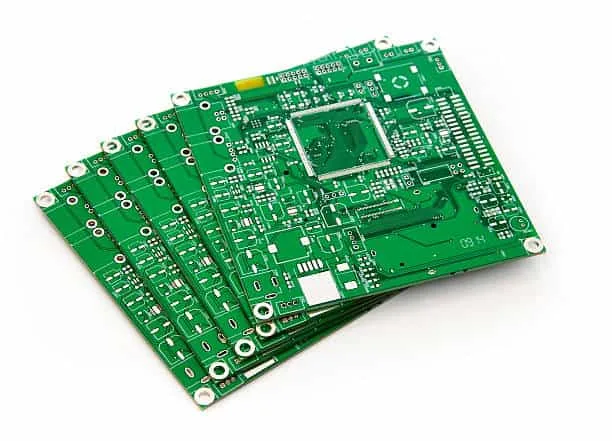
What Are the Benefits of Choosing a Chinese PCB Manufacturer?
Selecting a qualified PCB manufacturer in China can provide several potential advantages for international electronics companies.
Competitive Manufacturing Costs
China has a mature electronics manufacturing ecosystem, including PCB materials, components, equipment, assembly, packaging, and logistics.
This integrated supply chain can help manufacturers maintain competitive production costs.
Broad Manufacturing Capabilities
Chinese PCB manufacturers offer a wide range of technologies, from conventional FR-4 boards to advanced HDI, high-speed, high-frequency, rigid-flex, and heavy copper PCBs.
Flexible Production Volumes
Customers may require different quantities at different stages of product development.
A suitable supplier should be able to support:
- Prototypes
- Engineering samples
- Small-batch production
- Pilot production
- Medium-volume manufacturing
- High-volume production
Strong Electronics Supply Chain
A mature local supply chain can simplify procurement of PCB materials, components, connectors, and other electronic manufacturing resources.
Global Export Experience
Manufacturers serving international customers typically need to understand packaging, documentation, logistics, quality requirements, and communication across different markets.
What Makes Kingda a PCB Manufacturing Partner?
As an experienced PCB manufacturer and PCB assembly service provider, Kingda provides professional solutions covering PCB prototype manufacturing, rapid PCB prototyping, PCB fabrication, and PCB assembly.
Kingda’s service model is designed to support customers throughout the product development lifecycle, from initial design verification to broader production.
1. PCB Prototype Support
For engineers developing new products, PCB prototypes provide an important opportunity to verify the design before mass production.
Kingda supports prototype projects with engineering-oriented manufacturing services designed to help customers move efficiently from design files to physical boards.
2. Rapid PCB Prototyping
When development schedules are tight, rapid PCB prototype manufacturing can help engineers accelerate hardware validation and design iteration.
Kingda can support customers requiring fast prototype development while maintaining attention to manufacturing quality and technical specifications.
3. PCB Assembly Services
Kingda provides PCB assembly solutions to help customers integrate bare PCB fabrication and electronic component assembly.
This can simplify supplier management and create a more coordinated manufacturing workflow.
4. Engineering and DFM Support
Manufacturing problems can often be reduced by identifying potential design issues before fabrication.
Kingda can support engineering review and manufacturing-oriented design evaluation to help customers identify potential production risks before placing orders.
5. Support from Prototype to Production
A PCB supplier should not only support the first prototype but also provide a pathway toward production.
Kingda’s manufacturing solutions are designed to support the progression from:
Initial Design → Prototype → Design Validation → Small-Batch Production → Volume Manufacturing
This approach can help reduce the need to change suppliers as the product moves through different development stages.
6. Integrated PCB and PCBA Solutions
For customers requiring both PCB fabrication and assembly, Kingda provides integrated PCB and PCBA manufacturing solutions.
This can reduce communication between multiple suppliers and make it easier to coordinate technical requirements, production schedules, and quality expectations.
How to Choose the Right PCB Manufacturer?
When evaluating Chinese PCB manufacturers, consider the following checklist:
Manufacturing Capability
Confirm that the supplier can manufacture your required:
- Layer count
- Board thickness
- Copper thickness
- Material
- Trace width and spacing
- Via structure
- Surface finish
- Impedance requirements
- Special PCB structure
Quality Management
Ask about:
- Incoming inspection
- Process inspection
- Final inspection
- Electrical testing
- Traceability
- Quality documentation
- Applicable certifications
Engineering Support
Evaluate whether the manufacturer can provide:
- DFM review
- Stack-up recommendations
- Material recommendations
- Design feedback
- Prototype support
- Engineering change management
Production Capacity
Check whether the supplier can support your expected production volume and whether capacity can scale as demand increases.
Lead Time
Compare actual manufacturing lead times rather than relying only on advertised turnaround times.
PCB Assembly Capability
If you require PCBA, determine whether the supplier can provide:
- Component sourcing
- SMT
- THT
- AOI
- X-ray
- Functional testing
- Final inspection
Communication
Good communication is especially important for international projects involving engineering changes, material substitutions, urgent production, and quality issues.
What Information Should Be Included in a PCB RFQ?
A complete PCB RFQ should include as much technical information as possible.
Recommended information includes:
- Gerber or ODB++ files
- BOM
- Pick-and-place files
- PCB dimensions
- Layer count
- Material
- Board thickness
- Copper thickness
- Surface finish
- Solder mask color
- Silkscreen requirements
- Impedance requirements
- Quantity
- Prototype quantity
- Annual production volume
- Assembly requirements
- Testing requirements
- Delivery destination
The more complete the RFQ, the easier it is for a manufacturer to provide an accurate quotation and realistic production schedule.
PCB Manufacturing Applications
Chinese PCB manufacturers serve a wide range of industries.
Automotive Electronics
Automotive PCBs are used in:
- ECUs
- ADAS systems
- Battery management systems
- Infotainment
- Vehicle lighting
- Charging systems
- Power electronics
These applications often require high reliability, thermal stability, vibration resistance, and controlled manufacturing processes.
Industrial Electronics
Industrial PCBs are used in:
- PLCs
- Industrial controllers
- Motor drives
- Robotics
- Sensors
- Power supplies
- Automation equipment
Long operating cycles and demanding environments make manufacturing consistency particularly important.
Telecommunications
Communication equipment often requires:
- High-speed PCBs
- High-frequency PCBs
- Controlled impedance
- Low-loss materials
- Multilayer structures
These boards may be used in networking equipment, wireless infrastructure, routers, switches, and communication modules.
Medical Electronics
Medical devices require reliable PCB performance and controlled manufacturing.
Typical applications include:
- Patient monitoring
- Diagnostic equipment
- Medical imaging
- Laboratory equipment
- Portable medical devices
Depending on the final application and market, additional quality and regulatory requirements may apply.
New Energy
PCBs are increasingly used in:
- EV charging equipment
- Battery management systems
- Energy storage
- Solar equipment
- Power converters
- Motor controllers
These applications may require high-current, high-temperature, high-reliability, or specialized PCB structures.
Consumer Electronics
Consumer products require compact, cost-effective, and scalable PCB solutions.
Applications include:
- Smart home products
- Wearable devices
- Consumer appliances
- Gaming equipment
- Personal electronics
Frequently Asked Questions About Chinese PCB Manufacturers
Q1: Why are Chinese PCB manufacturers widely used by international customers?
China has a mature electronics manufacturing ecosystem, broad PCB production capabilities, established component supply chains, and extensive manufacturing infrastructure. However, supplier selection should always be based on the specific technical, quality, delivery, and service requirements of the project.
Q2: Can Chinese PCB manufacturers produce prototype PCBs?
Yes. Many manufacturers support PCB prototype manufacturing, although capabilities and turnaround times vary between suppliers. Customers should confirm prototype quantity, material availability, technical limitations, and lead time before ordering.
Q3: Can one supplier provide both PCB fabrication and PCB assembly?
Yes. Some manufacturers provide integrated PCB and PCBA services, allowing customers to source bare boards, components, SMT assembly, through-hole assembly, testing, and related services from one supplier.
Q4: What files are required for a PCB quotation?
A typical PCB quotation requires Gerber or ODB++ files. For PCBA projects, the manufacturer will generally also need the BOM and pick-and-place files, along with assembly drawings and testing requirements when applicable.
Q5: How can I reduce PCB manufacturing costs?
Cost reduction should begin with design and manufacturing optimization rather than simply choosing the lowest-cost supplier.
Potential approaches include:
- Optimizing the layer count
- Selecting appropriate materials
- Reducing unnecessary tolerances
- Optimizing panel utilization
- Standardizing components
- Reviewing surface finish requirements
- Conducting DFM analysis before production
Q6: What is DFM in PCB manufacturing?
Design for Manufacturing (DFM) is the process of reviewing a PCB design to ensure it can be manufactured reliably and economically.
DFM checks may include trace spacing, drill sizes, annular rings, component clearances, solder mask, impedance structures, and panelization.
Q7: What is the difference between PCB manufacturing and PCBA?
PCB manufacturing produces the bare printed circuit board. PCBA manufacturing adds electronic components to the PCB through processes such as SMT and THT assembly.
A complete electronic manufacturing solution may combine both processes.
Q8: Can Kingda support PCB projects from prototypes to mass production?
Kingda provides PCB manufacturing, PCB prototype, rapid PCB prototype, and PCB assembly solutions, supporting customers from initial design validation through small-batch and volume manufacturing.
Conclusion
Choosing among Chinese PCB manufacturers requires a comprehensive evaluation of technology, quality, engineering support, production capacity, lead time, communication, and total manufacturing cost.
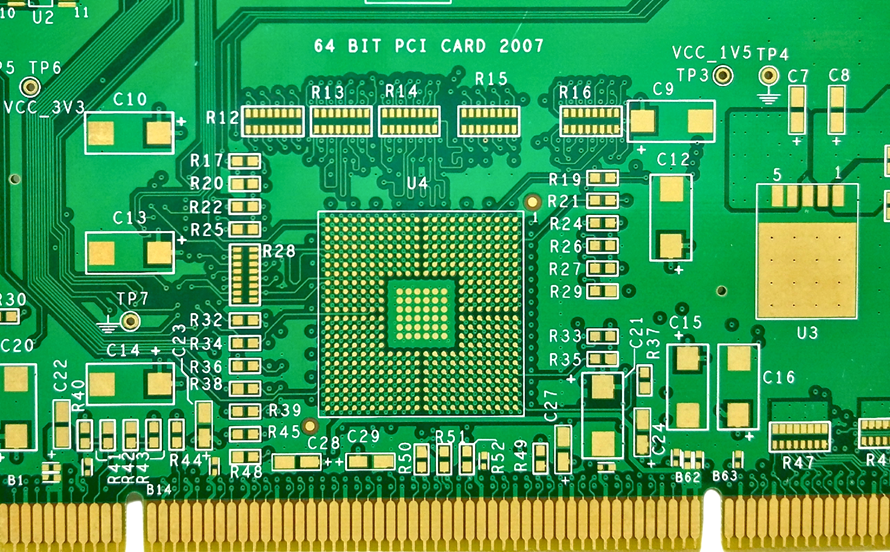
The right supplier should be capable of supporting more than a single PCB order. For new product development, the manufacturer should provide reliable PCB prototype manufacturing, engineering and DFM support, and a clear path toward PCB assembly, small-batch production, and volume manufacturing.
As an experienced PCB manufacturer and PCB assembly service provider, Kingda provides professional PCB prototype manufacturing, rapid PCB prototyping, PCB fabrication, and PCBA solutions to support customers from initial design verification to full production.
By selecting a manufacturing partner based on technical capability and long-term project requirements rather than price alone, electronics companies can improve manufacturing efficiency, reduce production risks, and establish a more stable supply chain.