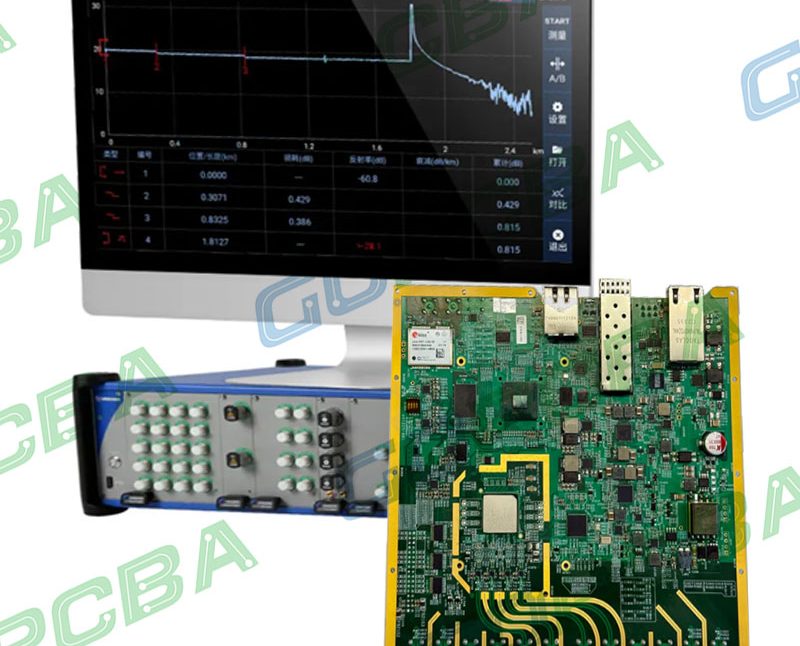
Burr Control at Drill Entry and Exit
A drilled hole is formed by a tool that pushes through a stack of materials, and what happens at the top and the bottom of that stack decides the quality of the hole. Entry and exit material is placed to control those two surfaces, and its specification is part of the process rather than an accessory.
What Happens at the Entry
The drill enters the top surface and pushes the copper and the resin aside before it starts cutting. That displacement produces a burr and it also produces a small amount of delamination around the hole in the top layer.
An entry sheet lubricates the drill, holds the top of the hole and takes the burr into itself rather than into the board. An entry material that is too soft does none of those things. Our fabrication notes describe where the choice is recorded.
Points to Confirm at First Article
On a design of this kind, exit material is the item that decides how the rest of the board is arranged. Consumables have a life measured in cycles, and the replacement point should come from the measurement rather than from a failure. The sequence of operations is part of the specification, because a different order produces a different result from the same steps.
Where the process window is narrow, the measurement resolution has to be better than the window, or the data cannot distinguish a good part from a marginal one. Where two operations share a tolerance, the allocation between them should be explicit rather than left to whichever is measured first.
The narrowest feature on the board usually sets the process window for the whole product, so it deserves the closest attention at review. Where a requirement can be measured, it should be measured at the point of manufacture and recorded against the board or the lot it applies to.
Sampling is a compromise between cost and confidence, and the sample size should follow from the failure rate that has to be detected. Where a decision is made by judgement, a boundary sample makes the judgement repeatable between operators and between shifts.
Where a process is at the edge of its capability, the margin should be bought deliberately rather than discovered during production. A record that identifies the operator, the date and the settings is worth more than a record that identifies only the result.
A measurement taken at the wrong point of the process describes the wrong thing, however carefully it is made.
Documented Process Control
On a design of this kind, exit material is the item that decides how the rest of the board is arranged. Handling between operations is part of the process, and the damage it causes is often attributed to the operation that preceded it. The checks that matter are the ones performed on the product rather than on a sample kept for the purpose, because a coupon that travels with the panel is the only evidence about that panel.
The environment around the process, including temperature, humidity and cleanliness, sets limits on what the process can hold. A parameter that is set once and never re verified drifts, and the drift is usually discovered by a defect rather than by the record.
The cost of verification is small compared with the cost of a field failure, and it is paid at a point where the product can still be corrected. The tooling, the material and the profile form one system, and a change to any of them should be assessed against the other two before it is released.
Inspection and Traceability Notes
On a design of this kind, exit material is the item that decides how the rest of the board is arranged. Where the supplier and the user both measure the same property, they should agree on the method before the first delivery.
What to Record and Why
On a design of this kind, exit material is the item that decides how the rest of the board is arranged. The first article confirms that the setup matches the intent, and it is the cheapest point at which a wrong setup can still be corrected. A change that is not recorded is a change that cannot be explained when the result moves, which is why the record is part of the process.
What Happens at the Exit
The drill breaks through the bottom and the exit is where the last material is pushed out rather than cut. An unsupported exit tears the copper and leaves the largest burr in the stack.
A backing board supports the exit and reduces that burr. The backing is a separate material with its own thickness and its own behaviour, and it is consumed by every stroke. Our hole copper notes describe why the exit condition matters to the plating.
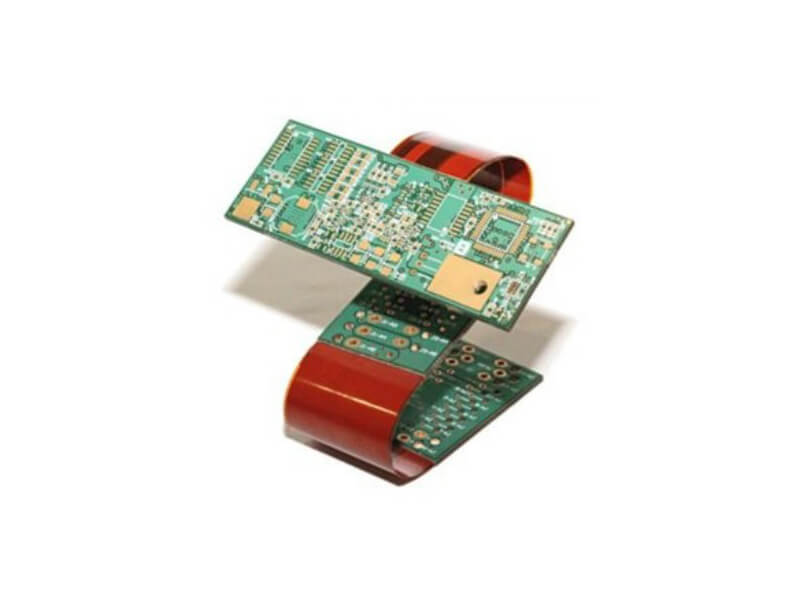
Material Choices
Entry materials are made from aluminium foil, coated papers and phenolic sheets, and the differences are in lubrication and in how cleanly the material clears. Exit materials are usually a rigid board that supports the stack without deforming.
The choice follows the hole size and the stack height. A fine via pattern needs a lubricated entry, and a heavy stack needs a backing thick enough not to bend under the thrust.

Stack Height and Its Effect
The stack is drilled in one stroke, so the entry material is used once and the backing once, regardless of how many boards are in between. The middle boards are protected by the boards above them, which is why the top and bottom boards in a stack are the ones that carry the entry and exit risk.
That is a reason to place the tightest design in the middle of the stack where the process allows it. It is also a reason the stack order is recorded rather than left to the operator. Our plating notes describe how the result appears after plating.
Burr Removal and Its Cost
A burr that is not controlled at the drill has to be removed later, and removal costs a process step and removes material. An entry and exit material that costs a small amount per stroke is usually cheaper than the mechanical deburring it replaces.
The deburring that follows also abrades the surface, which affects the adhesion of the mask and the finish. That is the second cost of a burr that is not controlled at the source.
Records and Consumables
The record is the entry and exit material identification, the stack height and the drill parameters. With those three, a change in the hole quality can be attributed to the consumable or to the tool.
Consumables are a common place for a substitution to be made without a record, because the material looks the same. Recording the identification is what prevents that. Our board quality notes describe how the finished hole is judged.
FAQ
Can the entry material be reused? It is consumed by the stroke and cannot be reused, because the burr is taken into it.
Is a thicker backing always better? It supports more and it costs more, so the thickness is set from the stack and the hole size.
What does gopcb provide for drill consumables? We provide entry and exit materials selected for the hole size and stack, the stack order recorded, drill parameters tied to the consumable identification, burr controlled at the source rather than removed later, and records per batch.