Elevator PCB Cost Guide: 2026 Pricing, Factors and Quotes
Why Elevator PCBs Cost More Than Consumer Boards
An elevator printed circuit board is the control brain inside every lift system, and it is treated very differently from the board inside a phone or a toy. Elevators run for years with only scheduled maintenance, they switch motor drives and safety relays thousands of times, and a single failure can stop a whole building. Buyers who ask how much an elevator PCB costs usually discover that price is only the smallest part of the decision: the real cost is the reliability of the board over a ten or twenty year service life.
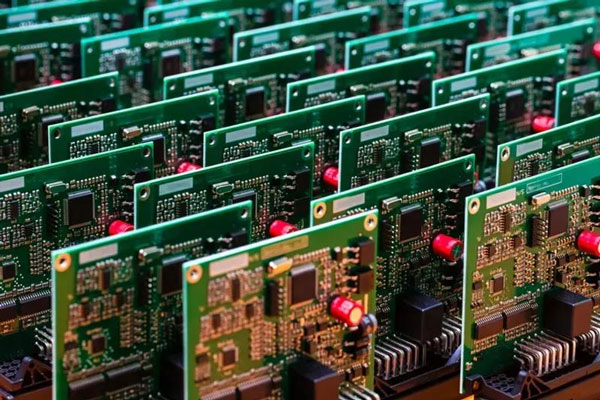
Elevator electronics are split into several functional boards. The main controller board manages the whole system logic, the door motor board drives the cabin doors, floor display boards and button boards handle passenger interface, and separate safety and communication modules watch the brakes, the emergency systems and remote monitoring. Each of these boards has a different layer count, component population and test requirement, which is why a single blanket price is impossible. A small button panel board can cost only a few dollars, while a complex main control board with dense layers and safety certification can cost several hundred dollars before assembly.
Because elevators are classed as industrial equipment, their PCBs must meet stricter requirements than consumer electronics: high reliability, a design life of ten to twenty years, strong electromagnetic interference immunity, vibration resistance, stable operation in high temperature and humidity, and support for industrial and safety certifications. Those requirements drive both the materials and the process choices, and they explain why the cheapest quotation is rarely the best value for an elevator project.
Reference Prices for Elevator PCBs in 2026
In 2026 the practical range for custom elevator PCBs is wide because design complexity varies so much. For bare board fabrication only, a simple two layer elevator interface board might cost between three and eight US dollars per board in reasonable volume, while a six or eight layer main control board with controlled impedance and tight tolerances can run from fifteen to forty dollars per board. When component assembly is included, the cost jumps further because elevator boards carry power devices, relays, connectors and safety logic that are expensive to source and place.
A more useful way to budget is by project stage. Prototype and sample quantities of one to fifty boards typically cost eighty to three hundred and fifty dollars per board, because engineering, stencil, setup and small-batch component fees are spread over very few units. As volume grows to a few hundred boards, per-board cost usually falls to a range of roughly thirty to one hundred dollars including assembly. At production volumes of one thousand boards or more, well-designed elevator PCBs can be manufactured and assembled for twelve to seventy-five dollars per board, depending on layer count, surface finish and test depth.
These figures are guides, not quotes. Every quotation is built from the actual layer stack, board size, copper weight, surface finish, assembly process, component list, test standard and order quantity, and the difference between a simple door board and a safety rated main controller can be more than ten times.
Layer Count and Board Size Decide the Base Cost
Layer count is usually the largest single cost driver in elevator PCB fabrication. A two layer board needs one lamination cycle, a simple drill program and basic imaging, while a six or eight layer board multiplies the number of inner layers, registrations, plating steps and inspections. Each additional layer pair also increases the risk of yield loss, so fabricators price higher layer counts with a steeper curve than the material cost alone would suggest.
Board size matters through panel utilization. Elevator control boards are often long and narrow to fit inside controller cabinets, which wastes panel area when the board does not tile efficiently. Working with the fabricator to adjust the outline, or combining several elevator board designs on one panel, can cut the effective board cost by ten to twenty percent without changing the circuit. Thickness and copper weight also add cost: heavier copper for power and motor sections requires longer etching and wider minimum spacing, and thick boards need careful drilling and plating control.
Materials and Surface Finish for Long Service Life
Most elevator PCBs use FR-4 as the base laminate, but the grade matters. Standard FR-4 is acceptable for display and button boards in a normal indoor environment, while boards mounted near the motor drive, the brake resistor or the machine room need higher glass transition temperature material so the laminate keeps its dimensional stability when the board heats up. For high-speed communication and remote monitoring modules, controlled impedance laminates may be needed even if the rest of the board uses FR-4.
Surface finish is where many buyers make their biggest reliability mistake. Immersion gold, commonly called ENIG, is the mainstream finish for industrial elevator boards because it gives flat pads, corrosion resistance, stable soldering and long-term reliability, all of which matter when a board must work for years without rework. HASL is cheaper and fine for simple boards with large pads, but the uneven surface can cause problems with fine pitch components and long-term oxidation in humid elevator shafts. OSP is also cheaper but less robust for boards that will be handled or stored before assembly.
Assembly Cost: Components and Process
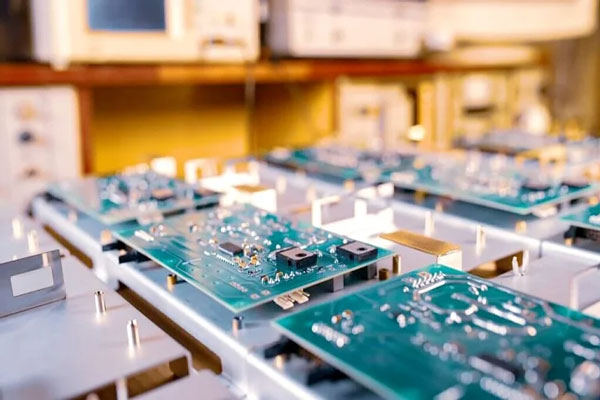
After fabrication, the assembly cost of an elevator PCB depends on the component mix and the process complexity. Modern elevator controllers combine small surface mount logic and communication chips with large through-hole components such as relays, transformers, connectors and terminal blocks, which means most elevator boards need both SMT placement and selective or wave soldering. A mixed technology board of this kind is exactly where a full-service assembler earns its value, because the two soldering processes must be sequenced so that the wave solder step does not damage the surface mount joints made earlier.
Component procurement is a growing share of elevator PCB cost. Elevator manufacturers increasingly ask the assembler to source the bill of materials, because many control components have long lead times and safety critical parts need traceability. When the assembler manages procurement, the buyer also avoids paying for minimum order quantities on dozens of small parts that a prototype order would otherwise trigger. For this reason, a turnkey PCB assembly quotation often ends up cheaper than a customer-managed build once all the hidden purchasing costs are counted.
Testing, Certification and Hidden Costs
Testing is a mandatory cost for elevator electronics rather than an optional extra. Bare boards should be electrically tested to catch shorts and opens before assembly, and assembled boards need automated optical inspection, in-circuit test and functional test where the board is powered and its inputs and outputs are verified against the specification. Elevator safety boards may also require burn-in or extended temperature cycling, all of which add labor and equipment time to the unit price.
Hidden costs appear when the buyer ignores test data. A board that passes a quick visual check but has an intermittent cold joint can fail during commissioning, when the cost of a service visit is far higher than the cost of proper testing. Buyers should ask for the test coverage and the records that come with each batch, not just for a low per-board number. Reliable suppliers document the PCBA testing results so that quality problems can be traced to a specific process step.
How to Lower the Cost of an Elevator PCB Order
Cost reduction starts in the schematic and layout phase, before any quote is issued. Reducing the layer count where the design allows it, keeping the board outline within standard panel dimensions, choosing standard FR-4 grades, using immersion gold only where it is needed and avoiding exotic finishes, consolidating connectors and keeping the component population to proven parts can all reduce unit cost without hurting reliability.
Order consolidation is the second lever. Elevator OEMs that order several board types together, or that place a single turnkey order for fabrication and assembly, give the factory the volume it needs to optimize panels, share setup and negotiate component pricing. Working with a single PCB assembly partner also keeps the design files, the component records and the test data under one quality system, which simplifies the audit trail that elevator customers increasingly request.
Finally, choose the supplier by process capability rather than by the lowest initial quote. Elevator boards are long-life products, and the true cost includes field failures, service calls and certification delays. A manufacturer with industrial control experience, documented quality management and full test capability will deliver a lower total cost than a shop that wins the first quotation on price alone.
Getting a Real Elevator PCB Quote
When you request a quotation for an elevator PCB, provide the complete design package: Gerber files, netlist, bill of materials, layer stack, board dimensions, operating environment, expected volumes and the test requirements. The more complete the package, the more accurate the quote and the fewer change orders later. Ask specifically how the quote treats prototype setup, component minimums, surface finish, testing and panel utilization, because those line items are where quotations differ most.
gopcb combines industrial PCB fabrication with full SMT PCB assembly, selective soldering and functional testing under one roof, which suits elevator control boards that mix fine-pitch logic with power and safety components. The engineering team reviews the design for manufacturability, suggests panel and layer optimizations, and quotes fabrication and assembly together so the per-board cost reflects the real production plan. Send gopcb your elevator PCB design files and annual volume for a free DFM review and a 2026 quotation with documented test coverage.