A Flexible Printed Circuit (FPC) is a lightweight and highly flexible circuit board commonly manufactured using polyimide or polyester film as the base material. It provides excellent flexibility, reliability, and space-saving characteristics, making it particularly suitable for modern electronic products that require compact and highly integrated circuit structures.
As the electronics industry continues to develop rapidly, electronic products are becoming smaller, thinner, lighter, and more functionally integrated. As a result, PCB Design is increasingly moving toward higher circuit density, finer traces, smaller components, and more complex three-dimensional structures.
Traditional manual inspection methods can no longer efficiently meet the requirements of high-volume and high-precision production. Automated inspection technologies are therefore becoming increasingly important in FPC Manufacturing, helping manufacturers identify defects more efficiently and improve production consistency.
What Is a Flexible Printed Circuit?
A Flexible PCB is a type of printed circuit board designed to bend, fold, or conform to different mechanical shapes.
The technology was originally developed to meet the requirements of aerospace and other advanced electronic applications. Over time, flexible circuit technology has expanded into a wide range of industries, including consumer electronics, telecommunications, automotive electronics, medical devices, cameras, wearable devices, and industrial equipment.
Unlike conventional rigid PCBs, which use rigid substrates, an FPC uses flexible materials such as polyimide or polyester film.
The circuit pattern is formed on a thin and flexible substrate, allowing electronic components and conductive traces to be integrated into narrow or irregular spaces.
This unique structure provides several advantages:
- Lightweight construction
- Excellent flexibility
- Reduced product thickness
- Space-saving design
- Good thermal characteristics
- Easy installation
- High circuit integration
- Capability for three-dimensional routing
A typical Flexible Circuit consists of several basic materials, including a flexible insulating film, conductive copper layer, and adhesive or bonding material, depending on the specific construction.
Key Advantages of Flexible PCBs
The rapid adoption of FPC Technology is closely related to the increasing demand for compact and lightweight electronic products.
1. Excellent Space Utilization
One of the most important advantages of an FPC is its ability to occupy irregular or limited spaces.
Because the circuit can bend and fold, designers can route electrical connections around mechanical structures that would be difficult to accommodate using a conventional rigid PCB.
This makes flexible circuits particularly useful for compact electronic products.
2. Lightweight and Thin Structure
FPCs can be manufactured with very thin substrates and copper layers.
Compared with traditional rigid circuit boards and wire harnesses, flexible circuits can significantly reduce weight and occupied space.
This characteristic is especially valuable in portable electronics, cameras, wearable devices, automotive electronics, and aerospace applications.
3. Improved Assembly Efficiency
A flexible circuit can integrate multiple electrical connections into a single component.
This can reduce the number of wires, connectors, and mechanical connection points required within an electronic product.
As a result, an FPC can simplify assembly and potentially improve overall product reliability.
4. Three-Dimensional Circuit Design
Traditional rigid PCBs are generally limited to relatively fixed planar structures.
In contrast, an FPC can be bent into different shapes, allowing engineers to develop three-dimensional electrical interconnection structures.
This provides greater flexibility during mechanical and electrical product design.
Future Development of FPC Technology
As electronic products continue to become smaller and more integrated, FPC Technology is expected to continue evolving.
Several important development trends are becoming increasingly significant.
1. Thinner and More Flexible Structures
Future FPC products are expected to become thinner while maintaining sufficient mechanical strength and electrical reliability.
Reducing substrate thickness and optimizing copper and coverlay structures can help manufacturers achieve more compact flexible circuits.
However, thinner construction also introduces additional manufacturing and reliability challenges.
2. Improved Flexing and Bending Reliability
Flexibility is one of the defining characteristics of an FPC.
For applications involving repeated movement, the circuit must withstand a large number of bending cycles without cracking the copper traces or damaging the substrate.
Future FPC Manufacturing technologies will therefore place greater emphasis on improving flexing durability, material selection, copper grain structure, and bending-radius control.
The required bending performance will vary depending on the application. Dynamic-flex applications generally require more stringent reliability testing than static-bend applications.
3. Cost Reduction
At present, flexible circuits can be more expensive than conventional rigid PCBs because of their specialized materials, manufacturing processes, precision requirements, and inspection procedures.
However, as production volumes increase and manufacturing technologies improve, process automation and material optimization may help reduce production costs.
Lower manufacturing costs would further expand the application range of flexible circuits.
4. Higher Manufacturing Precision
The continuous development of miniaturized electronic products is driving FPC manufacturing toward finer circuit structures.
Future production requirements are likely to include:
- Smaller hole diameters
- Finer trace widths
- Smaller trace spacing
- Higher registration accuracy
- More precise component placement
- Improved automated inspection
- Higher manufacturing consistency
These improvements will be particularly important for high-density flexible circuits used in advanced electronic devices.
Rigid-Flex PCB (R-FPCB)
The development of both flexible and rigid circuit technologies has led to the widespread adoption of Rigid-Flex PCB (R-FPCB) technology.
A rigid-flex PCB combines rigid PCB sections with flexible circuit sections within a single integrated board structure.
This design combines the mechanical strength of a rigid PCB with the flexibility and space-saving advantages of an FPC.
Instead of using separate rigid and flexible circuit boards connected by cables or connectors, an R-FPCB can integrate the two structures into one circuit assembly.
This can reduce the number of connectors and interconnection points while simplifying the overall product structure.
Applications of Rigid-Flex PCBs
Rigid-flex boards are widely used in applications where both mechanical stability and flexibility are required.
Typical applications include:
- Camera modules
- Smartphones
- Wearable devices
- Medical electronics
- Automotive electronics
- Aerospace equipment
- Industrial control systems
- High-density consumer electronics
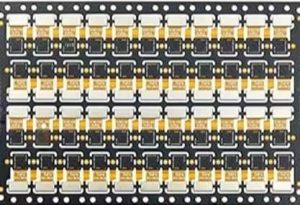
For example, camera modules often require extremely thin circuit structures and precise mechanical dimensions.
An R-FPCB can provide both the flexible connection required for compact internal routing and the rigid section required to support components.
The board must also maintain sufficient flatness and dimensional stability during assembly so that components and semiconductor devices can be accurately mounted.
Advantages of Rigid-Flex PCBs
The primary advantage of an R-FPCB is that it combines the characteristics of both rigid and flexible circuit technologies.
1. Space Saving
Rigid-flex construction can eliminate some cables, connectors, and additional mechanical structures.
This allows engineers to make better use of the limited internal space of compact electronic products.
2. Reduced Number of Interconnections
By integrating rigid and flexible sections into one circuit structure, the number of connectors and soldered interconnections can potentially be reduced.
Fewer interconnection points can help simplify assembly and improve long-term reliability.
3. Improved Mechanical Integration
The flexible section can be bent or folded according to the mechanical structure of the product, while the rigid section provides stable support for components.
This combination is particularly useful for products with complex three-dimensional internal structures.
4. Greater Design Flexibility
During PCB Design, engineers can use rigid sections for component mounting and flexible sections for electrical connections between different mechanical areas.
This provides greater freedom for product miniaturization and structural optimization.
Challenges of Rigid-Flex PCB Manufacturing
Although R-FPCBs provide significant design advantages, their manufacturing process is generally more complex than that of conventional rigid or flexible PCBs.
A rigid-flex board may involve multiple materials, different lamination structures, specialized drilling and routing processes, and tighter dimensional requirements.
As a result, manufacturers need to carefully control:
- Material compatibility
- Lamination parameters
- Layer registration
- Flexible-area protection
- Copper thickness
- Bend radius
- Dimensional stability
- Surface treatment
- Component assembly
- Inspection and reliability testing
The complexity of these processes can increase material consumption, labor requirements, manufacturing time, and overall production costs.
FPC vs. Rigid-Flex PCB
Although FPCs and R-FPCBs are closely related, they serve different structural requirements.
An FPC is primarily designed around flexibility and lightweight electrical interconnection.
An R-FPCB, on the other hand, combines flexible and rigid areas within the same circuit board, allowing certain regions to support components while other regions provide flexible electrical connections.
Therefore, the choice between an FPC and an R-FPCB should be based on the product’s mechanical structure, component requirements, bending requirements, available installation space, electrical performance, and manufacturing cost.
Conclusion
As electronic products continue to move toward miniaturization, higher integration, and increasingly complex mechanical structures, Flexible Printed Circuit (FPC) technology is becoming an important part of modern electronic interconnection.
FPCs provide excellent flexibility, lightweight construction, and efficient space utilization, while Rigid-Flex PCB (R-FPCB) technology further combines the advantages of rigid and flexible circuit structures.
Future FPC Manufacturing will continue to focus on thinner materials, improved bending reliability, finer circuit patterns, higher manufacturing precision, automated inspection, and cost optimization.
Kingda is committed to developing reliable PCB solutions for increasingly demanding electronic applications. Through optimized PCB Design, material selection, manufacturing processes, and quality control, Kingda can support flexible and rigid-flex circuit requirements across a wide range of applications.