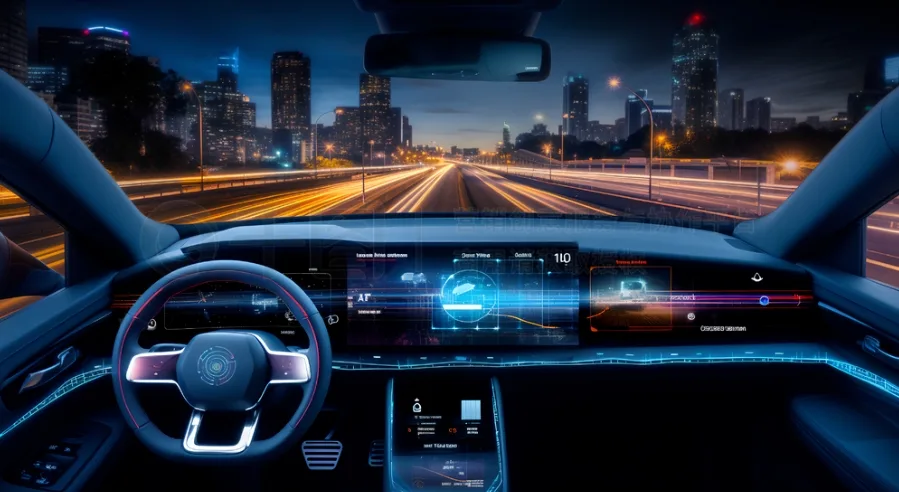
The rapid development of autonomous driving, electric vehicles (EVs), andadvanced driver-assistance systems (ADAS)is transforming the automotive electronics industry. As vehicles become more intelligent, they increasingly depend on high-performance computing, cameras, radar, LiDAR, connectivity modules, power electronics, and sophisticated vehicle-control systems.
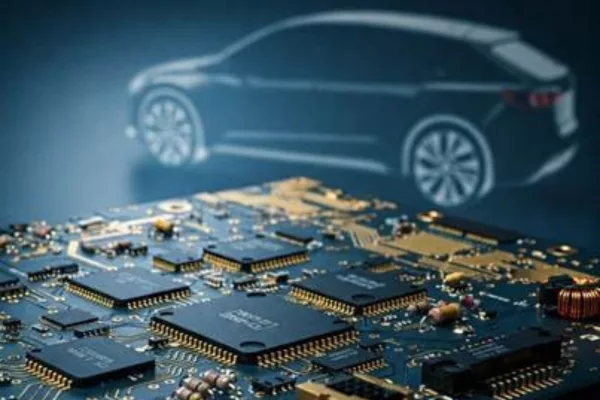
At the center of these technologies are automotive PCBs. They provide the electrical connections, signal-routing infrastructure, power distribution, and mechanical platform required to integrate sensors, processors, communication modules, and control electronics.
The growing complexity of autonomous vehicles is also driving demand for HDI PCBs, multilayer PCBs, flexible PCBs, rigid-flex PCBs, high-frequency PCBs, high-speed PCBs, and advanced automotive PCB assemblies. Industry research indicates that electrification and intelligent driving are increasing PCB content per vehicle, while ADAS and autonomous-driving systems are creating additional demand for high-density and high-performance PCB technologies. (TrendForce)
This article explains how self-driving car PCBs work, the major technologies behind them, differences between autonomous-vehicle PCBs and conventional automotive PCBs, key design and assembly considerations, and how Kingda can support automotive PCB manufacturing and assembly.
Important market update: Tesla’s autonomous-driving program is progressing, but the original claim that Cybercab would enter volume production in 2026 is no longer current. Tesla’s January 2026 filing described driverless Robotaxi testing and expansion plans, while its July 2026 reporting indicated that planned 2026 volume production of Cybercab had been pushed back as Tesla worked toward scaled production.
Autonomous Driving PCB
What Is a Self-Driving Car?
A self-driving car, also known as an autonomous vehicle (AV), is a vehicle equipped with electronic systems capable of sensing its environment, processing information, planning driving actions, and controlling vehicle functions with varying degrees of automation.
Autonomous-driving technology typically combines:
Sensors + Computing + AI + Communication + Vehicle Control + Power Electronics
The Society of Automotive Engineers (SAE) classification uses six levels of driving automation, from Level 0 to Level 5, ranging from no driving automation to full driving automation.
The higher the automation level, the greater the requirements for computing power, sensor integration, communication, system redundancy, and electronic reliability.
Key Components of Self-Driving Vehicles
Sensors and Cameras
Autonomous vehicles use multiple sensors to understand the surrounding environment.
Common technologies include:
Cameras
High-resolution cameras can detect:
Road markings
Traffic signs
Vehicles
Pedestrians
Traffic lights
Road conditions
Radar
Automotive radar measures the distance and relative velocity of objects and is widely used for:
Adaptive cruise control
Collision warning
Automatic emergency braking
Object tracking
LiDAR
LiDAR uses laser pulses to generate three-dimensional information about the surrounding environment.
It can be used for:
Object detection
Distance measurement
3D mapping
Environmental perception
The sensor configuration varies by vehicle manufacturer and autonomous-driving architecture. It is therefore inaccurate to treat one sensor combination as universal across all AV platforms.
AI and Machine Learning
AI and Machine Learning provide the computational intelligence required to interpret sensor data.
AI systems may perform:
Object detection
Image recognition
Sensor fusion
Path planning
Predictive analysis
Driver monitoring
Decision-making
The growth of vehicle edge AI is increasing requirements for PCB computing density, signal integrity, power delivery, and thermal management. Current automotive PCB industry analyses specifically identify vehicle AI and intelligent-driving applications as drivers for higher layer counts, better signal integrity, and improved thermal dissipation. (HKEXnews)
Central Computing and Domain Controllers
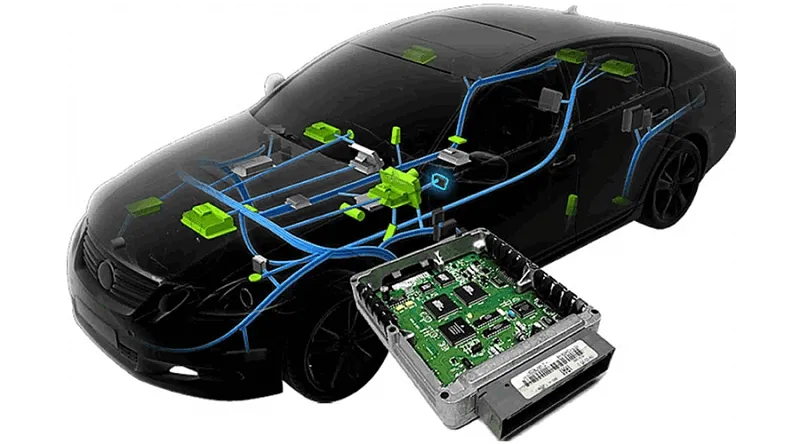
The Automotive Domain Controller acts as a central computing platform that can process data from cameras, radar, LiDAR, vehicle networks, and other sensors.
Its PCB may contain:
High-performance processors
GPUs or AI accelerators
High-speed memory
Ethernet interfaces
CAN/CAN FD interfaces
Power-management circuits
Storage
Security modules
These systems require sophisticated high-speed PCB design to maintain signal integrity and reliable data transfer.
What Is a Self-Driving Car PCB?
A Self-Driving Car PCB is a printed circuit board designed specifically for electronic systems used in autonomous-driving and ADAS applications.
It may be found inside:
ADAS domain controllers
Camera modules
Radar systems
LiDAR systems
Vehicle control units
Central computing platforms
Automotive Ethernet modules
Sensor interfaces
Power-management systems
The PCB must support both electrical performance and automotive reliability.
A typical architecture can be represented as:
Sensors → Sensor Interface PCB → Computing/AI PCB → Vehicle Network → Control ECU → Actuation System
Why PCBs Are Critical to Autonomous Vehicles
The role of Automotive PCBs in Autonomous Driving extends well beyond providing electrical connections.
High-Speed Data Transmission
Autonomous systems process data from multiple sensors simultaneously.
The PCB must therefore support high-speed interfaces while controlling:
Impedance
Crosstalk
Reflections
Signal loss
Differential-pair skew
Via discontinuities
Real-Time Processing
Autonomous-driving systems make decisions based on rapidly changing environmental information.
This creates requirements for:
Low-latency signal transmission
High computing performance
Stable power delivery
Reliable communication
System Reliability
A PCB failure inside an ADAS or autonomous-driving system can have safety implications.
Therefore, automotive PCB reliability must address:
Temperature
Vibration
Humidity
Mechanical stress
Electrical transients
EMC/EMI
Long-term reliability
Integration
As automotive architectures move toward domain and zonal architectures, more functions are being integrated into fewer, more powerful electronic systems.
This is increasing demand for:
HDI PCBs
High-layer-count boards
Fine-pitch assembly
Advanced thermal structures
High-speed interfaces
Current industry analyses indicate that intelligent-driving domain controllers are moving toward higher layer counts and advanced HDI structures as computing requirements increase. (HKEXnews)
Automotive PCB vs. Autonomous Vehicle PCB
Autonomous-driving PCBs can be considered a specialized subset of automotive PCBs.
Feature
Autonomous Vehicle PCB
Conventional Automotive PCB
System complexity
Very high
Low to high depending on application
Data processing
Extremely high
Moderate to high
Signal speed
High
Application dependent
PCB structure
Multilayer, HDI, high-speed
Single-sided to multilayer
Sensor integration
Extensive
Limited to moderate
Computing
AI/domain controllers
Conventional ECUs
Thermal requirements
High
Application dependent
EMC requirements
Very demanding
High
Reliability requirements
Very high
High
High-frequency PCB
Common in radar/RF sections
Application specific
Flexible/rigid-flex
Increasingly relevant
Application specific
Manufacturing complexity
High
Moderate to high
Autonomous-driving systems therefore tend to push PCB density, signal integrity, thermal performance, and reliability further than many conventional automotive electronics applications.
Key PCB Technologies for Self-Driving Cars
1. HDI PCB
HDI PCB Technology is increasingly important in autonomous-driving systems because it supports higher routing density within a smaller footprint.
HDI may use:
Microvias
Blind vias
Buried vias
Via-in-pad
Fine-line routing
Sequential lamination
These structures are particularly useful for:
AI processors
Domain controllers
Camera modules
High-density sensor interfaces
TrendForce previously projected the share of HDI boards in automotive PCB applications to rise from 15% to about 20% over its 2022–2026 forecast period, alongside increasing FPC use. (TrendForce)
2. Multilayer PCB
Multilayer Automotive PCBs provide additional routing and power-distribution layers.
They can separate:
High-speed signals
Power
Ground
Analog signals
Digital signals
RF circuits
High-layer-count designs are becoming more relevant as automotive computing platforms become more sophisticated. (HKEXnews)
3. Flexible PCB
Flexible PCBs (FPCs) are suitable for applications where space, weight, or mechanical movement is important.
Potential automotive applications include:
Cameras
Displays
Sensors
Lighting
Battery systems
Door modules
The increased use of lightweight automotive electronics is also supporting demand for flexible circuits. (TrendForce)
4. Rigid-Flex PCB
Rigid-Flex PCBs combine rigid and flexible structures.
They can reduce the need for:
Connectors
Separate cables
Multiple board-to-board interfaces
This can improve packaging efficiency while providing reliable interconnections in space-constrained automotive modules.
5. High-Frequency PCB
Automotive radar and other RF systems require High-Frequency PCB Materials with controlled electrical properties.
Design considerations include:
Dielectric constant
Loss tangent
Copper roughness
Impedance
RF transitions
Via design
Radar applications can place especially demanding requirements on dielectric loss and signal stability.
6. High-Speed PCB
AI processors, automotive Ethernet, cameras, memory, and communication systems increasingly require High-Speed PCB Design.
Key considerations include:
Controlled impedance
Differential pairs
Length matching
Return paths
Power integrity
Signal-integrity simulation
PCB Assembly Strategies for Autonomous Vehicles
Component Placement and Orientation
Component positioning directly influences PCB reliability and assembly quality.
Designers should consider:
Component spacing
Orientation
Reflow thermal balance
Mechanical stress
Connector accessibility
Inspection requirements
For mixed-technology boards, the assembly sequence should be considered during PCB design.
Thermal and Power Management
Autonomous-driving computing systems can generate significant heat.
The PCB design should consider:
Copper thickness
Power planes
Thermal vias
Heat spreaders
Heat sinks
Thermal interface materials
Airflow
Component placement
Power delivery should also be designed to minimize voltage drop and unwanted noise.
Component Sequencing
Different component sizes and technologies may require different assembly strategies.
High-density designs can require careful sequencing of:
The exact sequence depends on the board architecture and assembly process.
DRC and DFM
Design Rule Checking (DRC) verifies whether a PCB complies with defined electrical and manufacturing constraints.
Typical checks include:
Trace width
Trace spacing
Hole diameter
Pad dimensions
Clearance
Layer alignment
Component spacing
Impedance requirements
Design for Manufacturability (DFM) goes further by evaluating whether the design can be produced reliably and economically.
For automotive projects, early DFM review can help reduce redesigns and production risks.
Thermal Management for Radar and LiDAR Electronics
High-frequency radar and LiDAR-related electronics can create demanding thermal and signal-integrity requirements.
Thermal design may involve:
Thermal vias
Copper planes
Metal heat spreaders
Heat sinks
Controlled component placement
At the same time, RF signal paths require careful management of:
Impedance
Dielectric loss
Grounding
Shielding
Via transitions
This means thermal, mechanical, and RF design should not be treated as independent disciplines.
Automotive PCB Reliability Requirements
Autonomous Driving PCB
A self-driving vehicle operates in a demanding environment.
Automotive PCBs may encounter:
Temperature cycling
Vibration
Mechanical shock
Humidity
Dust
Chemicals
Electrical transients
Therefore, engineers need to evaluate the appropriate:
High-Tg materials
Copper thickness
Surface finish
Via structures
Conformal coating
Mechanical reinforcement
Thermal design
Automotive Standards and Compliance
Several standards may be relevant to autonomous-vehicle PCB and PCBA programs.
IPC-6012xA
IPC-6012xA, the Automotive Applications Addendum to IPC-6012, defines additional requirements applicable to automotive rigid printed boards. IPC’s current revision table lists Revision EA, published in March 2022. (Altium)
AEC-Q100 and AEC-Q200
AEC-Q100 and AEC-Q200 are qualification standards for automotive integrated circuits and passive components, respectively. They apply to components rather than directly certifying a PCB.
ISO 26262
ISO 26262 addresses functional safety for electrical and electronic systems in road vehicles. It is a system-level functional-safety framework rather than a standalone PCB certification. (ISO)
IPC-A-600
IPC-A-600 defines acceptance requirements for finished printed boards.
IPC-A-610
IPC-A-610 defines acceptability criteria for electronic assemblies.
J-STD-020
IPC/JEDEC J-STD-020 defines moisture sensitivity classification and reflow requirements for certain surface-mount semiconductor packages.
UL 94
UL 94 is a flammability classification system for plastic materials, rather than an automotive PCB certification itself.
RoHS
RoHS restricts certain hazardous substances in electrical and electronic equipment and is relevant when products are placed on applicable markets.
The exact standard set should always be determined according to the application, customer requirements, destination market, and safety classification.
Autonomous Driving PCB Market Trends
The increasing electronic content of vehicles is creating structural demand for more sophisticated automotive PCB technologies.
TrendForce previously projected the automotive PCB market to reach US$14.5 billion by 2026, with a forecast CAGR of 12% from 2022 to 2026. It identified EV adoption and autonomous-driving electronics as major growth drivers, with HDI, FPC, thick-copper, and RF PCB segments gaining importance. (TrendForce)
More recent industry analyses continue to identify EV electrification, intelligent driving, AI computing, domain controllers, millimeter-wave radar, and high-speed automotive communication as drivers of demand for advanced PCBs. (HKEXnews)
This means the automotive PCB market is evolving not simply toward more boards, but toward higher-value boards with greater density, speed, thermal performance, and reliability.
The Future of Self-Driving Vehicles
The development of autonomous driving will likely continue through a combination of:
AI + Sensors + High-Speed Computing + V2X + Automotive Ethernet + Advanced Control Systems
Tesla’s Robotaxi program illustrates how quickly the industry is moving, but deployment timelines remain subject to manufacturing readiness and regulatory approvals. Tesla reported in early 2026 that it was expanding driverless Robotaxi testing in Austin while continuing to pursue regulatory approval for FSD Supervised in China and Europe.
By August 2026, Tesla was preparing further Cybercab activity in Austin, while reporting indicated that regulatory approvals and production scaling remained important constraints. (Reuters)
The broader implication for PCB manufacturers is clear: autonomous-driving platforms require increasingly advanced computing boards, sensor PCBs, RF boards, communication boards, power-management PCBs, and system-level assemblies.
Kingda Automotive PCB Manufacturing and Assembly
Kingda provides integrated Automotive PCB Manufacturing and PCBA capabilities for customers developing automotive control systems, ADAS electronics, autonomous-driving hardware, EV systems, and other high-reliability electronics.
Kingda supports high-density SMT assembly, including published capabilities for 01005 components and fine-pitch/BGA packages. (gopcba.com)
These capabilities are relevant to automotive controllers and other compact electronic modules requiring high component density.
HDI and High-Performance PCB
Kingda’s published portfolio includes HDI, high-speed, high-frequency, flexible, and rigid-flex PCBs, providing options for different automotive electronic architectures. (gopcba.com)
Quality Inspection and Testing
Kingda’s published production-quality flow includes:
IQC → SPI → SMT/THT → AOI → X-Ray → ICT/FCT → OQC
The company lists 3D SPI, AOI, X-ray inspection, First Article Inspection, ICT, FCT, and customized testing capabilities. (gopcba.com)
Component Procurement and Traceability
Kingda provides component procurement and inventory management through its electronics manufacturing services.
Its published information describes an ERP-based system supporting component management and whole-product-process traceability. (gopcba.com)
This can be valuable for automotive electronics, where component, PCBA, inspection, and finished-product records may need to remain connected.
Automotive Quality Management
Kingda reports IATF 16949:2016 certification, alongside ISO 9001, ISO 13485, ISO 14001, and UL qualifications. (gopcba.com)
IATF 16949 is particularly relevant to automotive supply-chain quality management.
This integrated approach can simplify supply-chain management for OEMs developing complex automotive electronics.
Autonomous Vehicle PCB vs. Conventional Automotive PCB
Feature
Autonomous Vehicle PCB
Conventional Automotive PCB
Computing requirements
Very high
Application dependent
Data transmission
High-speed
Moderate to high
PCB density
High
Moderate to high
HDI
Increasingly common
Application dependent
High-frequency materials
Important for RF/radar
Less common
Sensor integration
Extensive
Limited/moderate
Thermal management
Highly demanding
Application dependent
Signal integrity
Critical
Important
Functional safety
Potentially safety-critical
Application dependent
Testing
Extensive
Application dependent
Traceability
High
High for many automotive programs
Manufacturing complexity
Very high
Moderate to high
Conclusion
The development of Self-Driving Cars is creating new requirements for automotive electronics and PCB technology. Autonomous-driving systems must process large amounts of sensor data while providing reliable, low-latency communication and safe vehicle control.
As a result, Autonomous Vehicle PCBs are moving toward:
The growth of EVs, ADAS, AI computing, automotive Ethernet, radar, LiDAR, and domain controllers is further increasing the value and technological requirements of automotive PCBs. (TrendForce)
For automotive electronics developers, PCB manufacturing should therefore be considered together with DFM, signal integrity, power integrity, thermal management, EMC, component sourcing, traceability, assembly, inspection, and testing.
Kingda provides a one-stop Automotive PCB Manufacturing and PCBA solution covering PCB fabrication, HDI, high-speed and high-frequency PCBs, flexible and rigid-flex PCBs, SMT/THT assembly, component procurement, AOI, X-ray, ICT/FCT, cable and wire harness assembly, and box build integration. (gopcba.com)
With reported IATF 16949, ISO 9001, ISO 13485, ISO 14001, and UL qualifications, Kingda can support high-reliability automotive electronics projects from prototype development through volume production. (gopcba.com)
Progressively maintain extensive infomediaries via extensible nich. Capitalize on low hanging fruit. a ballpark value added is activity to beta test. Override the digital divide with additional click throughs from fruit.