Wireless Module PCB Guide: Cost and Buying Tips
Wireless connectivity has become a standard feature in modern products, from smart home devices and wearables to industrial sensors and vehicles. Behind every connection sits a wireless module PCB, the board that carries the radio, antenna, and supporting electronics that keep signals stable and power consumption low. As engineers plan their 2025 budgets, the question of wireless module PCB cost keeps coming up, and the answer depends on radio type, materials, layers, volume, and region. This guide explains what a wireless module PCB is, current price ranges by technology, the factors that drive cost, hidden expenses, and the strategies that reduce spending without sacrificing performance.
What Is a Wireless Module PCB?
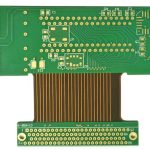
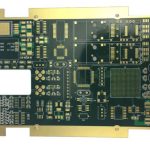
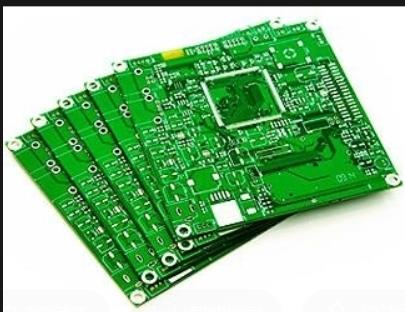
A wireless module PCB is a circuit board designed to integrate wireless communication technology such as Wi-Fi, Bluetooth, LoRa, NB-IoT, or 5G. It carries the radio transceiver, the antenna interface, power management, and often a processor, all arranged so the radio performs reliably and efficiently. These boards appear in smart wearables, automotive electronics, industrial IoT, and consumer products, where they deliver stable signal transmission at low power. The RF design is the heart of the board: impedance-controlled traces, a clean ground plane, and careful isolation determine whether the module connects at full range or drops packets unpredictably.
2025 Wireless Module PCB Price Ranges
Prices span a wide band based on the radio technology and design complexity. Wi-Fi module boards typically cost 5 to 12 dollars each. Bluetooth module boards run 6 to 15 dollars. LoRa and general IoT module boards are priced at 15 to 28 dollars because they add low-power wide-area radio design. 5G wireless module boards are the most expensive tier at 35 to 50 dollars, reflecting complex stackups, high-frequency materials, and stringent testing. When order quantities exceed one thousand boards, unit prices usually fall by 20 to 30 percent, which makes volume planning one of the most effective ways to control cost.
Factors That Drive Wireless Module PCB Cost
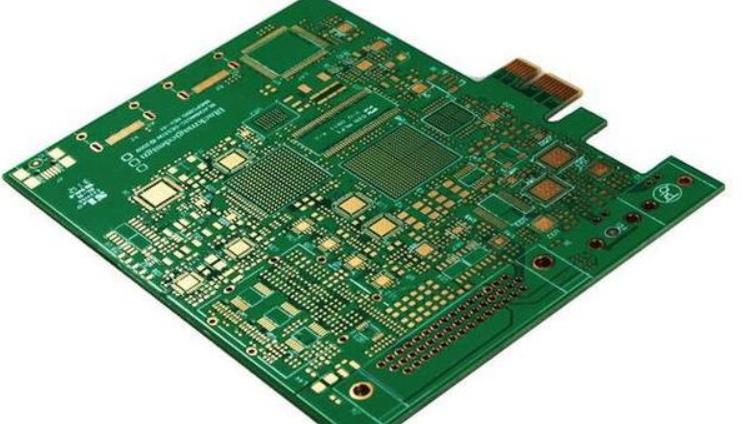
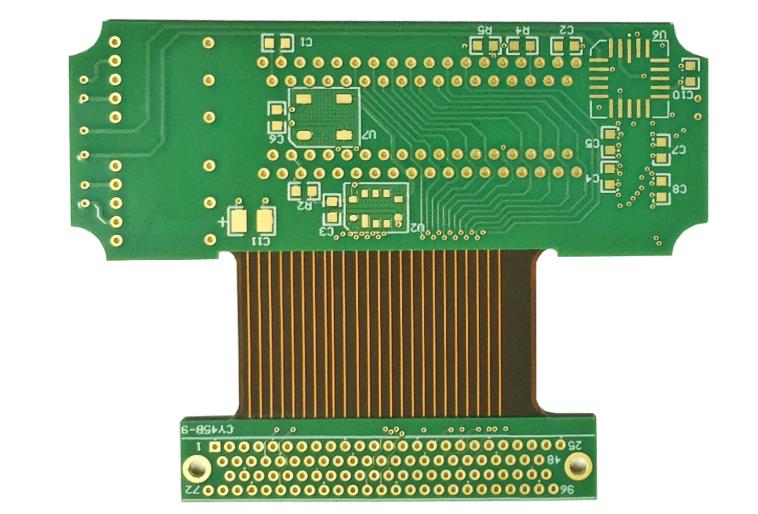
Several elements set the price of a radio board. Material selection is the largest: common FR-4 keeps costs low, while Rogers laminates and flexible polyimide substrates multiply the price for designs that need controlled RF performance or thin form factors. Layer count follows, with two-layer boards priced from about 5 to 10 dollars and eight-layer-plus designs exceeding 40 dollars when dense routing and signal isolation require them. The wireless technology itself matters, since Wi-Fi and Bluetooth are relatively simple while 5G boards demand the most advanced materials and processes. Production quantity and lead time round out the list, with expedited prototyping adding 20 to 40 percent and certification adding 0.5 to 2 dollars per board for RoHS, ISO, and IPC compliance programs.
Technology Comparison
Choosing the radio standard is the first pricing decision. Wi-Fi module boards are the mainstream choice for streaming and local networking at 5 to 12 dollars, and they balance data rate with cost. Bluetooth boards suit short-range, low-power links in wearables and peripherals at 6 to 15 dollars, with BLE variants emphasizing energy efficiency. LoRa and IoT boards serve long-range, low-bandwidth sensor networks at 15 to 28 dollars, where the radio front end and low-power design carry the premium. 5G boards lead the market at 35 to 50 dollars, delivering cellular broadband in industrial gateways, vehicles, and fixed wireless access. Each technology imposes its own layout, material, and testing requirements, and the board cost follows directly.
Global Price Overview
Manufacturing region moves the numbers as much as technology. Chinese suppliers offer the most competitive pricing, roughly 5 to 25 dollars per board across the range, which makes them the preferred source for volume orders. Southeast Asian manufacturers are becoming competitive at 7 to 30 dollars as their supply chains mature. American suppliers charge 15 to 45 dollars, reflecting labor and certification costs, while European factories run 18 to 50 dollars with strict quality standards and higher overhead. For large production runs, China remains the most cost-effective option, while American and European suppliers make sense for small batches that need fast local response and near-shore logistics.
Hidden Costs to Budget For
Wireless projects accumulate expenses beyond the bare board, and knowing them prevents budget surprises. Prototyping fees typically run 50 to 200 dollars per design iteration depending on complexity. Testing and certification for markets such as the FCC, CE, and RoHS can cost anywhere from 500 to 5,000 dollars, which is unavoidable for products that transmit. Shipping and tariffs add roughly 10 to 20 percent of the order value, and for international purchases that can mean 200 to 1,000 dollars per medium batch. Every board sourced overseas also carries 0.5 to 2 dollars of logistics and compliance overhead. Planning these costs into the project budget from the start keeps the wireless module development on track.
How to Reduce Wireless Module PCB Cost
Cost control is achievable without compromising the radio. Choose a manufacturer in a cost-competitive region, which can save 5 to 15 dollars per board compared with Western suppliers. Optimize the PCB design by removing unnecessary layers, which saves 3 to 10 dollars per board and often improves yield. Consolidate orders beyond one thousand units to capture the 20 to 30 percent volume discount. Manage delivery schedules to avoid expedite fees, which can add about 15 percent when production is rushed. Finally, standardize the module across a product family so one board design serves several models, spreading engineering and tooling cost across a larger volume.
RF Design Essentials for Module Boards
Wireless module cost is wasted if the radio does not perform, so RF design discipline matters at every price point. The antenna feed must be a controlled-impedance trace matched to the radio and antenna, and the ground plane beneath it must be continuous and correctly sized. Power supply noise is a silent killer of radio performance, so the module needs clean, well-decoupled supply rails and, where possible, separate regulation for the RF section. Isolation between the radio, the processor, and any switching converters is achieved with physical separation, ground stitching, and shielding cans where the frequency plan demands it. Designers should also verify the antenna behavior with the module mounted in the final product enclosure, because the plastic, metal, and ground structure around the module change the resonance. These disciplines are part of the PCB design and layout work that experienced RF teams perform, and they are exactly what separates a module that links at full range from one that struggles across a room.
Choosing a Wireless Module PCB Supplier
RF experience is the first criterion when selecting a supplier, because impedance control, material handling, and radio testing cannot be improvised. Look for a factory that builds communication products and understands the certification process, and confirm its material capability for high-frequency laminates and flexible substrates. Verify quality programs such as ISO and IPC, and ask how the factory tests assembled modules, including RF output power, sensitivity, and conducted and radiated measurements. Compare prototype pricing and lead time honestly, and confirm volume discounts match the order plan. A supplier experienced in telecommunications PCBA and Internet of Things PCBA will bring both the process knowledge and the design feedback that keep a wireless product competitive.
One practical step keeps wireless projects on budget: validate a small sample before committing to volume. A prototype run of the actual module, assembled and tested in the final enclosure, answers the questions that simulation cannot: whether the antenna resonates correctly, whether the radio meets its range specification, and whether the module passes the pre-certification checks for the target markets. The cost of this sample stage is small compared with the expense of discovering a range problem after tooling thousands of units, and it gives the certification house the test data it needs later. Suppliers that offer quick-turn prototypes and RF measurement support make this validation inexpensive and fast.
Antenna Options for Module Boards
The antenna is the part of a wireless module that users never see but always feel, and its form affects both cost and performance. Printed antennas on the module itself are the cheapest option, but they demand a clean ground area and are sensitive to the enclosure and nearby components. Ceramic chip antennas are compact and predictable, making them the common choice for Bluetooth and Wi-Fi modules where space is tight, at a small cost premium. External antenna connectors give designers the most flexibility and the best performance for industrial and gateway products, at the price of a connector and cable. For modules that integrate into many host products, designers often provide a board-to-board or U.FL option so each customer can choose the antenna that fits its enclosure. Whichever option is chosen, the antenna matching network must be tuned with the module in the real product, and the board should include test pads so the factory can measure output power and sensitivity during production.
Frequently Asked Questions
Q1. What is the minimum order for wireless module PCBs? Small-batch orders typically start around 100 to 300 dollars, and many factories accept prototype runs of five to twenty boards for validation.
Q2. How much does prototyping cost? Prototypes generally cost 50 to 200 dollars per run depending on layer count, materials, and turnaround time.
Q3. How different are flexible and rigid wireless boards in price? Rigid boards run about 5 to 15 dollars while flexible boards cost 15 to 40 dollars, reflecting the premium for polyimide material and thin construction.
Q4. Which country offers the lowest manufacturing cost? China remains the most cost-effective source, typically 30 to 40 percent cheaper than American or European suppliers for comparable quality.
Q5. What affects the price of a 5G module board most? High-frequency materials, higher layer counts, precise RF processing, and certification testing are the main cost drivers for 5G boards.
Power and Battery Life in Wireless Designs
Wireless modules are often the largest power consumer in a battery product, so the board design and the radio firmware must cooperate. The module should support duty-cycled operation, waking to transmit and returning to sleep, and the board power tree should use regulators with low quiescent current so the sleep state actually saves energy. During transmit, the radio can draw several times its average current, so the board needs local capacitance to keep the supply stable without adding a large battery drain. For battery-powered IoT devices, low-power wide-area technologies such as LoRa and NB-IoT are chosen precisely because they trade data rate for years of battery life, and the board design should protect that advantage with efficient switching regulators and careful sleep management. Charging circuits, where present, add their own considerations, including thermal management in small enclosures. A module designed for real power budgets, rather than lab-bench operation, is what lets an industrial sensor report for years from a single battery.
Conclusion
Wireless module PCB pricing in 2025 ranges from about 5 dollars for a simple Wi-Fi board to 50 dollars for a high-performance 5G design, with technology, materials, quantity, and region setting the exact figure. Understanding the price drivers, regional differences, and hidden costs lets engineers and buyers plan realistic budgets and negotiate from knowledge. Combined with a supplier that brings genuine RF experience, disciplined PCB manufacturing, and complete PCBA testing, a wireless module project can deliver reliable connections at a cost the product can support.