High Layer Count PCB Demand: What AI Infrastructure Is Really Buying
Cloud capital spending reported through 2026 turned into orders faster than most forecasts expected, and the board industry felt it first in a single segment. High layer count PCB demand is not simply more square metres of laminate; it is a different product with different process requirements and a different supplier base.
Quarterly capital expenditure across the largest cloud operators rose by well over half compared with the previous year, and shipments of AI servers are now expected to exceed two hundred million units annually across the market. Those numbers reach the board industry through servers, switches, optical modules and power systems rather than through a single product.
Where the Money Enters the Supply Chain
Capital spending first becomes data centre buildings, power distribution and cooling, then accelerators, switching and storage. Each of those steps consumes boards, but the boards differ enormously in specification depending on which layer of the system they serve.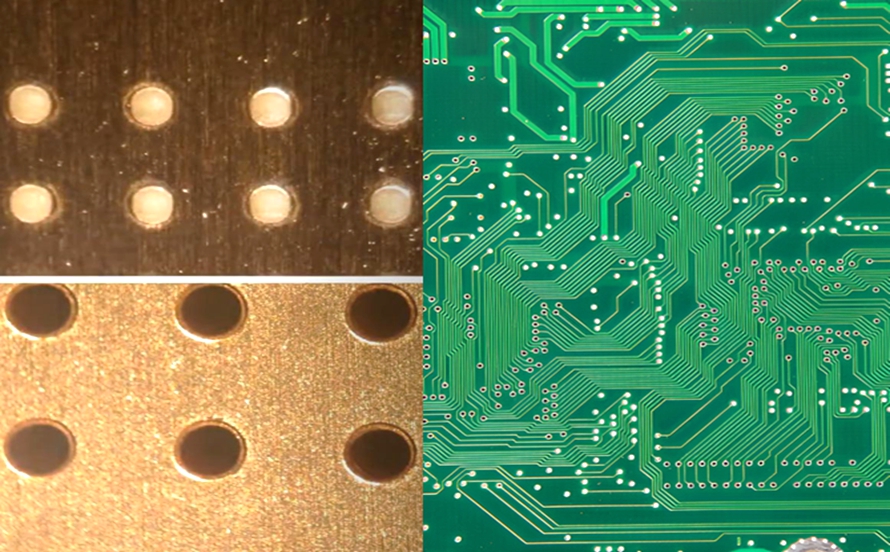
The visible effect in the board industry is that growth is concentrated in the upper end. Value in the eighteen layer and above segment is growing far faster than total output, which reflects both the number of boards and the difficulty of each one.
Why Accelerators Need More Layers
A server board that carries several accelerators must route many high speed links between them, to memory and to the network. Those links require reference planes, controlled impedance and shielding, and each requirement consumes routing capacity that has to come from somewhere.
The result is a stack that grows in both signal and power layers. Layer counts that were considered extreme a few years ago are now routine in accelerator platforms, and the next platform generation is already pushing higher.
Switches, Backplanes and the Interconnect Layer
Adding accelerators only helps if they can exchange data. Switch silicon and the boards that carry it have grown in port count and in per port speed, which multiplies the number of differential pairs that must cross a single board.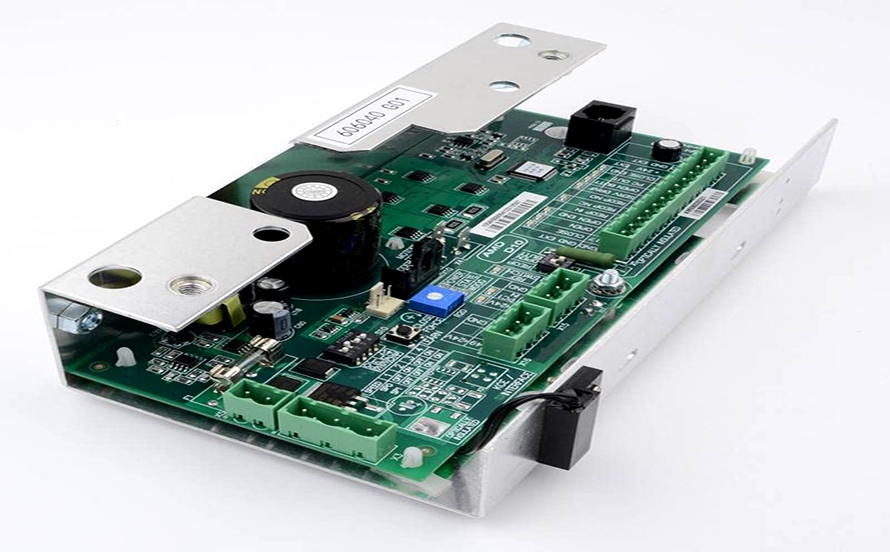
Backplanes and line cards therefore face the same density problem as compute boards, often with larger physical dimensions. Uniformity across a large panel becomes as important as peak capability, because a small impedance drift at one end of the board affects many channels at once.
Optical Modules and Bandwidth Pressure
Once electrical reach becomes impractical, links move to optics. That transition has produced exceptional growth for optical module boards, which combine very fine traces, tight impedance control and small form factors.
This is the point at which board manufacturing starts to resemble semiconductor work. Fine line formation, thin dielectrics and precise via structures dominate, and the process window narrows accordingly.
Three Technology Paths at the Same Time
It is a mistake to describe the AI hardware transition as a single trend. Layer count, routing density and power delivery are all increasing simultaneously, and each one stresses a different part of the manufacturing process.
Layer count stresses lamination and registration, density stresses exposure, etching and laser drilling, and power stresses copper thickness, plating and thermal design. A factory that is strong in one of those is not automatically strong in the others.
Back Drilling and Signal Integrity
High layer counts create long via barrels, and an unused portion of a barrel behaves as a stub that reflects energy. Back drilling removes the stub, and at modern data rates that step is often mandatory rather than optional.
Control of drill depth is the difficulty. A tolerance measured in fractions of a millimetre must be held on a panel several millimetres thick, across every via, without damaging the layers the barrel is meant to connect.
Heavy Copper for Power Delivery
More accelerators mean more current, and current has to reach them with acceptable loss and heat generation. Power delivery boards therefore use copper weights far above those in signal boards, which changes drilling, etching and plating conditions.
A single AI system may contain dense high speed boards and heavy copper power boards in the same rack. Suppliers who can build both reduce the coordination burden on the system integrator and shorten the path to a working product.
Impact on the Assembly Line
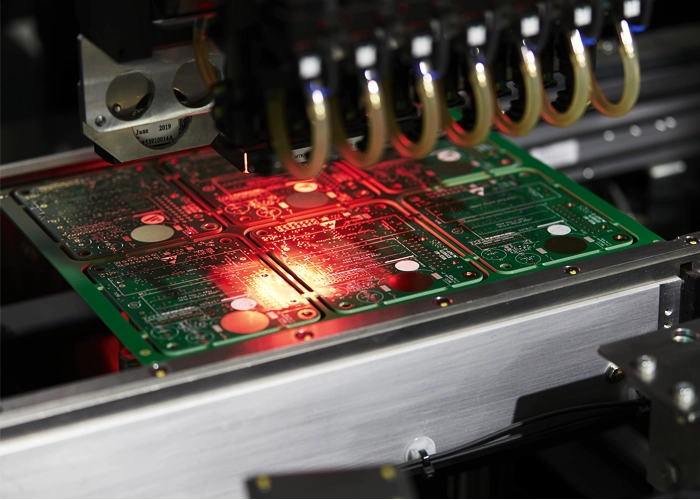
Complexity does not stop at the bare board. Large ball grid array packages, hundreds of passive components and high power devices all appear on the same assembly, and the thermal mass of a dense board makes the reflow profile harder to control.
That is why the boundary between board fabrication and assembly has become less distinct in this segment. A defect that originates in board flatness or via quality appears during assembly, and the investigation is much faster when both processes share one quality system.
Why Ordinary Capacity Does Not Help
Expansion of standard multilayer capacity does not translate into supply for AI hardware, because the constraint is not press time in general but the ability to press a demanding stack repeatedly at a stable yield.
This explains why the upper end of the market can remain tight even while overall industry capacity grows. The relevant supply is the number of lines that can hold registration, thickness and impedance on a dense stack, and that number increases slowly.
Longer Planning Horizons From Customers
Cloud operators have begun issuing hardware guidance stretching several years ahead, which is unusual for an industry used to quarterly visibility. For board suppliers this changes the nature of the investment decision.
Capacity added against a multi-year outlook is easier to justify, but it also has to remain valid if the architecture changes. Flexibility in equipment and process planning matters as much as raw expansion when the specification is still evolving.
Supplier Evaluation Is Changing
Customers evaluating partners for these programmes now ask about technical roadmap rather than capacity alone. Which high speed materials are qualified, what the roadmap is for finer lines, and how yield on high layer count products has trended over recent quarters.
Material availability matters in the same conversation. Securing low loss laminates and high performance copper foil early can decide whether a programme ships on schedule, because those supply chains are narrow.
Where Small and Medium Batches Still Matter
Before volume, every programme passes through engineering builds and qualification lots. Those quantities are small but the requirements are identical, so suppliers who only serve volume cannot support the development phase.
Being able to run prototypes and low volume assembly on the same process that will later run production is a practical advantage. It removes a transfer step where defects and doubts tend to appear.
Test Coverage for Dense Assemblies
Inspection requirements scale with complexity. Paste volume measurement, automated optical inspection and X-ray all carry more weight when joints are small, numerous and partly hidden beneath large packages.
Functional testing closes the loop. Combining fabrication data with board level testing results allows a supplier to answer a customer question about a failing assembly with process evidence rather than an opinion.
Cost Structure at the Top End
Price at the top end of the board market is dominated by yield and by process time rather than by material alone. A dense stack consumes many lamination cycles, and each one adds cost and risk in equal measure.
That is why engineering review has such a large financial effect here. Removing an unnecessary layer, improving panel utilisation or relaxing a tolerance that the design does not need can change the cost of a programme more than a supplier negotiation ever will.
How Durable Is the Demand
The demand is tied to architecture rather than to a single product cycle. As long as computing capacity is expanded by adding accelerators and connecting them at high speed, boards will need more layers, finer lines and better power delivery.
There is a limit, and optics may eventually absorb part of the load. Until then, AI hardware manufacturing will continue to pull the board industry upward in specification, and the suppliers who invested in that specification early will hold the advantage.
Material Supply as a Constraint
Low loss laminates, smooth copper foil and high performance prepregs come from a small group of producers, and their capacity expands more slowly than demand from data centre programmes. A qualified material is not always an available material.
Suppliers who hold stock of the grades their customers use, and who have a second advanced PCB capability route for each one, can keep a programme moving when a single source tightens. That is a commercial decision as much as a technical one.
The Quarterly Discipline Behind Delivery
High value programmes are rarely lost because a factory lacks equipment. They are lost because yield drifts, a process change goes unrecorded or an engineering question waits three days for an answer.
Reliable process control is what prevents those failures. Measured data per lot, documented change notes and a defined escalation path are unglamorous, but they are what allow a customer to commit to a delivery date.
What Buyers Should Do Now
Buyers should map their product roadmap against supplier capability rather than against capacity lists. Ask which layer counts, which materials and which impedance windows are supported in production today, and which will be supported in twelve months.
Then treat qualification as a programme rather than a purchase. Boards at this level of complexity reward relationships built before the volume arrives, and the supplier who helped solve the engineering problem is usually the one best placed to build the production order.