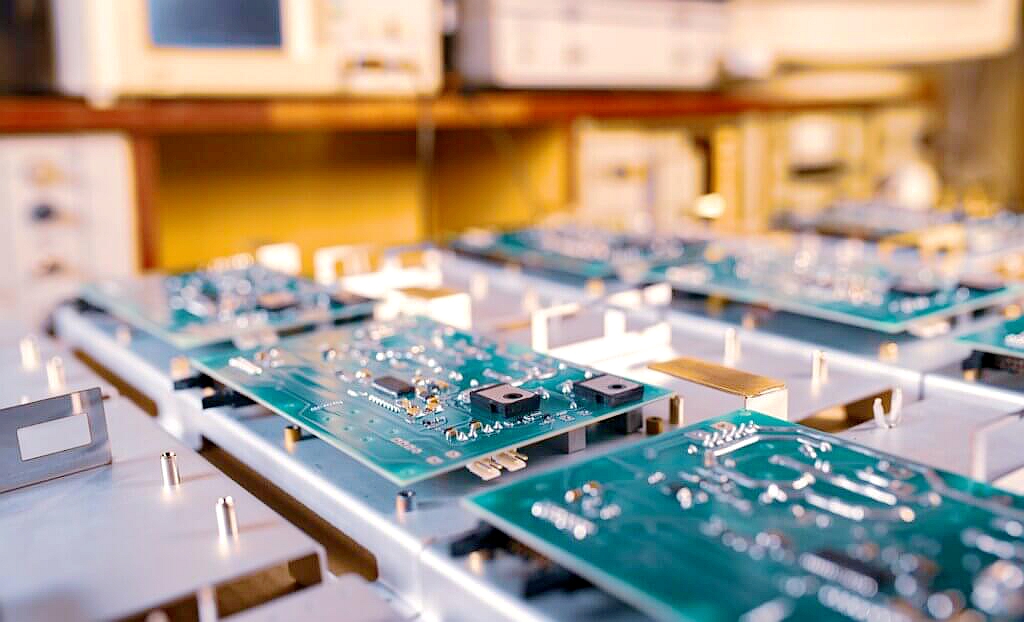
Turnkey PCB Assembly is a manufacturing service in which a supplier manages most or all of the activities required to produce an assembled printed circuit board. Instead of coordinating separate suppliers for PCB fabrication, component procurement, assembly, inspection, and delivery, the customer can work with one manufacturing partner.
Depending on the supplier and project requirements, a turnkey service may include PCB fabrication, Component Sourcing, SMT and through-hole assembly, inspection, electrical testing, packaging, and shipment.
The main value of turnkey manufacturing is not simply convenience. It can also simplify communication, improve supply-chain coordination, and give the customer a single point of responsibility for multiple manufacturing activities.
What Is Turnkey PCB Assembly?
A turnkey PCB assembly service means that the manufacturer takes responsibility for procuring and assembling the materials required for the customer’s PCBA.
A typical Turnkey PCB Assembly project may include:
- PCB fabrication: The supplier manufactures or sources bare PCBs according to the approved design data.
- Component sourcing: The supplier purchases electronic components according to the approved BOM.
- PCB assembly: Components are mounted using SMT, through-hole, or hybrid assembly processes.
- Inspection and testing: The completed PCBA is inspected and tested according to the product requirements.
- Packaging and delivery: Finished assemblies are packaged and shipped to the specified destination.
The exact scope varies between manufacturers. Some suppliers offer fully integrated services, while others outsource certain processes to qualified partners.
PCB Fabrication
The supplier can manufacture or source the bare PCB based on the customer’s Gerber files, ODB++ data, fabrication drawings, stackup information, and other manufacturing documentation.
The required PCB technology may include:
- Single-sided PCBs
- Double-sided PCBs
- Multilayer PCBs
- HDI PCBs
- Flexible PCBs
- Rigid-flex PCBs
- High-frequency PCBs
- Metal-core PCBs
The PCB manufacturing process should be evaluated according to the required layer count, material, copper thickness, surface finish, impedance requirements, dimensions, and other specifications.
Component Sourcing
Component Sourcing is an important part of turnkey manufacturing. Instead of purchasing resistors, capacitors, ICs, connectors, and other components independently, the supplier manages procurement according to the approved BOM.
Depending on the project, components may be sourced from authorized distributors, manufacturers, or other approved channels.
For critical or high-value components, customers should clearly define acceptable manufacturers, approved part numbers, lifecycle requirements, and substitution rules.
PCB Assembly
After the PCB and components are available, the supplier performs the required PCB Assembly processes.
These may include:
- Solder paste printing
- Solder paste inspection (SPI)
- SMT component placement
- Reflow soldering
- Through-hole component insertion
- Wave soldering
- Selective soldering
- Manual soldering
- AOI inspection
- X-ray inspection
- Electrical testing
- Functional testing
The actual process depends on the board design and component package types.
Inspection and Testing
Quality control is an important part of turnkey production. Depending on the product, inspection may include SPI, AOI, X-ray, visual inspection, ICT, flying-probe testing, and functional testing.
Testing requirements should be established according to the product’s electrical, mechanical, safety, and reliability requirements rather than applying the same test method to every PCB.
Packaging and Delivery
After final inspection and testing, finished PCB assemblies can be packaged according to the customer’s requirements and shipped to the designated location.
For international shipments, customers and suppliers should confirm applicable customs documentation, taxes, duties, shipping terms, packaging requirements, and import restrictions before production is completed.
Two Main Types of Turnkey PCB Assembly
Turnkey PCB assembly is commonly divided into two basic models: full turnkey and partial turnkey assembly.
Full Turnkey PCB Assembly
With full turnkey service, the supplier manages the major manufacturing activities, including PCB procurement, component procurement, assembly, inspection, and testing where required.
This model is particularly useful when the customer wants to minimize the number of suppliers involved in the manufacturing process.
The customer normally provides the required design and production documentation, while the manufacturer manages the sourcing and production activities.
Partial Turnkey PCB Assembly
Partial turnkey assembly allows the customer to provide some materials while the supplier purchases the remaining items.
For example, the customer may provide:
- Specialized ICs
- Customer-owned components
- Existing PCB inventory
- Proprietary components
- Long-lead-time components
The supplier then sources the remaining components and performs the assembly.
This model can be useful when certain components must come from a specified source or are not suitable for general procurement.
Documents Required for Turnkey PCB Assembly
Successful PCB Manufacturing and assembly depend heavily on accurate production documentation.
Bill of Materials (BOM)
The BOM is one of the most important documents in turnkey production.
A well-prepared BOM should normally include information such as:
- Manufacturer part number
- Customer part number
- Component description
- Quantity per board
- Reference designators
- Approved manufacturers
- Component package
- Lifecycle status
- Approved alternatives, where applicable
- Procurement notes
The BOM should have a clear revision number and revision history so that the customer and manufacturer are always working from the same version.
Pick-and-Place Files
Pick-and-place files provide component placement information for automated SMT equipment.
Typical information includes:
- Reference designator
- X/Y coordinates
- Rotation
- Component package
- Board side
The manufacturer can often generate or modify placement data from the customer’s design files, but customer approval is recommended before production when changes are made.
Gerber or ODB++ Files
Gerber files are widely used for PCB fabrication, while ODB++ and other intelligent manufacturing formats may also be used.
Depending on the project, the manufacturing package may include:
- Copper layers
- Solder mask
- Silkscreen
- Drill files
- Board outline
- Fabrication drawings
- Stackup information
- Impedance requirements
These files allow the manufacturer to verify the PCB design before fabrication.
Assembly Drawings
Assembly drawings help clarify:
- Component orientation
- Polarity
- Reference designators
- Mechanical requirements
- Special assembly instructions
- Components that should not be populated
Test and Programming Information
If the product requires programming or functional testing, customers should provide the required test procedures, firmware, test fixtures, programming files, or other relevant information.
Providing these requirements early can reduce delays during production preparation.
Benefits of Turnkey PCB Assembly
Using a turnkey supplier can provide several practical advantages.
Simplified Procurement
One of the primary benefits of turnkey manufacturing is simplified Component Sourcing.
Instead of contacting multiple suppliers for PCBs and individual components, the customer can coordinate the procurement process through one manufacturing partner.
Single Point of Responsibility
When PCB fabrication, component procurement, assembly, and testing are coordinated by one supplier, communication can become more straightforward.
If a manufacturing issue occurs, the supplier can investigate whether it is related to the PCB, component, assembly process, or another production factor.
Supply-Chain Coordination
A turnkey supplier can coordinate PCB availability, component availability, production scheduling, and assembly planning.
This can be particularly useful when a project contains many different components with different lead times.
Reduced Internal Workload
Turnkey services can reduce the procurement and production-management workload for engineering teams that do not have dedicated purchasing or manufacturing personnel.
The customer can focus more on product development while the manufacturing partner handles defined production activities.
Potential Cost Optimization
Turnkey production can create opportunities to optimize total manufacturing cost through coordinated procurement, panel utilization, production planning, and component sourcing.
However, turnkey service is not automatically cheaper than managing suppliers independently. Total cost should be evaluated based on material prices, manufacturing costs, logistics, testing, inventory, and engineering resources.
Manufacturing Expertise
An experienced manufacturer may identify manufacturing risks during DFM review or procurement.
For example, the supplier may identify:
- Obsolete components
- Long-lead-time parts
- Incorrect footprints
- Component spacing issues
- Difficult-to-source components
- Potential assembly defects
- PCB fabrication limitations
Any proposed design or component change should be reviewed and approved by the customer before implementation.

Turnkey PCB Assembly Process
A typical turnkey workflow can be organized into several stages.
1. Design and Manufacturing Review
The supplier reviews the PCB design package, BOM, assembly drawings, and testing requirements.
DFM analysis may evaluate:
- PCB layout
- Component spacing
- Pad design
- Stencil requirements
- Panelization
- Component availability
- Assembly orientation
- Test access
2. BOM Verification and Component Sourcing
The manufacturer checks the BOM for availability, lifecycle status, quantity, package information, and approved alternatives.
Procurement risks should be identified before purchasing whenever possible.
3. PCB Fabrication
Bare PCBs are manufactured according to the approved fabrication data.
Depending on the design, production may include drilling, imaging, plating, etching, solder-mask application, surface finishing, electrical testing, and final inspection.
4. Solder Paste Printing
For SMT Assembly, solder paste is printed onto PCB pads using a stencil.
Printing quality is affected by:
- Stencil thickness
- Aperture design
- Solder paste properties
- Squeegee pressure
- Printing speed
- PCB support
- Environmental conditions
SPI can be used to verify solder-paste deposition before components are placed.
5. SMT Component Placement
Automated placement machines position components according to the approved placement data.
The process must account for component orientation, polarity, package type, feeder configuration, and placement accuracy.
6. Reflow Soldering
The populated PCB passes through a controlled reflow profile.
The thermal profile should be developed according to the solder-paste requirements, component temperature limits, PCB construction, and assembly configuration.
7. Through-Hole Assembly
Boards containing through-hole components may require manual insertion, wave soldering, selective soldering, or a combination of processes.
The appropriate method depends on component type, board design, production volume, and quality requirements.
8. Inspection and Testing
After assembly, the PCBA may undergo:
- AOI
- X-ray inspection
- Visual inspection
- ICT
- Flying-probe testing
- Functional testing
The inspection plan should be matched to the product’s risk profile and quality requirements.
9. Final Inspection and Shipment
After all required inspections and tests are completed, the assemblies are packaged and prepared for shipment.
For international projects, shipping terms and customs requirements should be confirmed in advance.
How to Make Turnkey PCB Assembly More Efficient
Build a Detailed BOM
A clear and complete BOM reduces ambiguity during procurement and manufacturing.
Avoid unnecessary substitutions or incomplete descriptions. If alternative components are allowed, clearly identify the approved alternatives.
Maintain Revision Control
PCB design files, BOMs, assembly drawings, and test documents should have consistent revision numbers.
A revision-control system can help prevent an outdated BOM or Gerber package from being used in production.
Review Supplier Recommendations
Manufacturers may identify component availability problems or DFM issues during project review.
Customers should review proposed changes carefully and formally approve any modification that affects product performance, compliance, cost, or reliability.
Define Component Substitution Rules
Component substitutions can be useful when parts become obsolete or unavailable, but they should not be made solely according to package similarity.
Substitutions should be evaluated for:
- Electrical specifications
- Mechanical dimensions
- Pin compatibility
- Thermal performance
- Firmware compatibility
- Regulatory requirements
- Reliability
- Lifecycle status
Confirm Shipping Requirements Early
For international orders, shipping and import requirements should be considered before production.
Depending on the product and destination, customers may need to consider:
- Incoterms
- Customs documentation
- Import duties
- Taxes
- Product classification
- Packaging
- Country-specific requirements
The classification of finished assemblies, kits, or partially assembled products should be determined according to the actual shipment and applicable customs rules rather than assuming that a particular shipping category will always reduce duties.
Turnkey PCB Assembly Cost Factors
The cost of turnkey assembly is influenced by many variables.
Key factors include:
| Cost Factor | Potential Impact |
|---|---|
| PCB complexity | Layer count, dimensions, material, copper thickness, and fabrication requirements |
| Component count | More components generally increase procurement and assembly requirements |
| Component type | BGAs, QFNs, fine-pitch parts, and specialized components may require additional processes |
| Component availability | Long-lead or obsolete parts can increase procurement cost and schedule risk |
| Production volume | Larger quantities can improve manufacturing efficiency, depending on the project |
| Testing requirements | ICT, functional testing, X-ray, and custom test fixtures can add cost |
| PCB specifications | Advanced materials and special finishes can increase fabrication cost |
| Logistics | Shipping, packaging, duties, and taxes affect total landed cost |
Therefore, the lowest quoted assembly price does not necessarily represent the lowest overall project cost. Total cost should include procurement, manufacturing, testing, logistics, engineering, and potential inventory risks.
Turnkey PCB Assembly vs. Consignment Assembly
| Factor | Turnkey Assembly | Consignment Assembly |
|---|---|---|
| PCB procurement | Supplier manages it | Customer usually provides it |
| Component procurement | Supplier manages it | Customer usually provides it |
| Assembly | Supplier | Supplier |
| Procurement workload | Lower for customer | Higher for customer |
| Supply-chain responsibility | More centralized | More distributed |
| Component control | Supplier manages according to approved BOM | Customer has greater direct control |
| Best suited for | Customers seeking integrated manufacturing | Customers with established procurement channels |
Neither model is universally suitable. The appropriate approach depends on the customer’s procurement resources, component requirements, intellectual property considerations, inventory strategy, and manufacturing objectives.
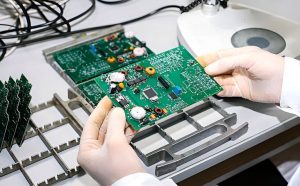
Kingda Turnkey PCB Assembly Services
Kingda provides turnkey PCB Assembly solutions covering manufacturing and assembly requirements according to customer specifications.
Depending on the project, the service can include PCB fabrication, Component Sourcing, SMT assembly, through-hole assembly, inspection, electrical testing, functional testing, and shipment coordination.
Kingda can also work with customer-supplied materials for partial turnkey projects when specific components or PCBs need to be provided by the customer.
For a turnkey project, customers should provide the latest BOM, Gerber or ODB++ files, pick-and-place data when available, assembly drawings, component specifications, and test requirements. These documents provide the foundation for accurate quotation, procurement, DFM review, and production planning.
How to Choose a Turnkey PCB Assembly Supplier
When evaluating a turnkey supplier, consider the following areas:
Manufacturing Capability
Confirm that the supplier can support the required PCB technology, component packages, SMT processes, through-hole assembly, testing, and production volume.
Procurement Capability
Review the supplier’s approach to component sourcing, approved vendors, obsolete components, counterfeit-risk control, and component traceability.
Engineering Support
A capable engineering team can help identify DFM, component, thermal, and assembly risks before production.
Quality Control
Ask how the supplier manages incoming inspection, process inspection, final inspection, testing, traceability, and nonconforming materials.
Communication and Documentation
Clear communication is especially important in turnkey manufacturing because the supplier manages several interconnected activities.
Revision-controlled documentation, formal change approval, and clear procurement rules can reduce manufacturing errors.
Conclusion
Turnkey PCB Assembly integrates multiple manufacturing activities into a coordinated service, potentially covering PCB fabrication, Component Sourcing, assembly, inspection, testing, and delivery.
The main advantages are simplified supplier management, centralized procurement, improved coordination, and reduced internal workload. However, successful turnkey manufacturing depends heavily on accurate documentation, effective revision control, component management, DFM review, process control, and communication between the customer and supplier.
Whether using full turnkey or partial turnkey assembly, customers should clearly define the BOM, PCB specifications, approved components, assembly requirements, testing strategy, and shipping requirements before production begins.
With a well-controlled manufacturing process and clearly defined responsibilities, turnkey PCB Assembly can provide a practical path from PCB design data to a tested and production-ready electronic assembly.