High-Tg PCB: PCB Design, PCB Manufacturing & High-Temperature Reliability Guide
As demand for high-performance electronic products continues to increase, the role of the printed circuit board (PCB) has become more critical than ever. In many applications, conventional PCB materials may not provide sufficient thermal stability, especially when the board is exposed to elevated temperatures, repeated thermal cycling, or demanding manufacturing processes.
This is where High-Tg PCB technology becomes important. The term Tg, or glass transition temperature, is a key property of PCB laminate materials. It indicates the approximate temperature at which the resin system transitions from a relatively rigid glassy state to a softer, more rubber-like state.
Choosing an appropriate Tg is therefore an important part of PCB Design and PCB Manufacturing, particularly for automotive electronics, industrial equipment, power electronics, aerospace systems, LED products, and other applications where thermal reliability is critical.
This guide explains what a High-Tg PCB is, why Tg matters, the differences between standard FR-4 and High-Tg FR-4, common materials, design considerations, applications, and how to select a suitable High-Tg PCB manufacturer.
What Is a High-Tg PCB?
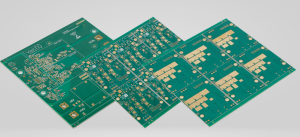
A High-Tg PCB is a printed circuit board manufactured using a laminate system with a relatively high glass transition temperature.
Tg is not the temperature at which a PCB suddenly melts or decomposes. Instead, it describes a significant change in the behavior of the polymer resin within the laminate. Below Tg, the resin is relatively rigid. As the temperature approaches and exceeds Tg, the resin becomes substantially softer, and its mechanical and dimensional properties change.
For this reason, operating a PCB continuously near or above the laminate’s Tg can increase the risk of dimensional instability, excessive thermal expansion, interconnection stress, and long-term reliability problems.
High-Tg materials are therefore commonly considered when a PCB must withstand:
- Elevated operating temperatures
- Repeated thermal cycling
- Lead-free reflow soldering
- High copper weights
- Large thermal excursions during assembly
- High-reliability applications
- Long operating lifetimes
It is important to note that Tg alone does not determine whether a PCB is suitable for a particular temperature environment. Designers should also consider decomposition temperature (Td), coefficient of thermal expansion (CTE), Z-axis expansion, dielectric properties, moisture resistance, copper-to-laminate adhesion, and the complete thermal profile of the application.
Why Is Tg Important for PCB Reliability?
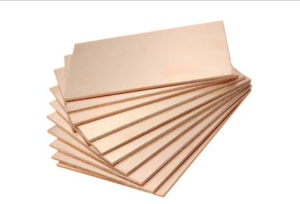
The glass transition temperature is particularly important because the mechanical properties of a PCB laminate change significantly around this transition.
When the laminate temperature approaches or exceeds Tg, the resin becomes softer and its coefficient of thermal expansion can increase significantly. This can place additional stress on plated through-holes, vias, copper layers, solder joints, and other structures.
During repeated heating and cooling cycles, this stress can accumulate and contribute to reliability problems such as:
- Plated-through-hole fatigue
- Via reliability issues
- Interlayer delamination
- PCB warpage
- Dimensional changes
- Copper-to-laminate stress
- Solder-joint fatigue
- Electrical discontinuities
Therefore, PCB Manufacturing for high-temperature applications requires more than simply selecting a high Tg number. The laminate system, copper construction, stackup, drilling, plating, lamination process, and thermal profile must all be compatible with the application’s requirements.
Advantages of High-Tg PCBs
High-Tg materials can provide several advantages when a PCB is exposed to significant thermal stress.
1. Improved Resistance to Delamination and Warpage
PCB fabrication involves multiple thermal processes, including lamination, soldering, reflow, and potentially rework.
A laminate with a higher Tg can maintain its mechanical properties over a broader temperature range, reducing thermal-mechanical stress during processing and operation.
However, material selection alone cannot eliminate warpage or delamination. Proper stackup symmetry, resin content, copper distribution, lamination parameters, and fabrication controls are also essential.
2. Better Long-Term Thermal Stability
Some electronic systems operate continuously for many hours or even years.
Continuous electrical current generates heat, while nearby power components may create localized hot spots. High-Tg laminates can provide greater thermal-mechanical stability in these conditions.
This is particularly relevant to:
- Power supplies
- Industrial controllers
- Automotive electronics
- LED systems
- Server and networking equipment
- Power conversion systems
3. Improved Reliability Under Thermal Cycling
Automotive, industrial, aerospace, and power electronics may experience repeated temperature changes rather than a single high-temperature event.
Repeated thermal expansion and contraction can place substantial stress on plated through-holes and multilayer structures.
A properly selected High-Tg laminate can help improve reliability by maintaining more stable mechanical properties during these thermal cycles.
4. Better Mechanical Stability
High-Tg laminate systems generally maintain their structural properties better at elevated temperatures than standard low-Tg materials.
This is particularly useful for multilayer boards, heavy-copper PCBs, and boards with demanding mechanical or thermal requirements.
5. Compatibility With High-Reliability PCB Applications
High-Tg materials are frequently considered for applications where PCB failure can result in significant equipment downtime or costly repairs.
These applications may include automotive control systems, industrial automation, telecommunications infrastructure, aerospace electronics, and power electronics.
Common High-Tg PCB Materials
High-Tg PCB materials are available in several laminate families. The appropriate material depends on electrical, thermal, mechanical, manufacturing, and cost requirements.
For many applications, High-Tg FR-4 is an attractive option because it provides improved thermal performance while retaining many of the manufacturing advantages of conventional FR-4.
Typical laminate examples may include:
| Material / Laminate | Typical Tg* | Typical Application Considerations |
|---|---|---|
| Standard FR-4 | ~130–140°C | General-purpose electronics |
| High-Tg FR-4 | ≥170°C in many product grades | Automotive, industrial, power electronics |
| Isola 370HR | ~180°C | High-reliability multilayer applications |
| Isola FR408HR | ~180°C | High-speed and high-reliability designs |
| Arlon high-temperature laminates | Material-dependent | High-temperature and specialty applications |
| Rogers RO4350B | ~280°C | RF and high-frequency applications |
| Rogers RO4003C | ~280°C | RF/high-frequency applications |
*Tg values vary by material construction, resin system, test method, and manufacturer. Designers should always verify the current manufacturer datasheet rather than selecting a laminate based only on a nominal Tg value.
It is also important to understand that high Tg does not automatically mean high-frequency performance. For RF or high-speed PCB applications, dielectric constant (Dk), dissipation factor (Df), dielectric stability, copper roughness, and controlled impedance characteristics may be more important than Tg alone.
High-Tg FR-4 vs. Standard FR-4
Standard FR-4 and High-Tg FR-4 are both widely used PCB laminate systems, but their thermal characteristics can differ significantly.
| Feature | Standard FR-4 | High-Tg FR-4 |
|---|---|---|
| Typical Tg | ~130–140°C | Often ≥170°C |
| Thermal stability | Suitable for general applications | Better for elevated-temperature environments |
| Z-axis expansion | Higher near/above Tg | Generally lower near operating temperatures |
| Thermal cycling capability | Application-dependent | Generally better suited to demanding thermal cycling |
| Moisture performance | Material-dependent | Often available in enhanced-performance grades |
| Typical applications | Consumer and general electronics | Automotive, industrial, power, aerospace |
| Cost | Generally lower | Generally higher |
The exact classification and specification should be verified against the laminate manufacturer’s datasheet and applicable IPC material specification.
Tg vs. Td: What Is the Difference?
Tg and Td are sometimes confused, but they describe different material behaviors.
Glass Transition Temperature (Tg)
Tg is the temperature range associated with a significant transition in the polymer resin from a relatively rigid glassy state toward a softer, rubber-like state.
Decomposition Temperature (Td)
Td represents the temperature at which measurable thermal decomposition of the material begins under a specified test method. Td is therefore associated with chemical degradation rather than simply a change in mechanical state.
In simplified terms:
Tg → change in physical/mechanical behavior
Td → onset of significant thermal decomposition
A PCB should normally be designed and operated with an appropriate margin below both limits. Tg should not be treated as the maximum allowable operating temperature.
Key Characteristics of High-Tg PCBs
High Thermal Stability
High-Tg materials can maintain more stable mechanical properties at elevated temperatures, helping protect multilayer structures and interconnections from excessive thermal stress.
Improved PTH Reliability
Plated through-holes (PTHs) are particularly sensitive to repeated Z-axis expansion and contraction.
During thermal cycling, differences between the CTE of the laminate and copper plating can generate stress in the plated barrel. A suitable High-Tg laminate, combined with controlled fabrication parameters, can help improve PTH reliability.
Support for High-Density PCB Design
High-Tg materials are frequently used in demanding multilayer and HDI applications. However, Tg itself does not directly make a PCB suitable for HDI.
HDI performance depends on factors such as:
- Microvia reliability
- Dielectric thickness
- Laser drilling capability
- Sequential lamination
- Copper plating quality
- Registration accuracy
- Via structure
- Material compatibility
Stable Electrical Performance
A high Tg value alone does not guarantee better electrical performance.
For high-speed and RF PCB Design, engineers should evaluate the complete electrical properties of the laminate, including:
- Dielectric constant (Dk)
- Dissipation factor (Df)
- Dielectric thickness
- Impedance stability
- Copper roughness
- Moisture absorption
- Frequency-dependent dielectric behavior
Higher Material Cost
High-Tg laminates generally cost more than standard FR-4 materials because of their enhanced resin systems and performance characteristics.
However, the additional material cost may be justified when improved thermal reliability can reduce field failures, rework, downtime, or premature product replacement.
When Should You Consider High-Tg PCB Materials?
Not every electronic product requires a High-Tg PCB. Material selection should be based on the actual thermal profile and reliability requirements of the product.
LED PCBs
High-power LED applications can generate significant heat. When a metal-core PCB is not appropriate or when an FR-4-based construction is required, a suitable High-Tg laminate can provide improved thermal-mechanical stability.
However, thermal conductivity and heat spreading remain separate considerations. A higher Tg does not automatically make a PCB better at conducting heat.
Heavy-Copper PCBs
Heavy-copper PCB structures can introduce significant thermal mass and thermal-mechanical stress.
High-Tg laminate systems may be considered where the board experiences repeated high-temperature assembly processes or significant thermal cycling.
High-Temperature Operating Environments
If an electronic product must operate near the upper temperature range of standard FR-4, engineers should evaluate whether a High-Tg laminate provides an appropriate reliability margin.
The actual operating temperature should be calculated based on ambient temperature, component heat generation, enclosure design, airflow, copper distribution, and thermal interfaces.
Lead-Free PCB Assembly
Lead-free soldering processes generally use higher reflow temperatures than traditional tin-lead soldering.
As a result, laminate selection becomes especially important for products that will undergo repeated assembly or rework cycles.
Applications of High-Tg PCBs
High-Tg PCBs are used in a wide range of demanding electronic systems.
1. Outdoor Signage and LED Displays
Outdoor LED signage and large displays may experience elevated ambient temperatures and direct solar exposure.
In regions with hot climates, the combination of ambient temperature, sunlight, high LED brightness, and internal heat generation can significantly increase PCB temperature.
High-Tg FR-4 may therefore be considered for LED control and driver boards when the complete thermal design supports it.
2. Military and Aerospace Electronics
Military and aerospace electronics may need to operate across wide temperature ranges.
Depending on the specific system and qualification requirements, PCB materials must provide appropriate thermal, mechanical, electrical, and environmental performance.
The exact temperature range should always be established from the system specification rather than assuming a universal value.
3. Networking and Communication Equipment
Networking equipment can contain dense components, high-speed signals, and significant heat-generating devices.
For example, SFP-related assemblies and other communication modules may require substantial mechanical and thermal reliability, particularly when components or metal cages must be removed during repair.
A High-Tg laminate can provide greater thermal margin during manufacturing and rework, although the maximum allowable rework temperature must be controlled according to the laminate and assembly specifications.
4. Power Electronics
Power supplies, DC-DC converters, inverters, battery-management systems, and power-control boards can generate substantial heat.
High-Tg PCB materials can help maintain structural reliability when combined with appropriate copper thickness, thermal vias, heat sinks, and thermal management strategies.
5. Automotive Electronics
Automotive electronics are often exposed to vibration, thermal cycling, humidity, and temperature extremes.
High-Tg materials may be used in applications such as:
- Engine control electronics
- Battery management systems
- Power conversion
- ADAS electronics
- Vehicle networking
- LED lighting
- Charging systems
6. High-Performance Computing and Industrial Electronics
Servers, industrial computers, data-processing equipment, and automation systems may operate continuously under significant thermal loads.
In these applications, High-Tg materials can be evaluated as part of a broader thermal and reliability strategy.
High-Tg PCB Design Considerations
Selecting a High-Tg material is only one part of successful PCB Design. Engineers should consider the entire board structure.
1. Select the Appropriate Laminate
Do not choose a laminate based solely on its Tg value.
Evaluate:
- Tg
- Td
- Z-axis CTE
- Dk
- Df
- Moisture absorption
- Copper adhesion
- Thermal conductivity
- Resin content
- Processing temperature
- Availability and cost
2. Optimize Thermal Management
High-Tg materials improve thermal-mechanical stability, but they do not replace thermal management.
Depending on the application, consider:
- Larger copper areas
- Heavy copper
- Thermal vias
- Copper planes
- Heat sinks
- Metal-core constructions
- Improved airflow
- Thermal interface materials
3. Consider CTE
The coefficient of thermal expansion is particularly important for multilayer PCBs.
Large Z-axis expansion can place significant stress on plated through-holes and microvias during thermal cycling.
Therefore, Tg and CTE should be evaluated together.
4. Check Laminate and Prepreg Compatibility
The selected core, prepreg, copper foil, and lamination process must be compatible.
This is especially important for multilayer and HDI PCB structures where dielectric thickness, resin content, registration, and lamination behavior directly influence manufacturing quality.
5. Validate the Thermal Profile
Thermal simulation and testing can help identify potential hot spots and thermal-mechanical risks before mass production.
Validation may include:
- Thermal cycling
- Reflow simulation
- Temperature-humidity testing
- Cross-section analysis
- PTH reliability testing
- Warpage measurement
- Electrical testing
How to Choose a High-Tg PCB Manufacturer
Choosing the right manufacturer is important because High-Tg PCB production requires appropriate material handling, lamination control, drilling, plating, inspection, and process management.
Consider the following factors:
Step 1: Verify Manufacturing Capabilities
Confirm that the manufacturer can process the specific High-Tg laminate you require.
Ask about:
- Supported laminate brands and grades
- Maximum layer count
- Copper thickness
- Minimum trace and spacing
- Hole sizes
- HDI capability
- Surface finishes
- Controlled impedance
- Thermal reliability testing
Step 2: Review Quality Systems
Depending on the application, relevant certifications and quality systems may include ISO 9001, ISO 14001, IATF 16949, ISO 13485, UL recognition, and applicable IPC requirements.
The appropriate certification depends on the target market and product category.
Step 3: Evaluate Engineering Support
A capable PCB manufacturer should be able to review your stackup, material selection, drill structure, copper distribution, thermal requirements, and DFM considerations.
Step 4: Request a Technical Quotation
Provide complete information, including:
- Gerber or ODB++ files
- Stackup
- Material requirements
- Tg requirement
- Copper thickness
- Surface finish
- Board dimensions
- Quantity
- Testing requirements
- Delivery requirements
Step 5: Evaluate Total Cost
The lowest unit price is not always the lowest overall manufacturing cost.
Consider material availability, yield, engineering support, testing, reliability, lead time, and potential rework when comparing High-Tg PCB suppliers.
Kingda can support customized PCB Manufacturing projects by working with engineers on material selection, stackup configuration, DFM review, PCB fabrication, PCB assembly, and quality inspection according to project requirements.
Frequently Asked Questions
Why is a High-Tg value important for PCBs?
A higher Tg can provide greater thermal-mechanical stability when the PCB operates or is processed at elevated temperatures. It can help reduce reliability risks associated with excessive softening and thermal expansion of the laminate resin system.
However, Tg should be considered together with Td, CTE, thermal cycling requirements, and the actual operating temperature.
What is the difference between a High-Tg PCB and a high-temperature PCB?
The terms are sometimes used interchangeably in commercial discussions, but they are not technically identical.
High-Tg PCB specifically refers to the glass transition characteristic of the laminate material.
High-temperature PCB is a broader term that may describe a PCB designed for elevated-temperature operation using one or more specialized materials or construction methods.
What are Tg, Td, and CTE?
Tg (Glass Transition Temperature): The temperature range associated with a major transition in the mechanical behavior of the polymer resin.
Td (Decomposition Temperature): A temperature metric associated with the onset of measurable thermal decomposition under a specified test method.
CTE (Coefficient of Thermal Expansion): A measure of how much a material expands or contracts as its temperature changes.
All three parameters are important when evaluating PCB thermal reliability.
When should I upgrade to a High-Tg PCB?
Consider a High-Tg PCB when:
- The operating temperature is high.
- The board experiences repeated thermal cycling.
- The assembly process uses high-temperature lead-free reflow.
- The PCB uses heavy copper.
- The board has demanding PTH reliability requirements.
- The product requires long-term thermal reliability.
- Standard FR-4 does not provide sufficient thermal margin.
The correct material should ultimately be selected based on the complete application requirements rather than Tg alone.
Conclusion
High-Tg PCB technology provides an effective way to improve the thermal-mechanical reliability of printed circuit boards used in demanding environments.
Compared with conventional laminate systems, High-Tg materials can provide better stability during elevated-temperature operation, thermal cycling, assembly, and rework. They are particularly relevant to automotive electronics, industrial equipment, power electronics, aerospace systems, LED products, networking equipment, and other high-reliability applications.
However, a higher Tg value does not automatically make a PCB suitable for every high-temperature or high-speed application. PCB Design engineers should evaluate Tg together with Td, CTE, Dk, Df, thermal management, stackup configuration, copper thickness, via structure, and manufacturing requirements.
For reliable PCB Manufacturing, material selection should be coordinated with lamination, drilling, plating, assembly, inspection, and thermal testing. By selecting the appropriate laminate and working with an experienced manufacturing partner, engineers can achieve a PCB that provides the required balance of thermal performance, electrical reliability, manufacturability, and cost.