How to Clean PCB Flux: PCB Design, PCB Manufacturing & Flux Removal Guide
Flux residue is a common result of the soldering process. Although flux is essential for improving solder wetting and reducing oxidation during soldering, inappropriate or excessive residue left on a printed circuit board (PCB) can contribute to corrosion, leakage currents, electrochemical migration, and other reliability concerns.
As PCB layouts become more compact and electronic assemblies become more sophisticated, PCB cleanliness is increasingly important. Knowing when to remove PCB flux and how to select an appropriate cleaning process can help manufacturers maintain assembly quality and long-term reliability.
This guide explains what soldering flux is, why flux residues may need to be removed, the major types of PCB flux, the best PCB Cleaning methods, common cleaning mistakes, and essential safety precautions. It also explains how flux-cleaning requirements should be considered during PCB Design, PCB Manufacturing, and PCB Assembly.
What Is Soldering Flux?
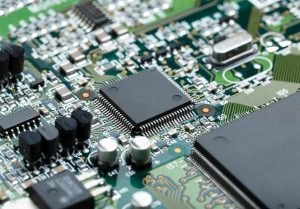
Soldering flux is a chemical compound or formulation used during soldering to promote proper wetting and help remove or prevent metal oxides from interfering with the soldering process.
Flux is available in different forms, including liquids, pastes, gels, and flux-containing solder materials. Its formulation can include several functional components, such as a flux base, activators, additives, and solvents.
After reflow soldering, wave soldering, or selective soldering, some flux components may evaporate or react while others can remain on the PCB surface as residue.
Whether this residue must be removed depends on the flux chemistry, residue characteristics, PCB construction, operating environment, and reliability requirements of the finished product.
What Does Flux Do During Soldering?
Flux primarily performs two important functions.
Oxide Removal:
Flux helps chemically remove or disrupt oxide films on metal surfaces. This improves solder wetting and helps molten solder form a reliable connection with the pad and component termination.
Oxidation Protection:
During soldering, elevated temperatures can accelerate oxidation. Flux helps protect exposed metal surfaces during the soldering process, supporting more consistent solder joint formation.
These functions make flux an essential part of many soldering processes. However, the residue left after soldering must still be evaluated to determine whether post-solder cleaning is necessary.
What Is Flux Residue?
Flux residue is the material remaining on the PCB after the active soldering process has finished.
Depending on the flux formulation, residue may contain:
- Flux base materials
- Activator residues
- Additives
- Reaction products
- Other non-volatile components
The amount and chemical activity of the residue vary significantly between flux formulations.
A visible residue does not automatically mean that a PCB is unreliable, while a visually clean PCB is not necessarily free of ionic contamination. For applications with strict cleanliness requirements, objective cleanliness testing may therefore be necessary.
Main Components of Soldering Flux
Although flux formulations vary by manufacturer and application, a typical flux system may contain four major functional categories.
Flux Base
The flux base provides the medium in which active ingredients are carried and delivered to the soldering area.
Common base materials include:
- Rosin
- Modified rosin
- Synthetic resins
- Solvent-based resin systems
Activators
Activators help remove metal oxides and improve solder wetting.
They may include organic acids, salts, or other chemically active materials. The activity level of the formulation affects both soldering performance and the characteristics of any remaining residue.
Additives
Additives are used to modify properties such as:
- Viscosity
- Flow behavior
- Stability
- Storage life
- Application characteristics
Solvents
Solvents dissolve or disperse other flux ingredients and help control viscosity and application behavior.
Many solvents evaporate during preheating and soldering, although the exact evaporation behavior depends on the formulation and thermal profile.
Why Should You Remove Flux from a PCB?
As component density increases, PCB cleanliness becomes more important.
Residues located between closely spaced pads, traces, leads, and other conductive structures may create reliability risks under certain environmental and electrical conditions.
Potential problems associated with inappropriate flux residues include:
- Corrosion
- Leakage currents
- Electrochemical migration
- Reduced insulation resistance
- Contamination beneath conformal coatings
- Poor coating adhesion
- Reduced adhesive bonding performance
- Long-term reliability degradation
These risks can become more significant when a PCB operates under high humidity, elevated temperature, electrical bias, or corrosive environmental conditions.
For high-reliability electronics used in medical, automotive, aerospace, industrial, and other demanding applications, cleanliness requirements should be established as part of the overall manufacturing and quality plan.
Types of PCB Flux
The type of flux used during soldering has a major influence on whether post-solder cleaning is required.
Rosin Flux
Rosin flux is based on natural or modified resin materials. It helps remove oxides and promote solder wetting during soldering.
After soldering, rosin flux can leave visible or non-visible residues.
Whether these residues must be removed depends on the specific flux formulation and the requirements of the finished product.
For aerospace, medical, automotive, and other high-reliability applications, manufacturers may establish controlled cleaning and cleanliness verification procedures.
Water-Soluble Flux
Water-soluble flux is formulated so that its residues can be removed using water-based cleaning processes.
These fluxes commonly contain water-soluble organic acids, activators, surfactants, and other formulation components. Because some water-soluble flux residues can remain chemically active, they generally require thorough post-solder cleaning.
A typical process may include:
- Cleaning or washing
- Rinsing
- Deionized-water rinsing when specified
- Drying
- Cleanliness verification
The exact process should follow the flux supplier’s technical specifications.
No-Clean Flux
No-clean flux is designed to leave a relatively small amount of residue that, under validated process conditions, may not require a separate cleaning step.
However, “no-clean” does not mean that the PCB contains no residue.
Cleaning may still be required when:
- Conformal coating will be applied.
- Adhesives must bond to the PCB surface.
- The product operates in a high-humidity environment.
- High-voltage insulation is important.
- Fine-pitch or densely populated areas make residue control critical.
- The product has stringent reliability requirements.
- The flux manufacturer’s specification requires additional cleaning.
Therefore, no-clean flux should be evaluated according to the complete product and manufacturing process rather than being treated as a universal exemption from cleaning.
When Should You Remove Flux Residue?
Not every PCB requires post-solder cleaning. Cleaning a board unnecessarily can increase manufacturing time, labor, chemical consumption, and process complexity.
The correct decision should be based on the flux type, residue characteristics, PCB design, components, operating environment, and required reliability.
Situations Where Flux Cleaning Is Recommended
Flux removal should generally be considered when:
- Rosin or water-soluble flux requires post-solder cleaning.
- The PCB is intended for high-reliability applications.
- The assembly will receive a conformal coating.
- The product operates in humid or corrosive environments.
- Residues may interfere with adhesive bonding.
- Electrical insulation requirements are strict.
- Cleanliness specifications require controlled residue removal.
- Testing indicates unacceptable ionic or other contamination.
When Can No-Clean Flux Residue Remain?
No-clean residue may be acceptable when:
- A qualified no-clean flux is being used.
- The residue is within the manufacturer’s specified limits.
- The assembly process has been properly validated.
- The product’s operating environment is compatible with the residue.
- Residues do not interfere with coatings, adhesives, electrical performance, or reliability.
When there is uncertainty, the best approach is to review the flux manufacturer’s technical data and evaluate the actual environmental and electrical requirements of the finished product.
Best PCB Flux Cleaning Methods
Selecting the right PCB Cleaning method depends on several factors, including:
- Flux chemistry
- PCB construction
- Component sensitivity
- Board complexity
- Production volume
- Required cleanliness level
- Available cleaning equipment
- Compatibility of materials with the cleaning chemistry
No single cleaning method is ideal for every PCB assembly.
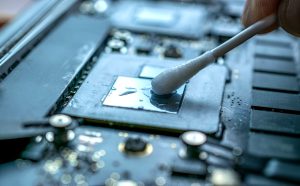
1. Manual Cleaning with Isopropyl Alcohol (IPA)
Manual cleaning with isopropyl alcohol (IPA) is commonly used for prototypes, repairs, rework, and localized contamination.
A suitable cleaning agent is applied to the affected area, and the dissolved residue is gently removed using a lint-free wipe or appropriate ESD-safe brush.
Best for:
- PCB prototypes
- Repair work
- Rework
- Small-batch production
- Selective cleaning
Advantages:
- Simple
- Relatively inexpensive
- Requires limited equipment
- Suitable for localized contamination
Limitations:
- Labor-intensive
- Operator-dependent
- Difficult to scale for high-volume production
- May not provide uniform cleaning of complex assemblies
IPA should also be checked for compatibility with the PCB materials, components, plastics, labels, coatings, and adhesives involved.
2. Ultrasonic Cleaning
Ultrasonic cleaning uses high-frequency acoustic energy to help remove contaminants from difficult-to-access areas.
The PCB assembly is placed in a compatible cleaning solution, where acoustic energy can help cleaning fluid reach areas that may be difficult to clean manually.
Best for:
- Certain complex assemblies
- Batch cleaning
- Difficult-to-access areas
Advantages:
- Can reach areas underneath or around components
- Suitable for batch processing
- Reduces manual cleaning effort
Limitations:
- Not suitable for every component or assembly
- Mechanical effects can affect certain fragile components
- Requires process and material compatibility validation
Ultrasonic cleaning should therefore be qualified for the specific assembly rather than assumed to be universally safe.
3. Aqueous or Water-Based Cleaning
Aqueous cleaning uses water-based cleaning chemistry to remove flux residues and other contaminants.
It is particularly useful for compatible water-soluble flux systems and can be integrated into automated production lines.
A typical process can include cleaning, rinsing, and controlled drying.
Best for:
- Water-soluble flux
- High-volume manufacturing
- Automated production lines
- Applications requiring controlled cleanliness
Advantages:
- Scalable
- Consistent
- Suitable for automated production
- Reduces dependence on flammable organic solvents
Limitations:
- Thorough rinsing is required
- Complete drying is essential
- Wastewater treatment may be necessary
- Not every flux residue can be effectively removed using water alone
4. Flux Remover Spray
Flux-remover sprays are convenient for localized cleaning and repair applications.
The cleaner is applied to the contaminated area and the dissolved residue is removed using a lint-free wipe or suitable ESD-safe brush.
Best for:
- Quick repairs
- Field service
- Localized contamination
- Rework
Advantages:
- Fast
- Portable
- Convenient
- Requires minimal equipment
Limitations:
- Less consistent than automated cleaning
- Not suitable for high-volume production
- May be inefficient for heavily contaminated assemblies
The cleaning agent should always be checked for compatibility with the PCB assembly before use.
PCB Flux Cleaning Method Comparison
| Cleaning Method | Best For | Main Benefits | Key Considerations |
|---|---|---|---|
| Manual IPA Cleaning | Prototypes, repair, rework, small batches | Simple, affordable, selective | Labor-intensive and operator-dependent |
| Ultrasonic Cleaning | Certain complex assemblies and batch cleaning | Reaches difficult areas | Requires component and material compatibility validation |
| Aqueous Cleaning | Water-soluble flux and high-volume production | Scalable and repeatable | Requires rinsing, drying, and wastewater management |
| Flux Remover Spray | Localized cleaning and repairs | Fast and portable | Not ideal for high-volume or severe contamination |
How to Choose the Right PCB Cleaning Method
1. Match the Cleaning Chemistry to the Flux
The first step is to identify the flux formulation.
Water-soluble flux generally requires a compatible aqueous cleaning process, while rosin and other residues may require specialized solvent-based or purpose-formulated flux-removal chemistry.
Do not assume that IPA or any other general-purpose solvent will remove every type of flux residue effectively.
2. Consider Production Volume
Production volume strongly influences the appropriate cleaning method.
Manual cleaning may be practical for:
- Prototypes
- Engineering samples
- Repairs
- Rework
- Small production runs
For larger production volumes, automated aqueous or other validated cleaning systems can provide greater consistency and repeatability.
3. Evaluate PCB and Component Compatibility
The cleaning process must be compatible with the complete PCB assembly.
Before selecting a cleaner, evaluate materials such as:
- Connectors
- Switches
- Sensors
- MEMS components
- Plastics
- Adhesives
- Labels
- Conformal coatings
- Shielding materials
A chemical that is safe for one PCB assembly may damage another.
4. Verify Cleaning Effectiveness
Visual inspection is useful for detecting obvious residues, but visual inspection alone cannot reliably identify all ionic contamination.
For controlled cleanliness requirements, manufacturers may use ionic contamination testing or other validated cleanliness verification methods.
The appropriate acceptance criteria should be established according to the product requirements and applicable industry standards.
5. Control Cleaning Parameters
Important cleaning parameters can include:
- Cleaning-agent concentration
- Temperature
- Cleaning time
- Spray pressure
- Agitation
- Rinse quality
- Drying conditions
The objective is to achieve sufficient contamination removal while preventing damage to components, solder joints, PCB materials, coatings, and markings.
Common PCB Flux Cleaning Mistakes
Using an Incompatible Solvent
A cleaning solvent that does not match the flux chemistry may fail to dissolve the residue effectively.
It may also damage plastics, adhesives, labels, coatings, or other materials.
Excessive Scrubbing
Excessive mechanical force can damage:
- Solder mask
- Solder pads
- Fine-pitch components
- Component leads
- Delicate mechanical structures
Cleaning should be sufficiently aggressive to remove the residue but gentle enough to protect the assembly.
Cleaning No-Clean Flux Without a Defined Requirement
Cleaning a validated no-clean assembly simply because some residue is visible can add cost and process risk without necessarily improving reliability.
The cleaning decision should be based on the flux specification and final product requirements.
Leaving Cleaning-Agent Residue
Insufficient rinsing or wiping can leave behind cleaning chemicals or dissolved contamination.
This can undermine the purpose of the cleaning process.
Failing to Dry the PCB Completely
Moisture or cleaning liquid trapped underneath components or inside connectors can create electrical and reliability problems.
The PCB should be completely dry before electrical testing or energization.
Ignoring ESD Protection
Cleaning operations involve direct contact with the PCB and may involve brushes and wipes that generate electrostatic charges.
Without appropriate ESD controls, sensitive components can be damaged even when there is no visible physical damage.
PCB Flux Cleaning Safety Tips
Use Appropriate ESD Protection
For sensitive electronic assemblies, appropriate ESD controls may include:
- ESD wrist straps
- Grounded ESD workstations
- ESD-safe mats
- ESD-safe brushes
- Appropriate grounding procedures
Wear Suitable Gloves
Chemical-resistant gloves can reduce skin exposure and prevent fingerprints, oils, and other contaminants from being transferred to the PCB.
Glove material should be selected according to the cleaning chemical being used.
Wear Safety Glasses
Eye protection should be used when handling cleaning chemicals, particularly during spraying, washing, rinsing, or other operations where splashing may occur.
Ensure Adequate Ventilation
Solvent-based cleaners should be used with appropriate ventilation or local exhaust systems.
Workers should follow the applicable Safety Data Sheet (SDS) requirements for the cleaning product.
Store Flammable Solvents Properly
IPA and some other cleaning agents are flammable.
They should be stored and handled according to applicable fire-safety requirements and kept away from ignition sources.
Allow the PCB to Dry Completely
Never power a PCB while cleaning liquid or moisture remains on or inside the assembly.
Depending on the PCB construction and cleaning process, controlled air drying or other validated drying methods may be required.
PCB Cleaning and PCB Design
Cleaning requirements should ideally be considered during PCB Design, not after the PCB has already entered production.
A design review can evaluate whether the assembly will be easy to:
- Clean
- Rinse
- Dry
- Inspect
- Coat
- Repair
High-density layouts can create restricted areas beneath components and between closely spaced conductors.
For example, bottom-terminated components, fine-pitch packages, shields, connectors, and densely populated areas can make post-solder cleaning more challenging.
Therefore, Design for Manufacturing (DFM) and Design for Assembly (DFA) reviews should consider not only solderability but also cleaning accessibility and cleanliness requirements.
PCB Cleaning and PCB Manufacturing
Cleaning is part of the broader PCB Manufacturing and assembly workflow.
A controlled process may look like:
Flux Selection → Solder Paste/Flux Application → Reflow or Soldering → Cleaning or Validated No-Clean Process → Rinsing → Drying → Cleanliness Verification → Inspection → Final Testing
This approach helps prevent cleaning from becoming an afterthought.
Manufacturers should define appropriate process parameters and acceptance criteria before production begins.
For high-reliability electronics, cleanliness verification may be incorporated into the quality plan alongside AOI, X-ray inspection, electrical testing, and other inspection processes where appropriate.
How Kingda Can Support PCB Manufacturing and Assembly
For products that require coordinated PCB Design, PCB Manufacturing, and PCB Assembly, selecting an experienced manufacturing partner can simplify the transition from engineering requirements to production.
Kingda provides integrated PCBA manufacturing services covering PCB fabrication, component sourcing, SMT assembly, THT/DIP assembly, inspection, testing, and related manufacturing processes.
An integrated approach allows engineers and purchasing teams to consider PCB specifications, assembly requirements, process controls, inspection, and production requirements together rather than treating PCB fabrication and assembly as isolated activities.
Conclusion
Flux plays a critical role in soldering by helping remove oxides and improve solder wetting. However, flux residue remaining after soldering must be evaluated according to its chemistry and the requirements of the finished PCB assembly.
Rosin and water-soluble flux systems commonly require appropriate post-solder cleaning, while qualified no-clean flux systems may allow residues to remain when the process and end-use conditions support that approach. The key is not to assume that every PCB requires cleaning—or that every no-clean PCB can automatically be left uncleaned.
The most appropriate PCB Cleaning method depends on flux chemistry, PCB design, component sensitivity, production volume, cleanliness requirements, and material compatibility. Manual IPA cleaning, ultrasonic cleaning, aqueous cleaning, and specialized flux-remover sprays each have specific applications.
Safety is equally important. Proper ESD protection, chemical handling, ventilation, PPE, solvent storage, rinsing, and complete drying should all be incorporated into the cleaning process.
By considering cleaning requirements during PCB Design, PCB Manufacturing, and PCB Assembly, manufacturers can establish a more controlled production process, reduce contamination-related risks, and improve the long-term reliability of electronic products.
Article Summary
PCB flux is essential for reliable soldering, but unsuitable or excessive flux residues can contribute to corrosion, leakage currents, electrochemical migration, and coating-related problems. Whether a PCB needs cleaning depends on the flux type, residue characteristics, PCB design, operating environment, and reliability requirements. Manual IPA cleaning, ultrasonic cleaning, aqueous cleaning, and flux-remover sprays can all be effective when properly selected and validated. Proper ESD protection, ventilation, chemical compatibility, rinsing, and complete drying are also essential for safe and reliable PCB Cleaning.