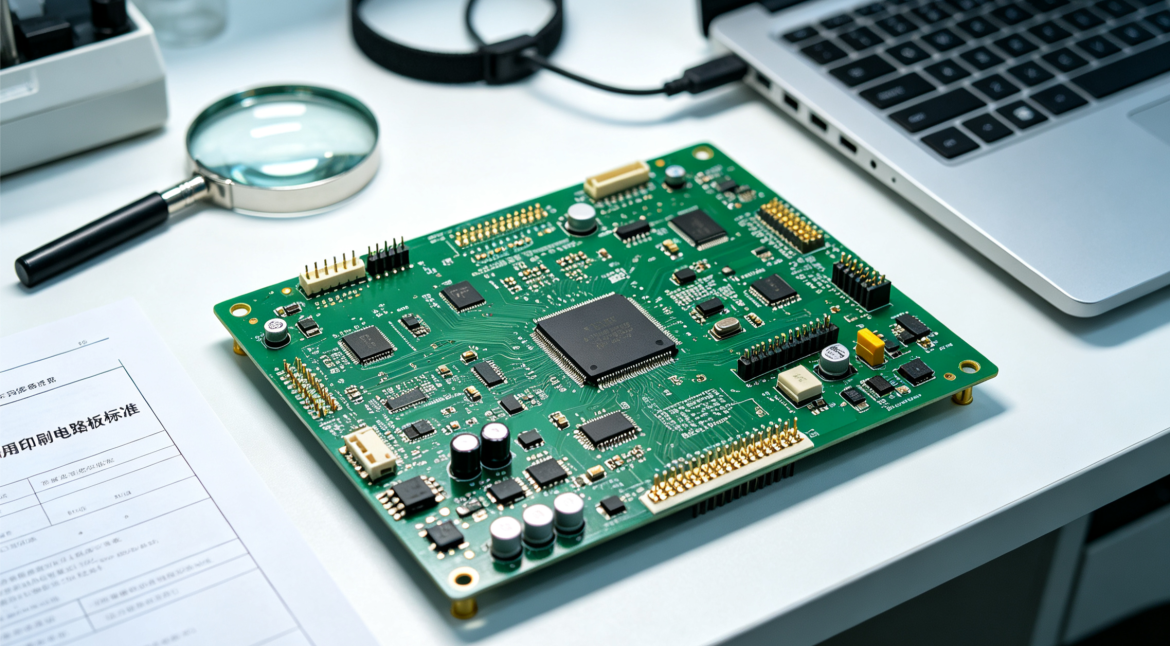
The IPC Standards system provides an important technical foundation for modern PCB Manufacturing, PCB Assembly, electronic packaging, soldering, inspection, cleaning, and reliability testing. These standards help manufacturers, engineers, designers, and quality-control teams establish consistent requirements throughout the entire electronic manufacturing process.
For companies involved in PCB Assembly and SMT Assembly, understanding the relevant IPC documents can improve process control, product reliability, manufacturing consistency, and quality assurance. Different standards address different stages of production, from electrostatic discharge (ESD) protection and soldering materials to temperature profiling, cleaning, inspection, and reliability evaluation.
Below is a practical overview of 35 important IPC standards and technical documents commonly associated with PCB manufacturing and electronic assembly.
1. IPC-ESD-2020 – ESD Control Program Development
IPC-ESD-2020 provides guidance for establishing, implementing, and maintaining an electrostatic discharge control program. It covers the design and management of an ESD control system and provides recommendations for protecting ESD-sensitive electronic components and assemblies.
The standard is particularly important for electronic manufacturing environments where sensitive components may be damaged by electrostatic discharge during handling, storage, assembly, inspection, or testing.
2. IPC-SA-61A – Post-Solder Cleaning Handbook
This handbook provides technical information related to semi-aqueous cleaning processes after soldering. It covers cleaning chemicals, manufacturing residues, cleaning equipment, process parameters, process control, environmental considerations, and worker safety.
Proper cleaning is essential for removing flux residues and other contaminants that could affect the reliability of a PCB assembly.
3. IPC-AC-62A – Post-Solder Cleaning Handbook
IPC-AC-62A addresses post-solder cleaning processes and discusses manufacturing residues, aqueous cleaning agents, equipment, process control, quality control, environmental requirements, and employee safety.
The document also provides information concerning cleanliness measurement and evaluation methods, helping manufacturers determine whether a cleaning process meets the requirements of a particular application.
4. IPC-DRM-40E – Through-Hole Solder Joint Evaluation
This desk reference provides visual guidance for evaluating PCB Assembly through-hole solder joints.
It illustrates component leads, hole walls, solder coverage, solder fillets, contact angles, vertical fill, pad coverage, and common solder joint defects. Three-dimensional illustrations can also help engineers better understand the relationship between component leads, plated through-holes, pads, and solder.
Through-hole solder joint evaluation remains important for assemblies where mechanical strength and reliable electrical connections are required.
5. IPC-TA-722 – Soldering Technology Assessment Handbook
IPC-TA-722 provides technical information covering various aspects of soldering technology.
The handbook includes discussions of general soldering principles, soldering materials, hand soldering, batch soldering, wave soldering, reflow soldering, vapor-phase soldering, and infrared soldering.
It can serve as a useful technical reference for engineers responsible for selecting and controlling soldering processes.
6. IPC-7525 – Stencil Design Guidelines
IPC-7525 provides guidance for designing and manufacturing stencils used for solder paste and surface-mount adhesive printing.
Stencil design has a direct influence on solder paste deposition and therefore affects the quality of SMT Assembly. Important factors include aperture dimensions, stencil thickness, component pitch, pad geometry, and printing conditions.
The guidelines also address stencil applications for surface-mount technology, including through-hole components, flip-chip applications, overprinting, double printing, and step stencils.
Proper stencil design helps improve solder paste transfer efficiency and reduce defects such as insufficient solder, solder bridging, and component placement problems.
7. IPC/EIA/JEDEC J-STD-004 – Requirements for Soldering Fluxes
J-STD-004 defines requirements for soldering fluxes and establishes classifications based on flux composition and activity.
It covers rosin-based, resin-based, organic, and inorganic flux systems, including classification according to halide content and activation levels. It also addresses fluxes used in no-clean processes and materials containing flux.
Selecting the correct flux is critical to achieving reliable solder wetting while controlling ionic and chemical residues.
8. IPC/EIA/JEDEC J-STD-005 – Requirements for Soldering Pastes
J-STD-005 defines requirements and characteristics for solder paste used in electronic assembly.
It addresses factors such as metal content, viscosity, slump, solder ball formation, tackiness, and other performance characteristics. Standardized testing helps manufacturers evaluate solder paste consistency and process suitability.
For high-volume SMT Assembly, solder paste performance directly affects printing quality, component placement, solder joint formation, and overall assembly yield.
9. IPC/EIA/JEDEC J-STD-006 – Requirements for Electronic-Grade Solder Alloys and Solders
This standard establishes requirements for electronic-grade solder alloys and solder products.
It covers terminology, specifications, and test methods for solder alloys in forms such as bars, wires, and powders, as well as solder products with or without flux.
Material composition and solder alloy selection can significantly influence melting behavior, wetting performance, mechanical strength, and long-term PCB Reliability.
10. IPC-CA-821 – General Requirements for Thermally Conductive Adhesives
IPC-CA-821 addresses thermally conductive adhesives used to attach components while providing thermal transfer through an electrically insulating medium.
The document covers applicable requirements and test methods for thermally conductive dielectric adhesives.
These materials are particularly useful in electronic applications where thermal management is important but electrical isolation must also be maintained.
11. IPC-3406 – Guidelines for Conductive Surface-Mount Adhesives
IPC-3406 provides guidance for selecting and using conductive adhesives as an alternative to conventional soldering materials.
Conductive adhesives can be considered for specific electronic manufacturing applications where traditional soldering may not be suitable because of temperature limitations, component sensitivity, substrate characteristics, or specialized assembly requirements.
12. IPC-AJ-820 – Assembly and Soldering Handbook
This handbook provides technical information concerning electronic assembly and soldering inspection.
It includes terminology and definitions, PCB and component types, lead configurations, solder joint characteristics, component mounting, design considerations, soldering processes, packaging, cleaning, coating, quality assurance, and testing.
It provides a broad technical reference for engineers involved in PCB Assembly and soldering process development.
13. IPC-7530 – Guidelines for Temperature Profiling for Mass Soldering Processes
IPC-7530 provides guidance for developing temperature profiles for mass soldering processes, particularly reflow soldering and wave soldering.
Temperature profiling is essential for verifying that components and solder joints experience the required thermal conditions throughout the soldering process.
A properly developed thermal profile can help reduce defects such as insufficient reflow, solder voiding, component damage, solder bridging, and inconsistent solder joint formation.
14. IPC-TR-460A – Troubleshooting Guide for Wave Soldering
IPC-TR-460A provides a troubleshooting reference for problems encountered during wave soldering.
It identifies common wave-soldering defects and provides recommendations for corrective actions. Typical issues may involve solder bridging, insufficient solder, poor wetting, solder icicles, component movement, and other process-related problems.
15. IPC/EIA/JEDEC J-STD-003 – Solderability Tests for Printed Circuit Boards
J-STD-003 establishes test methods for evaluating the solderability of printed circuit boards.
Solderability testing helps determine whether PCB surface finishes can provide reliable solder wetting and solder joint formation.
This is particularly important when PCBs are stored for extended periods or when surface finish characteristics may influence assembly performance.
16. J-STD-013 – Application of Ball Grid Array and Other High-Density Technologies
J-STD-013 addresses the application of BGA and other high-density packaging technologies.
The document provides information concerning design principles, material selection, PCB fabrication, assembly processes, inspection, testing, and reliability considerations for high-performance, high-pin-count IC packages.
BGA technology enables high interconnection density but also introduces additional requirements for PCB layout, solder paste printing, reflow control, inspection, and reliability evaluation.
17. IPC-7095 – Design and Assembly Process Implementation for BGA Devices
IPC-7095 provides technical guidance for the design and assembly of BGA devices.
It discusses practical considerations for engineers working with BGA packages, including package design, PCB land patterns, soldering, inspection, reliability, and process control.
Because BGA solder joints are located beneath the package, careful process development and inspection are particularly important for achieving consistent assembly quality.
18. IPC-M-I08 – Cleaning Handbook
IPC-M-I08 provides a collection of IPC cleaning-related information intended to help manufacturing engineers develop and troubleshoot cleaning processes.
It can be used as a reference when selecting cleaning methods, evaluating residues, and determining suitable process-control strategies.
19. IPC-CH-65-A – Printed Circuit Assembly Cleaning Handbook
IPC-CH-65-A provides guidance on cleaning technologies used in the electronics industry.
It discusses both established and emerging cleaning methods and explains the relationship among materials, manufacturing processes, contaminants, and cleaning requirements.
Selecting an appropriate cleaning process is especially important when residues may affect insulation resistance, corrosion resistance, or long-term PCB Reliability.
20. IPC-SC-60A – Post-Solder Solvent Cleaning Handbook
IPC-SC-60A focuses on solvent cleaning technologies used after automated and manual soldering.
It discusses solvent properties, residues, process control, and environmental considerations.
Although cleaning technology has evolved significantly, the technical principles described in such documents remain useful for understanding the relationship between soldering residues and cleaning requirements.
21. IPC-9201 – Surface Insulation Resistance Handbook
IPC-9201 addresses surface insulation resistance (SIR) and provides information about terminology, theory, testing procedures, and evaluation methods.
It also discusses temperature-humidity testing, failure modes, and troubleshooting.
SIR testing is an important reliability evaluation method because contamination, ionic residues, moisture, and electrical bias can contribute to insulation degradation and electrochemical migration.
22. IPC-DRM-53 – Electronic Assembly Desk Reference
IPC-DRM-53 provides illustrations and photographic references for electronic assembly technologies.
It includes information related to both through-hole assembly and surface-mount assembly, making it useful as a visual reference for engineers, inspectors, and production personnel.
23. IPC-M-103 – SMT Assembly Handbook
IPC-M-103 is a collection of IPC documents associated with SMT Assembly.
Surface-mount technology requires coordinated control of PCB design, component selection, solder paste printing, component placement, reflow soldering, inspection, and testing.
Using the relevant IPC documents together helps establish a consistent framework for SMT process development and quality management.
24. IPC-M-I04 – Printed Circuit Board Assembly Handbook
IPC-M-I04 provides a collection of commonly used technical documents related to printed circuit board assembly.
The handbook can serve as a reference for engineers and manufacturing teams working with PCB assembly processes, inspection requirements, soldering, cleaning, and quality control.
25. IPC-CC-830 – Qualification and Performance of Electrical Insulating Compound for Printed Wiring Assemblies
IPC-CC-830 addresses the performance and qualification of conformal coating materials used on printed wiring assemblies.
Conformal coatings provide a protective layer over PCB assemblies and can help protect electronic components and conductors from moisture, contamination, corrosion, and environmental exposure.
Material selection and coating-process control are important factors in achieving long-term PCB Reliability.
26. IPC-S-816 – SMT Process Guidelines and Checklist
IPC-S-816 provides troubleshooting information for SMT Assembly processes.
It covers common process problems and potential corrective actions, including solder bridging, solder splashing, component misalignment, placement problems, and other assembly defects.
A structured troubleshooting approach helps manufacturers identify whether defects originate from solder paste printing, component placement, reflow conditions, materials, equipment, or PCB design.
27. IPC-CM-770D – Guidelines for Printed Board Assembly
IPC-CM-770D provides guidance on component preparation and mounting for PCB assembly.
It considers both manual and automated assembly technologies, including surface-mount and flip-chip assembly, as well as subsequent soldering, cleaning, and coating processes.
The document emphasizes the relationship between component preparation, assembly technology, and downstream manufacturing processes.
28. IPC-7129 – Calculation of DPMO and Manufacturing Metrics for PCB Assembly
IPC-7129 provides guidance for calculating defects per million opportunities (DPMO).
DPMO is a useful manufacturing quality metric because it normalizes defect rates based on the number of opportunities for defects to occur.
Manufacturers can use this type of metric to monitor process performance, compare production lines, identify quality trends, and support continuous improvement.
29. IPC-9261 – Assessment of DPMO and Yield in PCB Assembly
IPC-9261 provides a methodology for evaluating output, yield, and defects per million opportunities during PCB assembly.
Such measurements can be applied to different stages of the assembly process to identify process weaknesses and quantify manufacturing performance.
When combined with defect analysis, DPMO and yield data can help manufacturers establish more effective process-improvement strategies.
30. IPC-D-279 – Design Guidelines for Reliable Surface-Mount Technology PCB Assemblies
IPC-D-279 provides design guidance for reliable PCB assemblies using surface-mount and mixed technologies.
The document considers design principles that influence assembly reliability, including component selection, layout, solder joint requirements, thermal considerations, and manufacturing constraints.
Applying reliability-oriented design principles at an early stage can reduce manufacturing risks and improve product performance.
31. IPC-2546 – Requirements for Transfer of Information in PCB Assembly
IPC-2546 addresses information and data transfer requirements associated with PCB assembly equipment and manufacturing systems.
It covers manufacturing equipment and processes such as manual placement, automated screen printing, adhesive dispensing, automated surface-mount placement, through-hole placement, forced-convection reflow, infrared reflow, and wave soldering.
Effective information exchange between equipment and manufacturing systems is increasingly important for automated production and smart manufacturing environments.
32. IPC-PE-740A – Troubleshooting in PCB Manufacturing and Assembly
IPC-PE-740A provides troubleshooting information for problems encountered during PCB design, manufacturing, assembly, and testing.
Troubleshooting should not focus only on correcting individual defects. A systematic approach should identify the root cause, evaluate process interactions, and establish preventive measures.
This approach can improve production yield and support continuous process improvement.
33. IPC-6010 Series – Qualification and Performance Specifications for Printed Boards
The IPC-6010 series provides a framework of qualification and performance specifications for printed boards.
Different documents within the series address specific PCB technologies and performance requirements. These specifications can cover areas such as materials, construction, electrical performance, dimensional requirements, reliability, and qualification testing.
For PCB Manufacturing, selecting the appropriate IPC-6010-series specification helps ensure that the finished PCB meets the requirements of its intended application.
34. IPC-6018 – Qualification and Performance Specification for High-Frequency (Microwave) Printed Boards
IPC-6018 addresses qualification and performance requirements for high-frequency and microwave printed boards.
High-frequency PCBs require careful control of material properties, dielectric characteristics, dimensional stability, impedance, conductor geometry, and manufacturing consistency.
For RF and microwave applications, even relatively small variations in PCB fabrication can influence signal performance and overall system reliability.
35. IPC-D-317 – Design Guidelines for Electronic Packaging Utilizing High-Speed Techniques
IPC-D-317 provides design guidance for electronic packages and assemblies using high-speed technologies.
High-speed PCB design requires careful consideration of electrical and mechanical characteristics, signal integrity, power distribution, impedance control, interconnect geometry, and performance testing.
As data rates continue to increase, PCB designers must consider manufacturing capabilities at the beginning of the design process rather than treating manufacturability as a final-stage concern.
Why IPC Standards Matter in PCB Manufacturing
The wide range of IPC Standards reflects the complexity of modern electronics manufacturing. PCB quality is not determined by a single production step. Instead, it depends on the interaction of materials, PCB design, fabrication, assembly, soldering, cleaning, inspection, testing, and environmental reliability.
For example, a high-quality PCB design may still experience assembly problems if the solder paste printing process is poorly controlled. Similarly, a well-assembled PCB may have reliability issues if contamination, moisture, or inadequate surface insulation is not properly controlled.
Therefore, manufacturers should select the relevant standards according to the product type, application requirements, materials, assembly technology, and expected operating environment.
IPC Standards and SMT Assembly Quality
For modern SMT Assembly, several areas require particular attention:
- PCB Design: Land patterns, component spacing, thermal design, and manufacturability.
- Solder Paste Printing: Stencil design, paste volume, alignment, and printing consistency.
- Component Placement: Placement accuracy, component orientation, and package compatibility.
- Reflow Soldering: Thermal profiling, solder wetting, solder joint formation, and process-window control.
- Inspection: Visual inspection, automated optical inspection (AOI), X-ray inspection, and other inspection methods.
- Cleaning: Removal or control of flux residues and other contaminants.
- Conformal Coating: Protection against moisture, contamination, and environmental stress.
- Reliability Testing: Evaluation of electrical, mechanical, thermal, and environmental performance.
Following applicable Soldering Standards and Electronic Assembly Standards provides a consistent technical framework for controlling these processes.
How Kingda Applies IPC Standards
For a professional PCB manufacturer, IPC standards are not simply reference documents. They provide a foundation for establishing manufacturing processes, quality-control procedures, inspection criteria, and reliability-management systems.
Kingda can integrate applicable IPC Standards into PCB fabrication and assembly processes based on customer requirements and product applications. By combining controlled manufacturing processes, experienced engineering teams, inspection systems, and standardized quality management, Kingda helps customers improve manufacturing consistency and product reliability.
For high-density, high-speed, multilayer, and other demanding PCB applications, standards should be considered together with actual manufacturing capabilities. The most suitable standard depends on the PCB structure, material system, component technology, assembly method, operating environment, and required reliability level.
Conclusion
Understanding IPC Standards is essential for engineers and manufacturers involved in PCB Manufacturing, PCB Assembly, and SMT Assembly. The 35 standards and technical documents discussed above cover a broad range of topics, including ESD protection, soldering materials, stencil design, BGA assembly, cleaning, inspection, temperature profiling, DPMO analysis, PCB performance, and high-speed electronic packaging.
As electronic products continue to become smaller, faster, and more highly integrated, standardized manufacturing and inspection requirements are becoming increasingly important. By applying the appropriate IPC requirements throughout design, fabrication, assembly, and testing, manufacturers can improve process consistency, reduce defects, and strengthen overall PCB Reliability.
For PCB projects with specific performance or manufacturing requirements, working with an experienced manufacturer such as Kingda can help ensure that the selected materials, fabrication processes, assembly technologies, and quality standards are aligned with the final application.